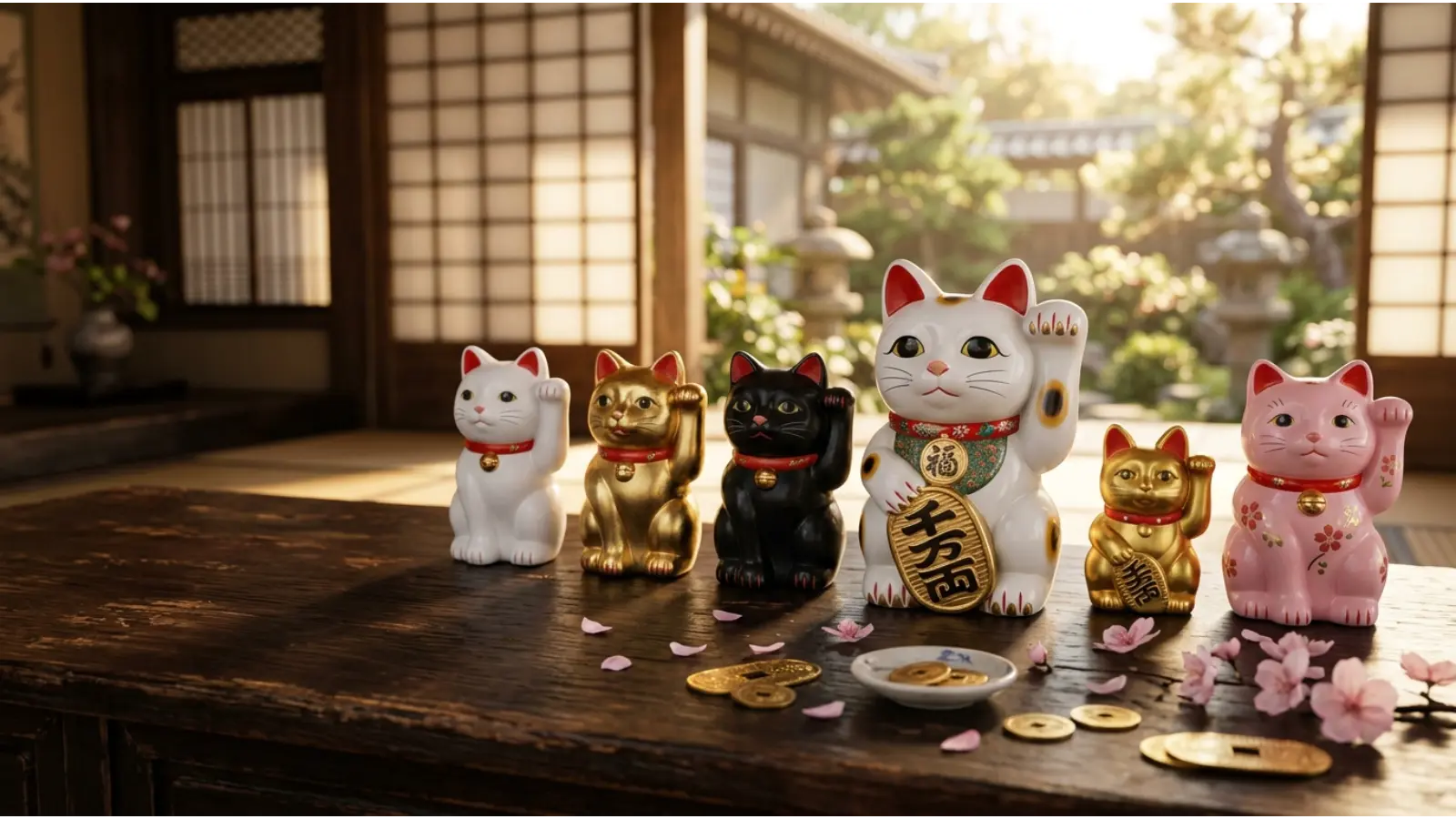
Walk into a Japanese restaurant, gift shop, or business, and you will likely notice a smiling cat raising one paw. This famous figure is known as the Lucky Cat or Maneki Neko, a beloved symbol of prosperity, protection, and welcome. Although many people recognize it as a decoration, few understand the deeper meanings behind its colors, raised paws, coins, and accessories.People search for Lucky Cat and Maneki Neko Symbols because they want to know which version attracts wealth, which one represents love, or whether different colors have different meanings.
Interestingly, interpretations have changed over time and can vary by region, tradition, and modern design trends.This guide explains the history, symbolism, psychology, cultural significance, spiritual interpretations, practical uses, and modern popularity of the Lucky Cat in simple language.
Quick Answer:
Lucky Cat (Maneki Neko) symbols represent good luck, prosperity, happiness, protection, welcoming energy, and success. The meaning changes depending on the cat’s color, raised paw, and accessories such as coins, collars, or bells.
Lucky Cat and Maneki Neko Symbols Chart
| Symbol | Traditional Meaning | Common Use |
|---|---|---|
| White Cat | Purity, happiness | Home decoration |
| Gold Cat | Wealth and financial success | Businesses and shops |
| Black Cat | Protection from negative energy | Homes and offices |
| Red Cat | Good health and safety | Wellness and family |
| Pink Cat | Love and relationships | Gifts for couples |
| Green Cat | Academic success and growth | Students and schools |
| Blue Cat | Career success and wisdom | Offices |
| Left Paw Raised | Invites customers and friendships | Restaurants and stores |
| Right Paw Raised | Attracts wealth and fortune | Businesses |
| Both Paws Raised | Double protection and luck | Homes and companies |
What Do Lucky Cat and Maneki Neko Symbols Mean?
The Japanese words Maneki Neko literally mean “beckoning cat.” The raised paw appears to invite good fortune instead of waving goodbye. In Japan, this gesture signals someone to come closer.
Therefore, the Lucky Cat symbolizes:
- Good luck
- Prosperity
- Wealth
- Business success
- Protection
- Happiness
- Positive opportunities
- Hospitality
- Friendship
At the same time, modern interpretations continue to expand. Today, many people also associate the Lucky Cat with motivation, hope, and fresh beginnings.
The History of Lucky Cat and Maneki Neko Symbols
The Lucky Cat originated in Japan during the Edo period (1603–1868). Although several legends explain its beginnings, one of the most famous tells the story of a poor temple cat.
According to tradition, a samurai sought shelter beneath a tree during a storm. The temple cat appeared to wave him closer. Moments later, lightning struck the tree where he had been standing. Believing the cat had saved his life, the samurai became a generous supporter of the temple.
While historians cannot confirm every legend, these stories helped make the Maneki Neko one of Japan’s most recognizable cultural symbols.
Today, it appears worldwide in:
- Restaurants
- Retail stores
- Hotels
- Offices
- Homes
- Gift shops
Psychology Behind Lucky Cat and Maneki Neko Symbols
People naturally respond to friendly facial expressions. The Lucky Cat’s smiling face, upright posture, and welcoming gesture create feelings of warmth and optimism.
Psychologically, it may encourage:
Hope
Many people see it as a reminder to stay positive during difficult times.
Optimism
The smiling expression encourages a more welcoming atmosphere.
Motivation
Business owners often display it as a symbol of future success.
Trust
Customers may perceive businesses using traditional symbols as warm and inviting.
Scientific research does not show that Lucky Cats create luck. Instead, their positive symbolism can influence mood, expectations, and customer experience.
Spiritual Meaning of Lucky Cat and Maneki Neko Symbols
Different spiritual traditions interpret the Lucky Cat differently.
Common symbolic meanings include:
- Protection from negative influences
- Attraction of positive energy
- Gratitude
- Prosperity
- Balance
- Harmony
- Blessings for the home
These interpretations come from cultural traditions rather than scientific evidence. Therefore, beliefs vary between individuals and communities.
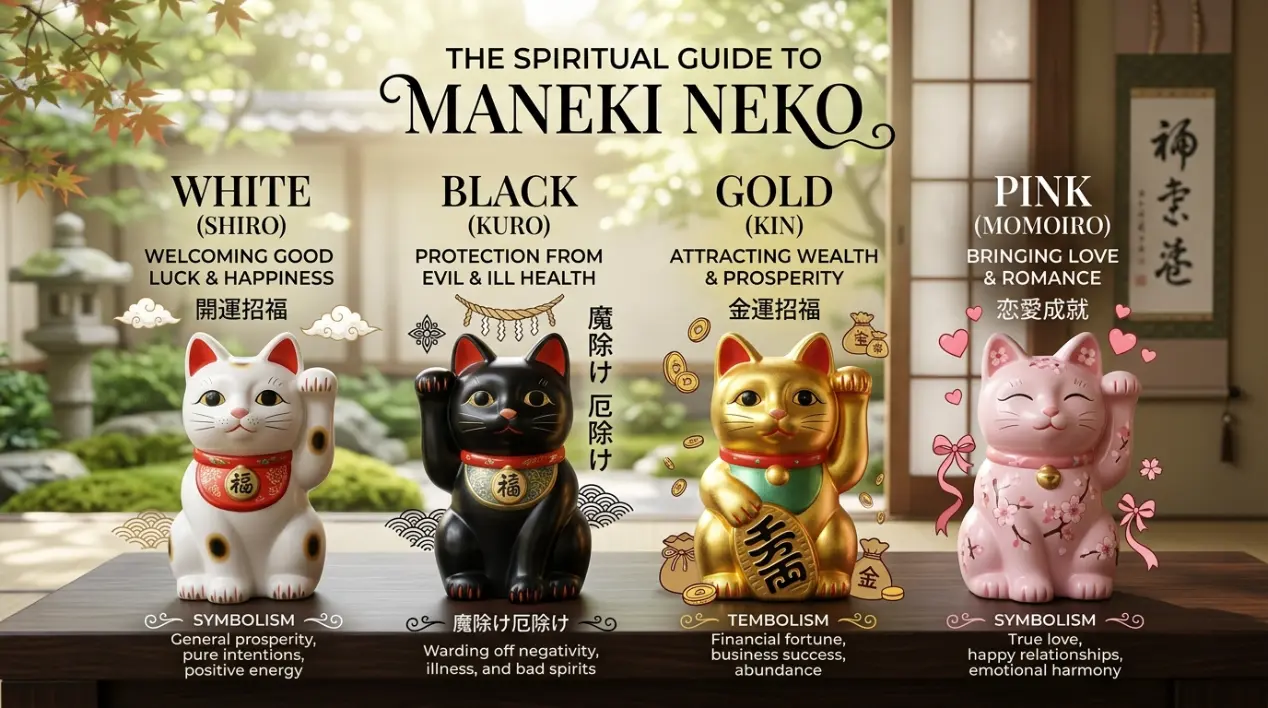
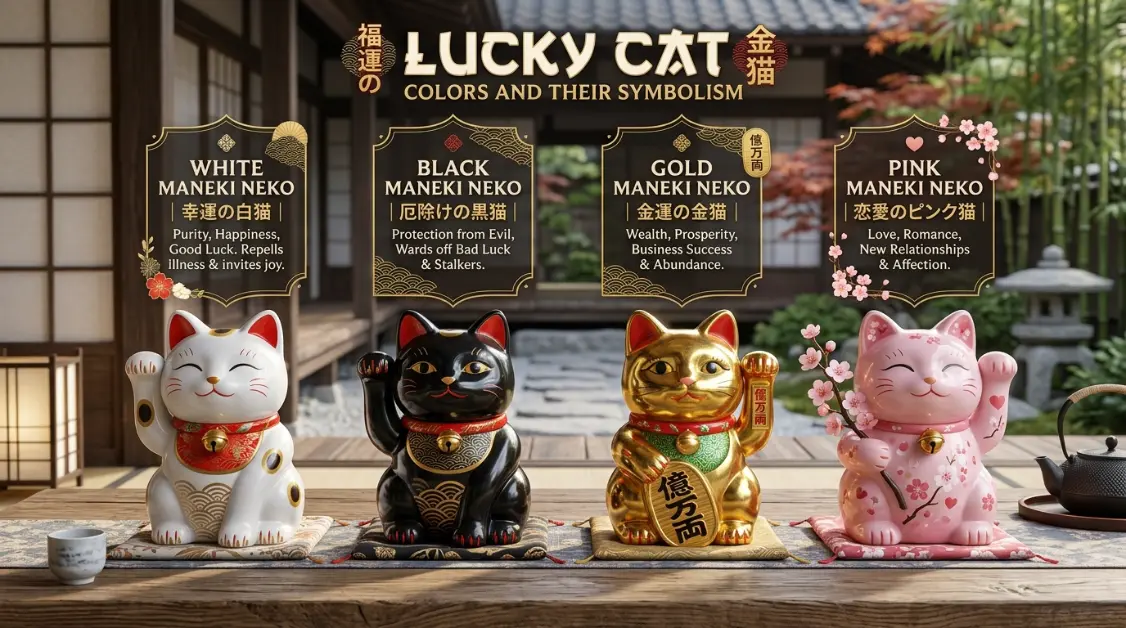
Lucky Cat Colors and Their Symbolism
Color plays a major role in Maneki Neko symbolism.
White Lucky Cat
Represents:
- Purity
- Peace
- Happiness
- New beginnings
It is one of the most traditional designs.
Gold Lucky Cat
Gold symbolizes:
- Wealth
- Financial success
- Prosperity
- Business growth
This version is especially popular in shops and offices.
Black Lucky Cat
Unlike some Western beliefs about black cats, Japanese tradition often views black Lucky Cats positively.
They symbolize:
- Protection
- Safety
- Warding off negativity
Red Lucky Cat
Red commonly represents:
- Good health
- Protection
- Strength
- Family wellbeing
Historically, red was believed to help guard against illness.
Pink Lucky Cat
Pink symbolizes:
- Romance
- Affection
- Loving relationships
It has become increasingly popular in modern gift culture.
Green Lucky Cat
Green often represents:
- Education
- Learning
- Personal growth
- Success in studies
Students sometimes keep one on their desks.
Blue Lucky Cat
Blue is linked with:
- Career development
- Wisdom
- Calm thinking
- Professional success
What Does the Raised Paw Mean?
One of the most interesting Lucky Cat symbols is the raised paw.
Left Paw Raised
Represents:
- Inviting customers
- Friendships
- Social connections
- Hospitality
Many restaurants display this version.
Right Paw Raised
Represents:
- Money
- Wealth
- Business success
- Financial opportunities
Many stores prefer this design.
Both Paws Raised
Represents:
- Double luck
- Extra protection
- Success
- Security
Some believe both paws provide stronger symbolic protection.
Other Common Lucky Cat Symbols
Besides colors and paws, many Maneki Neko figures include extra symbols.
Gold Coin
Usually represents financial prosperity.
Bell
Traditionally symbolizes protection and good fortune.
Red Collar
Reflects historical pet collars worn during the Edo period.
Bib
Often represents gratitude and respect.
Cushion
Suggests comfort, stability, and prosperity.
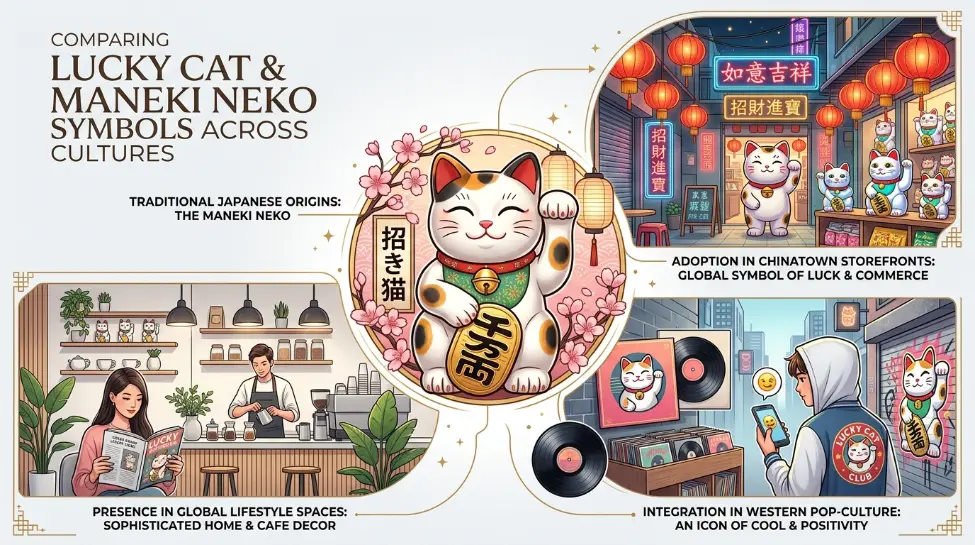
Lucky Cat and Maneki Neko Symbols Across Cultures
Although the Lucky Cat began in Japan, many cultures have adopted it.
Japan
Seen as a symbol of welcome, luck, and prosperity.
China
Often associated with wealth and successful business.
Western Countries
Popular as a decorative good-luck charm in restaurants and homes.
Global Culture
Today, it represents positivity, hospitality, and optimism more than superstition.
Real-Time Example
Imagine a newly opened café in 2026. The owner places a gold Maneki Neko with its right paw raised near the entrance. Customers immediately recognize it as a traditional good-luck symbol. While the figurine cannot guarantee business success, it creates a friendly first impression and reflects the owner’s hope for prosperity. Combined with good service and quality products, it becomes part of the café’s welcoming brand identity.
Lucky Cat and Maneki Neko Symbols in Branding and Marketing
Businesses choose Lucky Cat imagery because it communicates positive emotions.
It often suggests:
- Friendly service
- Hospitality
- Optimism
- Prosperity
- Cultural authenticity
Restaurants frequently display the symbol near entrances because it creates a welcoming atmosphere before customers even walk inside.
Lucky Cat in Interior Design
The Lucky Cat works well in many spaces.
Living Room
Creates a cheerful conversation piece.
Entryway
Traditionally symbolizes welcoming guests.
Home Office
Represents motivation and financial goals.
Retail Store
Encourages a warm customer experience.
Soft lighting and uncluttered surroundings help the figurine remain a subtle decorative accent.
Lucky Cat in Fashion and Art
Artists and designers often include Lucky Cat imagery in:
- T-shirts
- Jewelry
- Tote bags
- Stickers
- Street art
- Digital illustrations
Modern designs sometimes mix traditional Japanese elements with contemporary colors while keeping the iconic raised paw.
Common Misconceptions About Lucky Cat and Maneki Neko Symbols
Myth: It guarantees wealth.
Reality: It is a cultural symbol of hope and prosperity, not a magical object.
Myth: Every Lucky Cat means the same thing.
Reality: Colors, paws, and accessories each carry different symbolic meanings.
Myth: Black Lucky Cats are unlucky.
Reality: In Japanese tradition, black Lucky Cats often symbolize protection.
Myth: Only businesses use Lucky Cats.
Reality: Many people keep them at home as decorative symbols of positivity.
Practical Uses of Lucky Cat Symbols
People use Lucky Cats in everyday life to:
- Decorate homes
- Welcome visitors
- Celebrate new businesses
- Give thoughtful gifts
- Inspire positive thinking
- Add cultural charm to workspaces
Many collectors also appreciate them as works of traditional Japanese craftsmanship.
Frequently Asked Questions
What does Maneki Neko mean?
Maneki Neko means “beckoning cat” in Japanese.
Why is one paw raised?
The raised paw represents inviting luck, customers, friendships, or prosperity.
Which Lucky Cat is best for wealth?
Traditionally, a gold Lucky Cat with the right paw raised symbolizes financial success.
Is the Lucky Cat only Japanese?
It originated in Japan, although it has become popular worldwide.
Does every color have a different meaning?
Yes. Colors traditionally represent different wishes, such as health, wealth, love, education, or protection.
Is the Lucky Cat connected to religion?
Not directly. It is primarily a cultural and traditional symbol, although some people give it spiritual meaning.
Where should I place a Lucky Cat?
Many people place it near entrances, cash registers, reception desks, or home entryways to create a welcoming atmosphere
Are Lucky Cats considered lucky everywhere?
Interpretations vary. While many cultures view them positively, beliefs about luck depend on personal and cultural traditions.
Can I give a Lucky Cat as a gift?
Yes. It is a popular gift for new homes, business openings, graduations, and celebrations.
Why is the Lucky Cat still popular today?
Its cheerful appearance, rich history, and positive symbolism make it meaningful across cultures and generations
Final Thoughts on Lucky Cat and Maneki Neko Symbols
Lucky Cat and Maneki Neko symbols combine history, art, culture, and optimism into one memorable figure. Their raised paws, colorful designs, and traditional accessories tell stories about prosperity, protection, friendship, and hope.
Although these meanings come from cultural traditions rather than proven science, the Lucky Cat continues to inspire people around the world. Understanding its symbols allows you to appreciate it not only as a decorative object but also as a meaningful expression of welcome, gratitude, and positive intention.

Emma Wilson is a dedicated comparison writer and product researcher at ColorMystiic.com. She specializes in creating unbiased product comparisons, detailed reviews, and helpful buying guides. Her goal is to help readers make smarter purchasing decisions with confidence.