Mood lipstick is more than ordinary makeup because its shade can appear to change after it touches your lips. Some products shift toward pink, red, berry, purple, or other tones depending on the formula and the chemistry of the wearer’s lips. That makes mood lipstick color meanings especially interesting: people often want to know whether a particular shade says something about their mood, personality, or energy.
The key point is that these color changes are usually cosmetic effects, not reliable measurements of emotions. Depending on the product, the final color can be influenced by ingredients, lip moisture, skin tone, temperature, application thickness, and the chemistry of the lips.
Color itself does carry psychological associations. A major 2025 systematic review covering 132 studies, more than 42,000 participants, and 64 countries found consistent color-emotion associations, although many colors were connected with several emotions rather than one fixed feeling.
So, when reading mood lipstick color meanings, it helps to separate what a shade traditionally symbolizes from what actually causes the lipstick to change.
Quick Answer
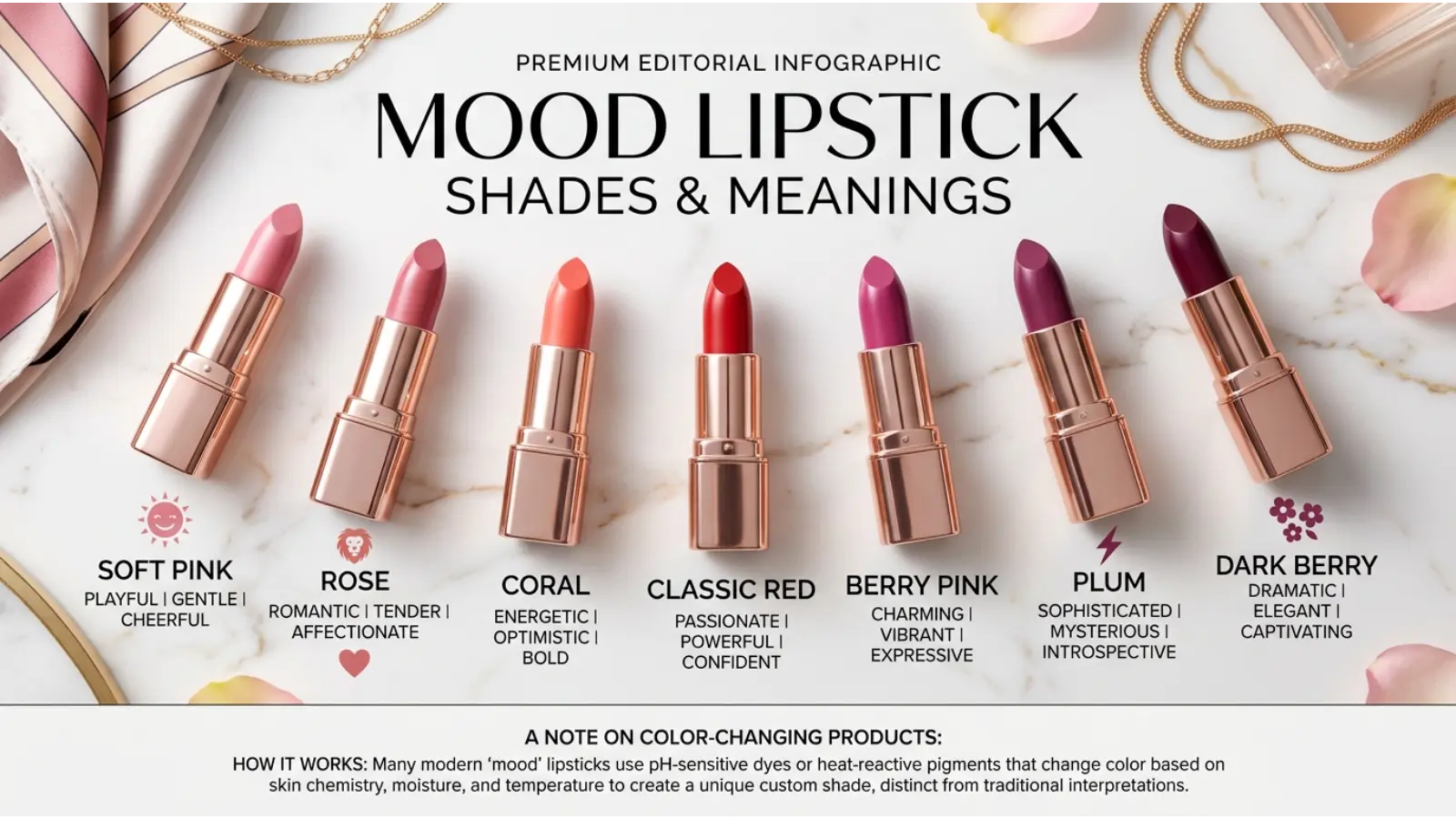
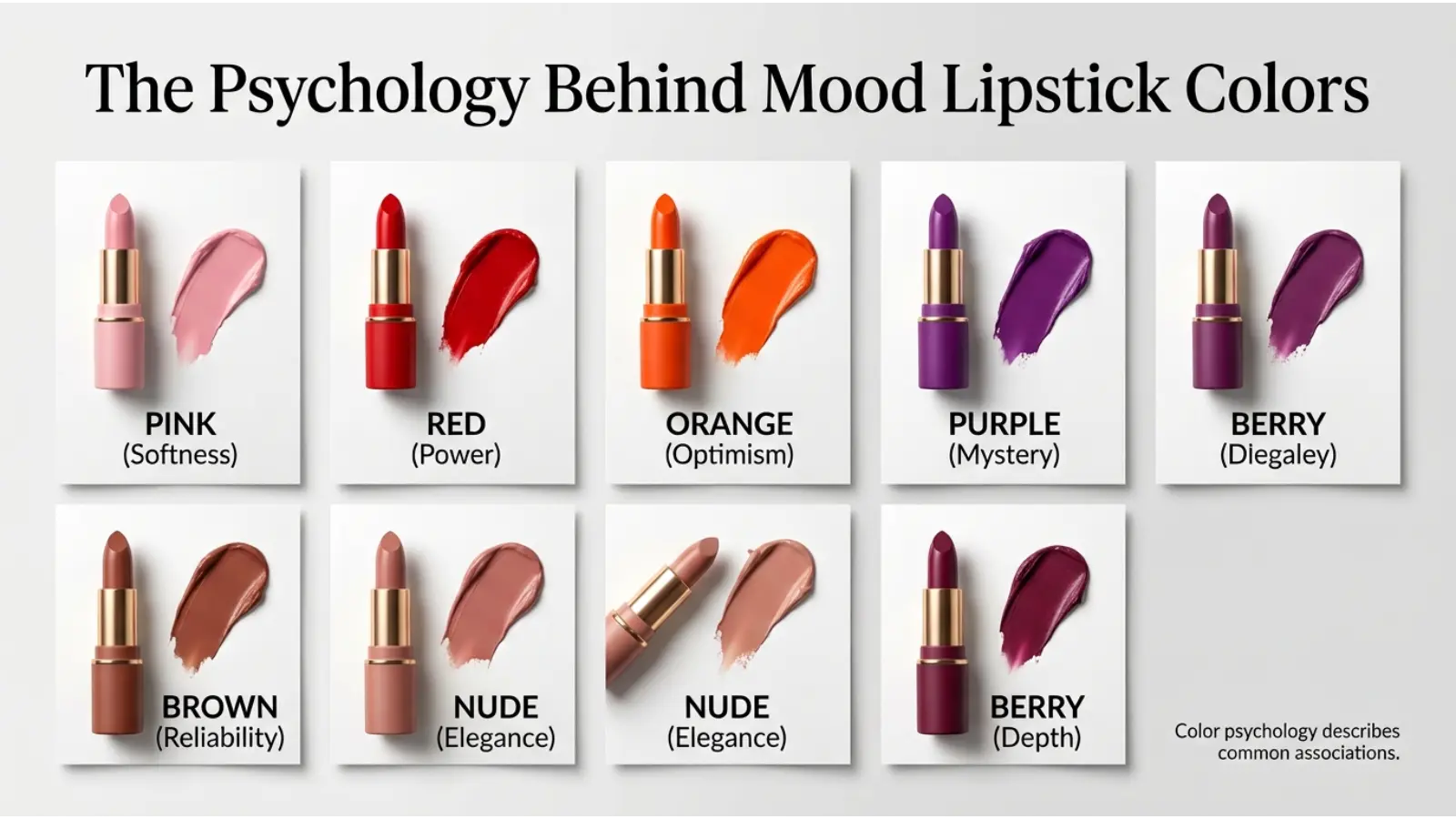
Mood lipstick colors are commonly interpreted through familiar color symbolism. Pink may suggest softness and affection, red confidence and passion, berry sophistication, purple creativity, brown warmth and stability, and coral or orange energy and friendliness. However, a mood lipstick’s actual color change does not reliably diagnose your emotions. The shade can be affected by the product formula, lip chemistry, moisture, temperature, lighting, and natural lip color.
Mood Lipstick Color Meanings at a Glance
| Lipstick Color | Common Symbolic Associations | Overall Impression |
|---|---|---|
| 💗 Pink | Affection, softness, playfulness | Gentle and friendly |
| ❤️ Red | Passion, confidence, energy | Bold and expressive |
| 🍓 Berry | Sophistication, richness, individuality | Elegant and mature |
| 💜 Purple | Creativity, imagination, individuality | Artistic and distinctive |
| 🌹 Rose | Romance, warmth, elegance | Polished and feminine |
| 🧡 Coral | Energy, friendliness, optimism | Fresh and lively |
| 🍊 Orange | Enthusiasm, warmth, sociability | Energetic and confident |
| 🤎 Brown | Stability, comfort, naturalness | Grounded and understated |
| 🍷 Deep Wine | Power, maturity, luxury | Dramatic and sophisticated |
| 🖤 Plum | Mystery, depth, confidence | Modern and intriguing |
| 🌸 Mauve | Balance, subtlety, sophistication | Calm and versatile |
| 💧 Clear/Sheer | Simplicity, freshness, natural beauty | Minimal and clean |
These are symbolic associations, not scientific personality tests. The meaning can change depending on the person, culture, setting, shade intensity, and styling.
What Is Mood Lipstick?
Mood lipstick is a type of cosmetic designed to produce a noticeable shade on the lips, sometimes changing or deepening after application. Products marketed as “mood” lipsticks may use dyes, pigments, or other color-producing ingredients that interact with the lip environment.
That interaction should not be confused with a device that directly measures emotional states.
Some color-changing formulas rely on ingredients whose appearance changes according to factors such as the local chemical environment. Other products simply appear different because the formula mixes with the natural color of the lips.
The result is highly personal. The same lipstick can look soft pink on one person and stronger berry or red on another.
How Does Mood Lipstick Change Color?
The exact mechanism depends on the product.
Lip Chemistry
Some color-changing cosmetics use dyes that respond to the chemical environment in which they are applied. The lips can therefore affect how the final shade develops.
However, this does not mean the lipstick is reading your feelings.
Natural Lip Color
Your natural lip pigmentation acts like a background layer. A translucent or reactive lipstick can look dramatically different over pale, pink, brown, or deeply pigmented lips.
For example, the same sheer pink formula may appear:
- Soft rose on naturally pink lips
- Brighter pink on pale lips
- Berry-toned on darker lips
- More muted when layered lightly
Moisture
Moisture can affect how a lipstick spreads and how strongly its color appears. Hydrated lips may produce a smoother, more even result than dry or flaky lips.
Temperature
Temperature can influence cosmetic texture and application. Warm lips may also make a product spread differently than cooler lips.
Application Thickness
A thin layer usually produces a softer effect. Building several layers can make the color look much deeper.
This is one reason two people can use the same mood lipstick and report different results.
The Psychology Behind Mood Lipstick Color Meanings
Color psychology offers useful clues about why people interpret lipstick shades differently, but it should not be treated as a system of fixed rules.
Research shows that people consistently associate colors with emotions, yet those relationships are often many-to-many. A single color can communicate different feelings depending on its lightness, saturation, hue, and context.
For lipstick, the same principle becomes even more noticeable because color appears directly on the face.
A vivid red lipstick, for example, can look powerful and dramatic. A soft dusty rose can communicate something much quieter even though both belong to the red-pink family.
Red Mood Lipstick Meaning ❤️
Red is one of the strongest lipstick colors and is often associated with confidence, passion, energy, attraction, and power.
A bright red can create a high-energy appearance, while a darker red may feel more serious and sophisticated.
From a psychological perspective, red has been linked with high-arousal emotions, including both positive and negative emotions. This is why red should not be reduced to simply “love.”
What Red Lipstick May Communicate
- Confidence
- Passion
- Boldness
- Romance
- Energy
- Glamour
- Assertiveness
A classic red works especially well when the goal is to make the lips the main visual focus.
Pink Mood Lipstick Meaning 💗
Pink commonly suggests affection, softness, warmth, playfulness, and femininity, although its meaning changes greatly with saturation.
Baby pink can feel delicate and youthful. Hot pink is much more energetic and expressive. Dusty pink tends to appear mature and understated.
Research broadly supports positive emotional associations with pink, but the exact interpretation depends on context.
Pink Lipstick May Suggest
- Sweetness
- Warmth
- Romance
- Playfulness
- Gentleness
- Youthfulness
- Approachability
For everyday makeup, muted pinks often provide a softer impression than highly saturated shades.
Berry Mood Lipstick Meaning 🍓
Berry shades sit between red, purple, and pink, which gives them a richer visual character.
They can suggest confidence, sophistication, depth, romance, and individuality.
A light berry tint may look casual, while a dark berry lipstick can create a dramatic evening appearance.
Berry is especially useful when someone wants more intensity than pink but less visual brightness than a classic red.
Purple Mood Lipstick Meaning 💜
Purple is often associated with creativity, imagination, individuality, mystery, and luxury.
Research has found purple associated with empowering emotions, although color meanings remain dependent on context and shade.
Lavender lipstick creates a very different impression from deep plum lipstick. The first can feel airy and playful; the second may appear dramatic and sophisticated.
Purple Works Well For
- Creative looks
- Alternative fashion
- Evening makeup
- Statement styling
- Artistic self-expression
Rose Mood Lipstick Meaning 🌹
Rose shades combine the warmth of red with the softness of pink.
They often communicate romance, elegance, warmth, and polish without appearing as intense as bright red.
Rose is one of the most versatile lipstick families because it can move from casual to formal depending on its depth and finish.
Coral Mood Lipstick Meaning 🧡
Coral blends orange and pink, giving it a naturally energetic appearance.
It is often associated with warmth, optimism, friendliness, freshness, and enthusiasm.
Coral can be particularly effective in spring and summer makeup because its warm undertone tends to create a lively appearance.
Orange Mood Lipstick Meaning 🍊
Orange lipstick is expressive and attention-grabbing.
It can symbolize energy, enthusiasm, warmth, confidence, and creativity.
Bright orange is more dramatic, while terracotta and burnt orange can feel earthy and sophisticated.
Brown Mood Lipstick Meaning 🤎
Brown lipstick often communicates grounding, warmth, naturalness, comfort, and stability.
The modern popularity of nude and brown lipstick has also made these shades closely connected with understated beauty.
Chocolate brown can create a bold retro look, while caramel and beige-brown shades can produce a softer everyday effect.
Wine and Burgundy Mood Lipstick Meaning 🍷
Wine and burgundy shades are deeper versions of the red-purple family.
They can suggest:
- Maturity
- Luxury
- Confidence
- Mystery
- Elegance
- Dramatic style
Because these shades are dark and highly saturated, they often attract more visual attention than neutral lip colors.
Mauve Mood Lipstick Meaning 🌸
Mauve combines muted pink, purple, and sometimes gray or brown undertones.
Its symbolism tends to feel quieter than bright pink or red. It may suggest balance, sophistication, subtle confidence, and calmness.
Mauve is particularly useful when you want a polished color without creating a very dramatic focal point.
Does Mood Lipstick Really Detect Your Mood?
Not reliably.
The word “mood” is mainly a marketing and descriptive idea for many color-changing cosmetic products. A lipstick cannot reliably determine whether you are happy, angry, nervous, relaxed, or sad simply from the shade it produces.
Color-emotion research demonstrates associations between colors and emotions, but researchers also caution that associations do not automatically prove that a color directly causes a particular emotional state.
Therefore, if your mood lipstick becomes darker, brighter, or more purple, it is better to interpret that as a cosmetic color response, not a scientific emotional reading.
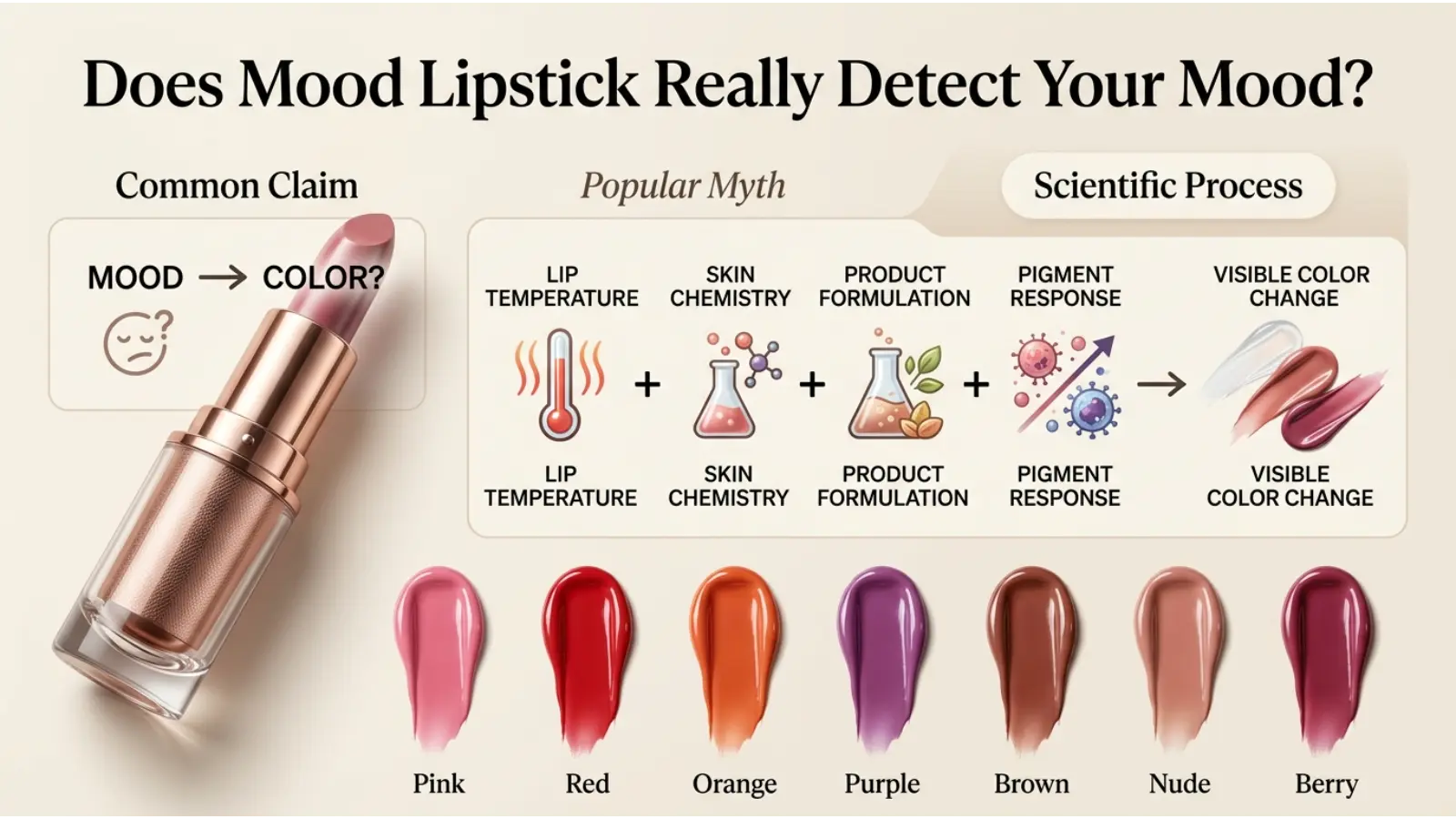
Why Does the Same Mood Lipstick Look Different on Everyone?
There are several reasons.
Natural Lip Pigmentation
Your lips provide the base color beneath the lipstick.
Skin Undertone
Warm, cool, neutral, and olive undertones can change how the same lipstick is perceived.
Product Formula
Different brands may use different dyes, pigments, oils, waxes, and bases.
Moisture and Lip Condition
Dryness and hydration can influence application and visual intensity.
Lighting
Daylight, warm indoor bulbs, fluorescent lights, and phone cameras can all make lipstick appear different.
Layering
One layer may look like a stain, while multiple layers can create a much stronger shade.
This is why a lipstick color chart should be treated as a guide rather than a guarantee.
Mood Lipstick Colors and Personality Associations
People often use color preference to describe personality. Someone who loves red lipstick might be described as confident, while someone who prefers nude lipstick may be viewed as understated.
These descriptions can be useful as social impressions, but they are not reliable personality measurements.
A person’s preferred lipstick color can change with:
- Age
- Fashion trends
- Occasion
- Culture
- Workplace expectations
- Personal style
- Skin tone
- Current beauty trends
In other words, liking purple lipstick does not prove that someone is creative, and wearing red does not prove that someone is confident.
Cultural Mood Lipstick Color Meanings
Color meanings are not universal.
Red, for example, has strong associations with love, celebration, danger, power, and beauty in different settings. Pink can be linked with femininity in modern Western societies, while other cultures and historical periods have used colors differently.
The 2025 review of color-emotion research found substantial cross-cultural consistency, but this does not erase cultural differences or contextual effects.
For lipstick specifically, social norms matter too. A bold lip may be considered glamorous in one environment and inappropriate for a particular formal setting in another.
The best interpretation therefore considers color + culture + occasion + personal style rather than color alone.
Mood Lipstick in Fashion
Lipstick can change the visual balance of an outfit.
For a Professional Look
Consider:
- Rose
- Mauve
- Soft pink
- Neutral brown
- Muted berry
These shades usually create less visual contrast than extremely bright colors.
For a Party Look
Brighter or deeper shades can become the focal point:
- Red
- Wine
- Plum
- Berry
- Hot pink
For a Minimal Look
Nude, sheer pink, caramel, and soft brown can complement rather than dominate the face.
The important factor is not whether one color is “best.” It is whether the shade supports the impression you want to create.
How Lighting Changes Mood Lipstick Colors
Lighting can completely change the way lipstick appears.
Under warm yellow lighting, red and orange undertones may look stronger. Cool lighting can make some pink and purple shades appear more noticeable.
Natural daylight usually gives a more useful reference point when comparing lipstick colors.
For photography, camera white balance also matters. A lipstick that looks neutral in person may appear warmer or cooler in a photograph.
Color Combinations That Work With Mood Lipstick
Red Lipstick + Black
This creates strong contrast and a dramatic appearance.
Pink Lipstick + White
The combination feels light, clean, and soft.
Berry Lipstick + Navy
Both shades have depth, creating an elegant and balanced palette.
Purple Lipstick + Gray
Gray allows purple to remain the main focal color.
Coral Lipstick + Beige
Beige softens coral while keeping the overall look warm.
Brown Lipstick + Cream
This creates a natural, earthy palette that works well for understated makeup.
Mood Lipstick for Different Occasions
| Occasion | Shades to Consider | Why |
|---|---|---|
| Everyday | Pink, mauve, nude | Easy and understated |
| Office | Rose, muted berry, brown | Polished without excessive contrast |
| Date night | Red, rose, berry | Romantic and expressive |
| Party | Red, plum, hot pink | High visual impact |
| Wedding guest | Rose, mauve, berry | Elegant and versatile |
| Casual outing | Coral, pink, nude | Fresh and relaxed |
| Evening event | Wine, burgundy, deep plum | Dramatic and sophisticated |
These are style suggestions, not strict rules.
Is Mood Lipstick Safe?
Cosmetic safety depends on the ingredients and how the product is manufactured and used.
In the United States, FDA rules require color additives used in cosmetics to be approved for their intended uses. The agency also maintains lists of permitted color additives, including those permitted for lipstick.
The FDA notes that reactions to color additives are possible but uncommon.
If a lipstick causes persistent burning, swelling, itching, rash, or another concerning reaction, stop using it and seek appropriate medical advice.
Buying from reputable manufacturers and checking the ingredient label is a sensible way to reduce uncertainty.
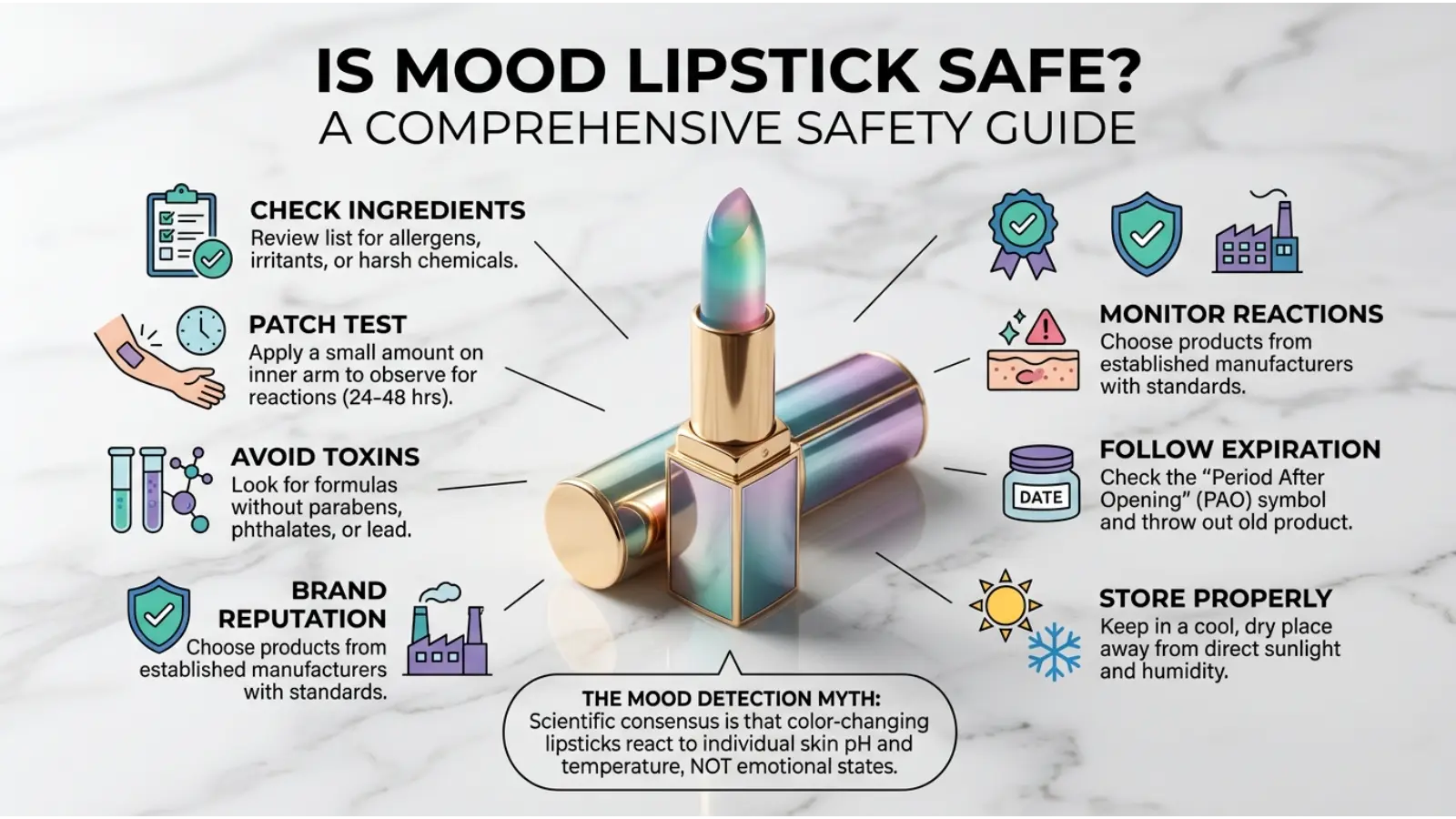
Common Misconceptions About Mood Lipstick
Myth: The Color Tells You Exactly How You Feel
There is no reliable scientific basis for treating lipstick shade as an emotional diagnostic tool.
Myth: Everyone Gets the Same Color
Natural lip color, formula, application, and other factors can produce different results.
Myth: One Color Has One Universal Meaning
Color symbolism is flexible. The same color can represent different ideas in different contexts.
Myth: Darker Lipstick Means a Negative Mood
Dark colors can be associated with negative emotions in some research contexts, but wearing a dark lipstick does not mean someone is sad or upset.
Myth: Color Psychology Can Predict Personality
Color preference may influence impressions, but it cannot accurately define an individual’s personality.
Real-World Uses of Mood Lipstick Color Meanings
Mood lipstick color meanings can be useful when choosing makeup for a particular visual message.
A beauty creator might use bright red to create a confident tutorial thumbnail. A fashion photographer may select deep plum for a mysterious editorial look. A cosmetics company might use pink packaging to create a soft, approachable brand identity.
The same principle works in everyday life. Choosing a lipstick shade is often a form of visual communication.
However, the meaning comes from the whole presentation, not just the lipstick.
Hair, clothing, lighting, facial expression, makeup finish, and cultural setting all contribute to the final impression.
Mood Lipstick and Branding
Lipstick companies frequently use color to communicate the personality of a product.
A bright red package may suggest energy and confidence. Soft pink may suggest delicacy or romance. Black and burgundy can create a premium or dramatic appearance.
Color can influence consumer perception, but marketing research does not support treating one color as a universal emotional trigger. The wider design system matters, including typography, imagery, packaging shape, product naming, and cultural expectations. Research reviews likewise emphasize that color effects have important boundary conditions.
How to Choose a Mood Lipstick Color
Start with the result you want rather than a supposed emotional diagnosis.
For confidence: Try red or deep berry.
For softness: Try pink or rose.
Sphistication: Try mauve, wine, or muted berry.
For creativity: Try purple or unusual coral shades.
For a natural look: Try nude, brown, or sheer rose.
Energy: Try coral, orange, or vivid pink.
Then consider your skin undertone, natural lip color, outfit, lighting, and occasion.
Frequently Asked Questions
What do mood lipstick colors mean?
They are commonly interpreted through traditional color symbolism. Pink can suggest softness, red confidence, berry sophistication, purple creativity, and brown naturalness. These meanings are cultural and contextual rather than fixed rules.
Does mood lipstick actually read your emotions?
No. Mood lipstick cannot reliably measure emotional states. Its color change is primarily a cosmetic effect influenced by the formula and conditions on the lips.
Why does my mood lipstick turn pink?
A formula may be designed to produce a pink or pink-red stain when it interacts with the lips. Your natural lip color and the product’s ingredients can also affect the final shade.
Why does the same lipstick look different on different people?
Natural lip pigmentation, skin undertone, moisture, application thickness, formula, and lighting can all change the final appearance.
What does red mood lipstick mean?
Red is commonly associated with passion, confidence, energy, romance, and power. It can also communicate danger or intensity depending on the context.
What does pink mood lipstick mean?
Pink often carries associations with affection, softness, warmth, playfulness, and femininity. Lighter and darker pinks can create very different impressions.
What does purple mood lipstick mean?
Purple is often associated with creativity, individuality, mystery, and empowerment. Lavender tends to feel softer, while plum creates a deeper and more dramatic effect.
Can lipstick color tell your personality?
No. Lipstick preference may influence how others perceive you, but it cannot reliably determine personality traits.
Does lighting affect mood lipstick color?
Yes. Warm and cool lighting can change how undertones appear. Natural daylight is often useful for judging the actual shade.
Are mood lipsticks safe?
Safety depends on the specific formula and its ingredients. In the United States, cosmetic color additives are subject to regulatory requirements for approved uses.
Final Thoughts
Mood lipstick color meanings are most useful when treated as a blend of cosmetic science, color psychology, symbolism, fashion, and personal expression.
A changing lipstick shade does not provide a scientific reading of your emotions. Instead, its appearance can change because of the formula, natural lip color, moisture, application, temperature, and lighting. At the same time, the shade you choose can influence how your overall appearance is perceived.
Red may create a powerful focal point. Pink can feel soft and approachable. Berry can look sophisticated. Purple can express individuality. Brown can feel grounded. Coral can add energy.
The most meaningful “mood” is ultimately the one you choose to create. Color psychology can help explain why certain shades feel expressive, but context and personal preference remain just as important.
Emma Wilson is a dedicated comparison writer and product researcher at ColorMystiic.com. She specializes in creating unbiased product comparisons, detailed reviews, and helpful buying guides. Her goal is to help readers make smarter purchasing decisions with confidence.