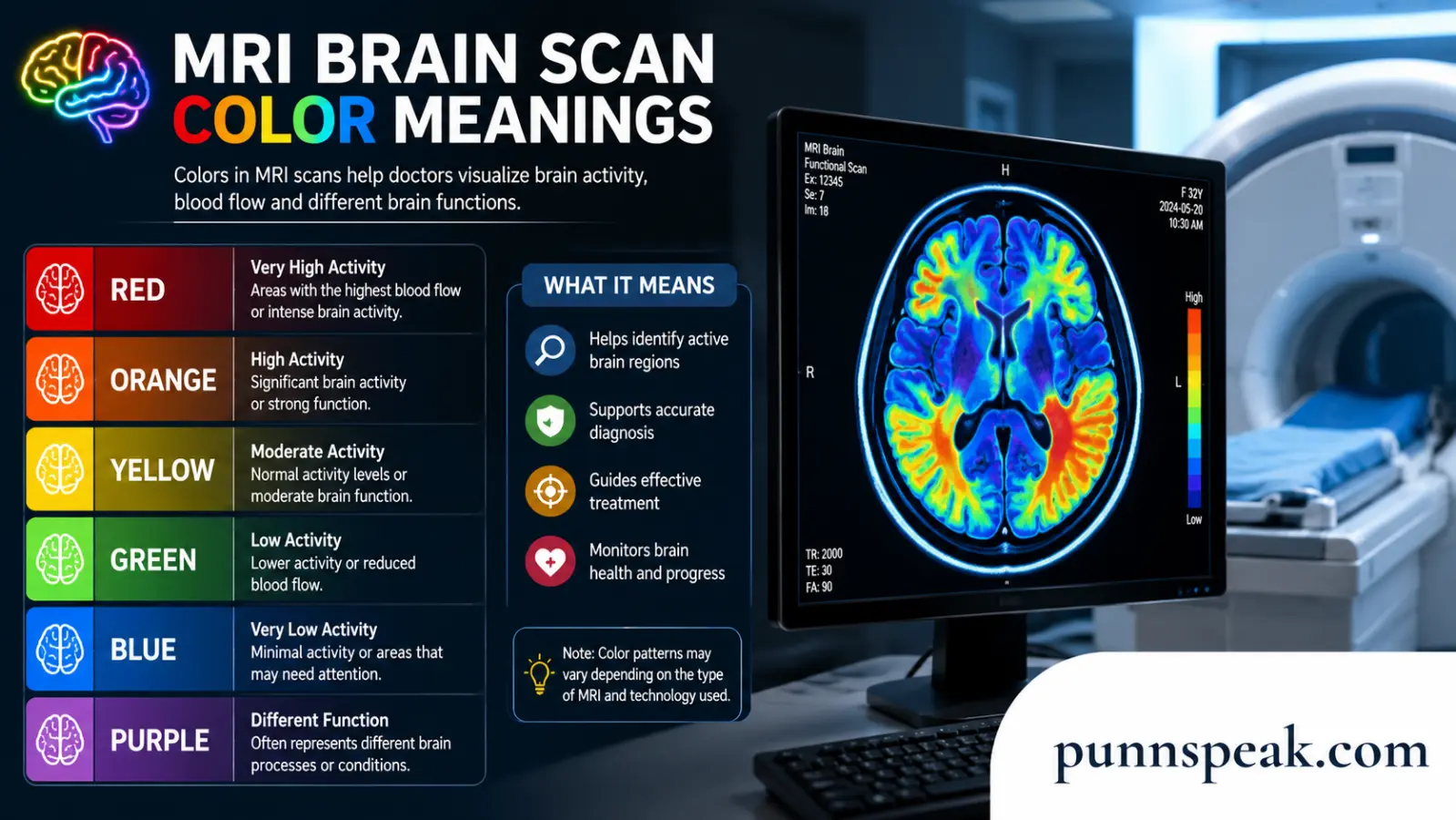
MRI brain scan color meanings refer to the visual color maps used in medical imaging to represent different levels of brain activity, blood flow, tissue density, connectivity, and neurological function. While traditional MRI scans are often displayed in grayscale, advanced imaging techniques such as functional MRI (fMRI), diffusion tensor imaging (DTI), and color-enhanced brain mapping use various colors to help physicians and researchers interpret complex neurological data. These colors are scientific visualization tools rather than natural brain colors. However, people often associate them with symbolic, psychological, and cultural meanings that influence interpretation.
Quick Answer: MRI brain scan colors typically symbolize different levels of brain activity, blood flow, connectivity, or tissue characteristics, with warm colors often indicating higher activity and cool colors representing lower activity or different physiological measurements.
What Does the Color MRI Brain Scan Symbolize?
MRI brain scan colors symbolize the visualization of neurological information that would otherwise be difficult to interpret. Different colors help doctors identify patterns, compare brain regions, and detect abnormalities.
Common symbolic meanings include:
- Intelligence and cognition
- Brain activity
- Scientific discovery
- Medical diagnosis
- Awareness and consciousness
- Neurological health
- Human potential
- Advanced technology
In public perception, colorful brain scans often symbolize knowledge, innovation, and the mysteries of the human mind.
Psychological Characteristics of the Color MRI Brain Scan
Color psychology influences how people interpret MRI brain scan images, even though the colors themselves are scientifically assigned.
Emotional Associations
- Curiosity
- Fascination
- Intelligence
- Discovery
- Innovation
- Scientific progress
Psychological Effects
- Increases interest in neuroscience
- Enhances visual understanding
- Makes complex data easier to interpret
- Creates emotional engagement with medical information
Positive Emotional Responses
- Hope
- Confidence
- Wonder
- Trust in science
- Optimism about healthcare
Negative Emotional Responses
- Anxiety about medical results
- Fear of neurological disorders
- Confusion about color interpretations
- Overestimation of scan significance
Impact on Mood and Behavior
Color-coded MRI images often encourage deeper attention and understanding because the human brain processes color information quickly.
How People Typically React
Most people view colorful brain scans as highly advanced, trustworthy, and visually impressive representations of brain function.
Spiritual Meaning of the Color MRI Brain Scan
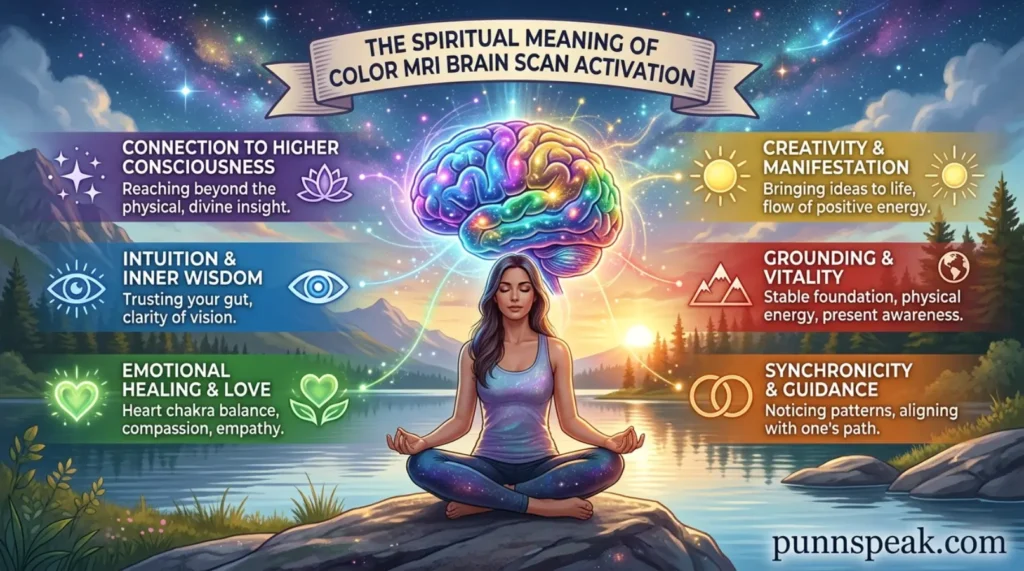
Although MRI brain scan colors are scientific rather than spiritual, many people connect them with symbolic themes related to consciousness and human awareness.
Spiritual Associations
- Holiness: Appreciation for the complexity of human creation.
- Wisdom: Representation of knowledge and understanding.
- Purity: Clear insight into the brain’s structure.
- Transformation: Growth of awareness and learning.
- Healing: Recovery from neurological conditions.
- Protection: Early detection of disease.
- Power: Human cognitive abilities.
- Enlightenment: Greater understanding of consciousness.
- New Beginnings: Improved health through diagnosis and treatment.
- Eternity: Exploration of enduring questions about the mind and existence.
Many spiritual traditions view the human brain as a remarkable gift connected to learning, awareness, and self-discovery.
Positive and Negative Meanings of the Color MRI Brain Scan
Positive Meanings
MRI brain scan colors can symbolize:
- Purity: Clear visualization of medical data.
- Peace: Reassurance through accurate diagnosis.
- Simplicity: Easier interpretation of complex information.
- Clarity: Enhanced understanding of brain function.
- Freshness: New scientific discoveries.
- Hope: Potential for successful treatment.
- Balance: Healthy neurological functioning.
- Harmony: Coordination between brain regions.
Example: A color-enhanced scan helping doctors identify a treatable condition may provide reassurance and hope for patients.
Negative Meanings
MRI brain scan colors may sometimes symbolize:
- Emptiness: Areas showing reduced activity.
- Isolation: Damage affecting communication between brain regions.
- Coldness: Clinical and technical medical environments.
- Sterility: Highly scientific presentation lacking emotional context.
- Boredom: Repetitive medical procedures.
- Emotional Distance: Difficulty understanding technical findings.
- Perfectionism: Overanalyzing minor scan variations.
Example: A patient may become anxious after seeing unusual color patterns without understanding their medical significance.
Meanings of the Color MRI Brain Scan
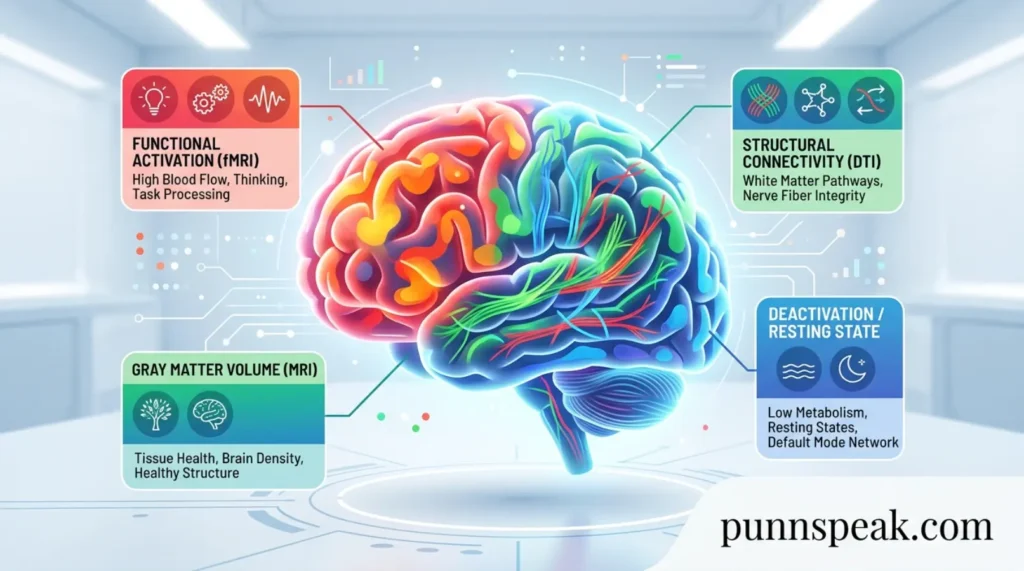
The meaning of MRI brain scan colors depends heavily on the imaging technique, software, and medical context. Red in one scan may indicate high activity, while in another it may represent a completely different measurement.
Feng Shui
MRI brain scan color palettes often include blue, green, yellow, red, and purple.
- Associated Element: Varies by individual color.
- Energy Symbolism: Knowledge, awareness, and mental clarity.
- Best Rooms: Home offices, study areas, libraries, and meditation spaces.
- Recommended Color Combinations: Blue with green, purple with blue, or red with yellow accents.
- Home Decorating Tips: Use brain-inspired artwork featuring balanced color gradients to encourage creativity and intellectual stimulation.
Marketing
Many healthcare and technology brands use colors similar to MRI brain scan imagery.
Branding Psychology
Colorful gradients suggest innovation, intelligence, research, and advanced technology.
Consumer Perception
People often associate these colors with scientific expertise and medical credibility.
Trust Signals
Blue and green tones are commonly used to communicate reliability and healthcare professionalism.
Product Packaging
Medical devices, health technology products, and educational materials frequently use brain-scan-inspired graphics.
Advertising Applications
Colorful neural imagery is often used in campaigns related to healthcare, neuroscience, artificial intelligence, and cognitive enhancement.
Common examples include brands such as:
- IBM
- GE HealthCare
- Siemens Healthineers
Design
MRI brain scan colors inspire many design applications.
Interior Design
Brain-inspired color palettes create modern and intellectually stimulating environments.
Graphic Design
Color gradients help communicate complexity and data visualization.
Web Design
Technology and healthcare websites often use neural-network-inspired color schemes.
User Experience
Color coding improves data interpretation and navigation.
Minimalist Aesthetics
Selective use of vibrant colors against neutral backgrounds creates visual focus.
Fashion
Brain-scan-inspired colors have become popular in modern fashion and digital art.
Clothing Symbolism
They symbolize intelligence, creativity, and innovation.
Seasonal Use
Bright gradients are popular throughout the year, particularly in modern streetwear and athletic apparel.
Styling Effects
They create futuristic and energetic visual impressions.
Personality Impressions
Wearers may be perceived as curious, creative, and forward-thinking.
Advantages
- Eye-catching appearance
- Modern aesthetic
- Strong visual identity
Disadvantages
- Can appear overly technical
- May be difficult to coordinate with neutral wardrobes
Example: Gradient athletic wear inspired by scientific imaging often conveys energy and innovation.
Color Associations Are Not Universal
Western Cultures
In Western cultures, colorful MRI images are commonly associated with science, medical progress, intelligence, and healthcare innovation.
Eastern Cultures
Many Eastern cultures may interpret certain MRI colors through traditional color symbolism, such as red for vitality or blue for wisdom and tranquility.
Religious Traditions
Religious interpretations often focus less on the scan itself and more on the human brain as a symbol of divine creation, consciousness, and learning.
Historical Interpretations
Historically, the brain was difficult to visualize in detail. Modern MRI color mapping represents a major advancement in understanding neurological processes.
Modern Global Interpretations
Globally, colorful brain scans have become symbols of neuroscience, artificial intelligence, medical research, and technological advancement.
What MRI Brain Scan Color Meanings Say About Your Personality
People who are strongly drawn to MRI brain scan color palettes may share certain personality tendencies. However, color preferences alone cannot accurately determine personality.
Strengths
- Curious
- Analytical
- Intelligent
- Creative
- Open-minded
Weaknesses
- Overthinking
- Excessive analysis
- Perfectionism
- Difficulty disconnecting from work
Social Behavior
They often enjoy intellectual discussions, learning, and problem-solving.
Work Style
These individuals frequently thrive in research, technology, education, healthcare, and creative professions.
Relationships
They often value meaningful conversations and intellectual compatibility.
Emotional Tendencies
They may be highly reflective, inquisitive, and motivated by personal growth.
Frequently Asked Questions
What defines MRI brain scan color meanings?
MRI brain scan color meanings refer to the visual color maps used to represent brain activity, blood flow, connectivity, or tissue characteristics.
What does MRI brain scan symbolize?
MRI brain scans symbolize knowledge, medical discovery, brain function, and scientific advancement.
Why are MRI brain scan colors important?
They help doctors and researchers interpret complex neurological data more efficiently.
Are MRI brain scan colors real brain colors?
No. Most MRI colors are artificially assigned by imaging software to visualize scientific information.
Is MRI brain scan color considered warm or cool?
MRI color maps often include both warm colors like red and yellow and cool colors like blue and green.
What emotions do MRI brain scan colors represent?
They commonly evoke curiosity, hope, intelligence, innovation, and scientific trust.
What is the spiritual meaning of MRI brain scan colors?
Many people associate them with wisdom, consciousness, healing, enlightenment, and personal growth.
What colors pair well with MRI brain scan palettes?
Blue, green, purple, red, orange, and yellow gradients are commonly used together.
What does liking MRI brain scan imagery say about a person?
It may indicate curiosity, analytical thinking, creativity, and interest in science or technology.
Why do some MRI scans use red and yellow colors?
These colors often represent higher activity levels or stronger signals, depending on the imaging technique.
Can MRI scan colors diagnose disease by themselves?
No. Colors assist interpretation, but diagnosis requires expert medical analysis.
Conclusion
MRI brain scan color meanings combine scientific visualization with powerful symbolic associations related to intelligence, discovery, healing, and human potential. While the colors are primarily tools for displaying neurological information, they also inspire cultural, psychological, and artistic interpretations. Understanding MRI brain scan color meanings helps people appreciate both the medical purpose of these images and their broader symbolism in modern society. As neuroscience continues to advance, colorful brain imaging will remain an important symbol of knowledge, innovation, and the exploration of the human mind.

Emma Wilson is a dedicated comparison writer and product researcher at ColorMystiic.com. She specializes in creating unbiased product comparisons, detailed reviews, and helpful buying guides. Her goal is to help readers make smarter purchasing decisions with confidence.