Litter color meanings can vary depending on the context, including waste management systems, recycling programs, environmental awareness campaigns, product packaging, and public cleanliness initiatives. Different litter colors are often used to communicate specific messages, identify waste categories, encourage responsible disposal, and promote environmental sustainability. Color psychology also influences how people perceive litter bins, recycling containers, and environmental messaging.
Quick Answer: Litter color meanings generally symbolize organization, environmental responsibility, recycling categories, safety, cleanliness, and sustainability. The exact meaning depends on the color being used and the cultural or practical context.
What Does the Color Litter Symbolize?
The symbolism of litter colors is primarily connected to waste sorting, environmental protection, public health, and resource conservation. Different colored litter containers help individuals quickly identify where to dispose of specific materials.
Common symbolic associations include:
- Environmental awareness
- Organization and efficiency
- Public cleanliness
- Sustainability
- Resource recovery
- Waste reduction
- Safety and hygiene
- Community responsibility
In many modern systems, color-coded litter management helps reduce contamination and improve recycling effectiveness.
Psychological Characteristics of the Color Litter
Color psychology plays an important role in how people respond to litter bins, recycling systems, and environmental campaigns.
Emotional Associations
- Responsibility
- Orderliness
- Environmental consciousness
- Security
- Awareness
- Community participation
Psychological Effects
- Encourages proper waste disposal
- Improves decision-making speed
- Reduces confusion
- Increases recycling participation
- Enhances environmental engagement
Positive Emotional Responses
- Confidence
- Trust
- Responsibility
- Cooperation
- Pride in cleanliness
Negative Emotional Responses
- Confusion when colors are inconsistent
- Frustration from unclear labeling
- Anxiety regarding proper waste sorting
Impact on Mood and Behavior
Color-coded litter systems simplify waste management and encourage positive environmental behaviors. People are more likely to recycle correctly when colors are clear and recognizable.
Typical Reactions
Most individuals respond positively to organized color systems because they reduce uncertainty and create visual structure.
Spiritual Meaning of the Color Litter
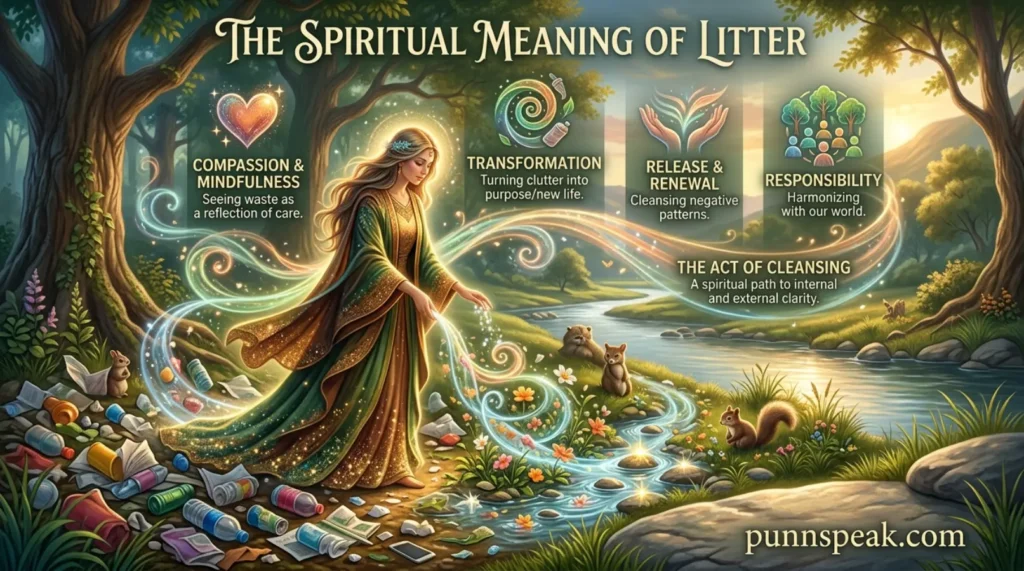
Although litter colors are primarily practical rather than spiritual, environmental stewardship often carries symbolic spiritual significance.
Common Spiritual Associations
- Holiness: Caring for nature as a sacred responsibility.
- Wisdom: Making sustainable choices.
- Purity: Maintaining clean surroundings.
- Transformation: Turning waste into reusable resources.
- Healing: Supporting environmental restoration.
- Protection: Preserving ecosystems.
- Power: Collective action for environmental change.
- Enlightenment: Greater awareness of human impact on nature.
- New Beginnings: Recycling materials into new products.
- Eternity: Sustainable resource cycles that continue over time.
Many spiritual traditions view responsible environmental behavior as a form of respect for creation and future generations.
Positive and Negative Meanings of the Color Litter
Positive Meanings
Litter color systems often symbolize:
- Purity: Clean and organized environments.
- Peace: Reduced visual pollution and cleaner communities.
- Simplicity: Easy-to-understand waste sorting.
- Clarity: Clear instructions for disposal.
- Freshness: Cleaner public spaces.
- Hope: Progress toward sustainability goals.
- Balance: Efficient resource management.
- Harmony: Cooperation between people and the environment.
Example: A community with clearly marked recycling bins often experiences cleaner parks and public spaces.
Negative Meanings
In some situations, litter colors may also be associated with:
- Emptiness: Unused or abandoned waste facilities.
- Isolation: Neglected areas filled with litter.
- Coldness: Highly functional systems lacking human engagement.
- Sterility: Overly industrial waste environments.
- Boredom: Generic designs that fail to attract attention.
- Emotional Distance: People feeling disconnected from environmental issues.
- Perfectionism: Excessively complex sorting requirements.
Example: Complicated color systems can discourage participation if users are uncertain about proper disposal methods.
Meanings of the Color Litter
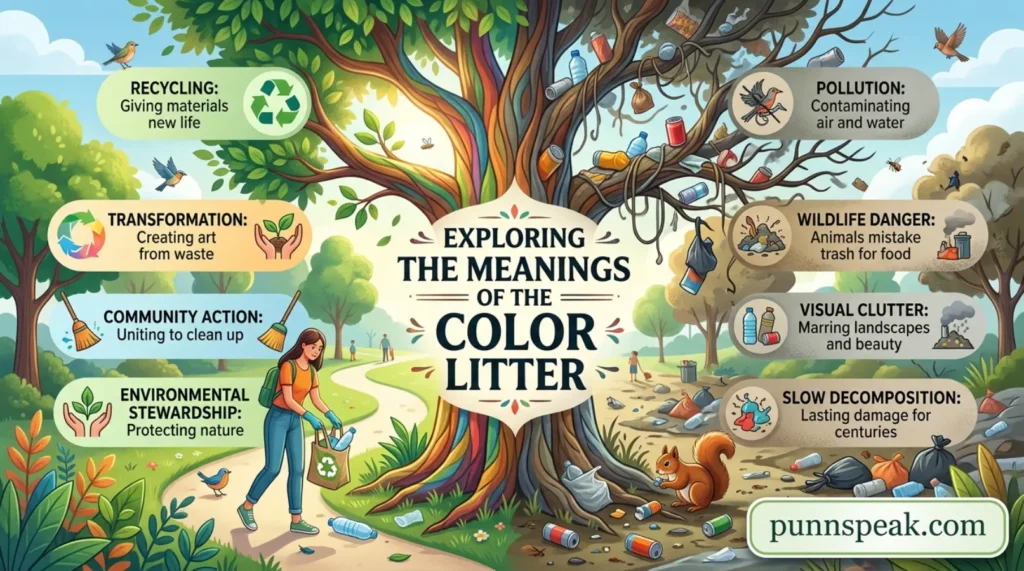
The meaning of litter colors changes significantly depending on local regulations, environmental programs, and cultural expectations.
Feng Shui
In Feng Shui, cleanliness and proper organization support positive energy flow.
- Associated Element: Depends on the specific color used.
- Energy Symbolism: Order, cleanliness, and balanced energy.
- Best Rooms: Kitchens, utility areas, garages, and recycling stations.
- Recommended Color Combinations: Green with blue, white with gray, or earth tones with natural wood.
- Home Decorating Tips: Use attractive recycling containers that blend with interior design while maintaining functionality.
Marketing
Many environmental brands use color psychology to reinforce sustainability messages.
Branding Psychology
Colors communicate recycling, cleanliness, environmental responsibility, and trustworthiness.
Consumer Perception
Consumers often associate green, blue, and white with environmentally friendly practices.
Trust Signals
Consistent color systems improve credibility and user confidence.
Product Packaging
Eco-friendly packaging frequently incorporates green, brown, blue, or natural earth tones.
Advertising Applications
Environmental campaigns use colors to encourage recycling and responsible disposal.
Examples of brands and organizations frequently using environmentally associated colors include:
- TerraCycle
- Keep America Beautiful
- Waste Management
Design
Litter-related color systems are important in design.
Interior Design
Color-coded bins improve organization while maintaining visual appeal.
Graphic Design
Distinct colors help communicate disposal instructions quickly.
Web Design
Environmental websites frequently use green and blue palettes to reinforce sustainability.
User Experience
Clear color distinctions improve usability and reduce mistakes.
Minimalist Aesthetics
Simple color schemes help users focus on essential information.
Fashion
While litter itself is not a fashion color, sustainability themes influence modern fashion.
Clothing Symbolism
Eco-conscious clothing often uses natural and recycled color palettes.
Seasonal Use
Earth tones are popular throughout the year, especially during autumn.
Styling Effects
Natural colors communicate environmental awareness and authenticity.
Personality Impressions
People may perceive environmentally inspired styles as responsible and thoughtful.
Advantages
- Timeless appearance
- Sustainability messaging
- Versatile combinations
Disadvantages
- Can appear overly casual
- May lack bold visual impact
Color Associations Are Not Universal
Western Cultures
In many Western countries, green often represents recycling and environmental responsibility. Blue may symbolize paper recycling or general sustainability initiatives.
Eastern Cultures
Several Eastern societies place strong emphasis on cleanliness, community responsibility, and harmony with nature, which can influence waste management symbolism.
Religious Traditions
Many religious teachings encourage stewardship of the environment, cleanliness, and responsible use of resources.
Historical Interpretations
Historically, waste management focused primarily on sanitation and public health. Modern color-coded systems expanded to include recycling and environmental protection.
Modern Global Interpretations
Today, litter colors commonly symbolize sustainability, resource conservation, climate awareness, and environmental responsibility across many countries.
What Litter Says About Your Personality
People who strongly appreciate organized litter and recycling systems often display certain personality tendencies. However, color preferences and environmental attitudes do not determine personality with certainty.
Strengths
- Responsible
- Organized
- Conscientious
- Community-minded
- Environmentally aware
Weaknesses
- May become frustrated by disorder
- Can be overly concerned with rules
- May expect others to follow standards closely
Social Behavior
These individuals often encourage cooperation and civic responsibility.
Work Style
They typically value structure, efficiency, planning, and long-term thinking.
Relationships
They often appreciate reliability, honesty, and shared values.
Emotional Tendencies
Many prefer stability, order, and meaningful contributions to their communities.
Frequently Asked Questions
What defines litter color?
Litter color refers to the specific colors used in waste disposal and recycling systems to identify different categories of waste.
What does litter symbolize?
Litter symbolism often relates to environmental responsibility, public cleanliness, waste management, and sustainability.
Why is litter color important?
It helps people sort waste correctly, improves recycling rates, and reduces contamination.
Is litter color a warm or cool color?
Litter is not a single color. Different systems use various warm and cool colors depending on their waste categories.
What emotions does litter color represent?
Common associations include responsibility, organization, environmental awareness, and cleanliness.
What does litter mean spiritually?
Spiritually, litter management can symbolize stewardship, transformation, healing, and respect for nature.
What colors pair well in litter systems?
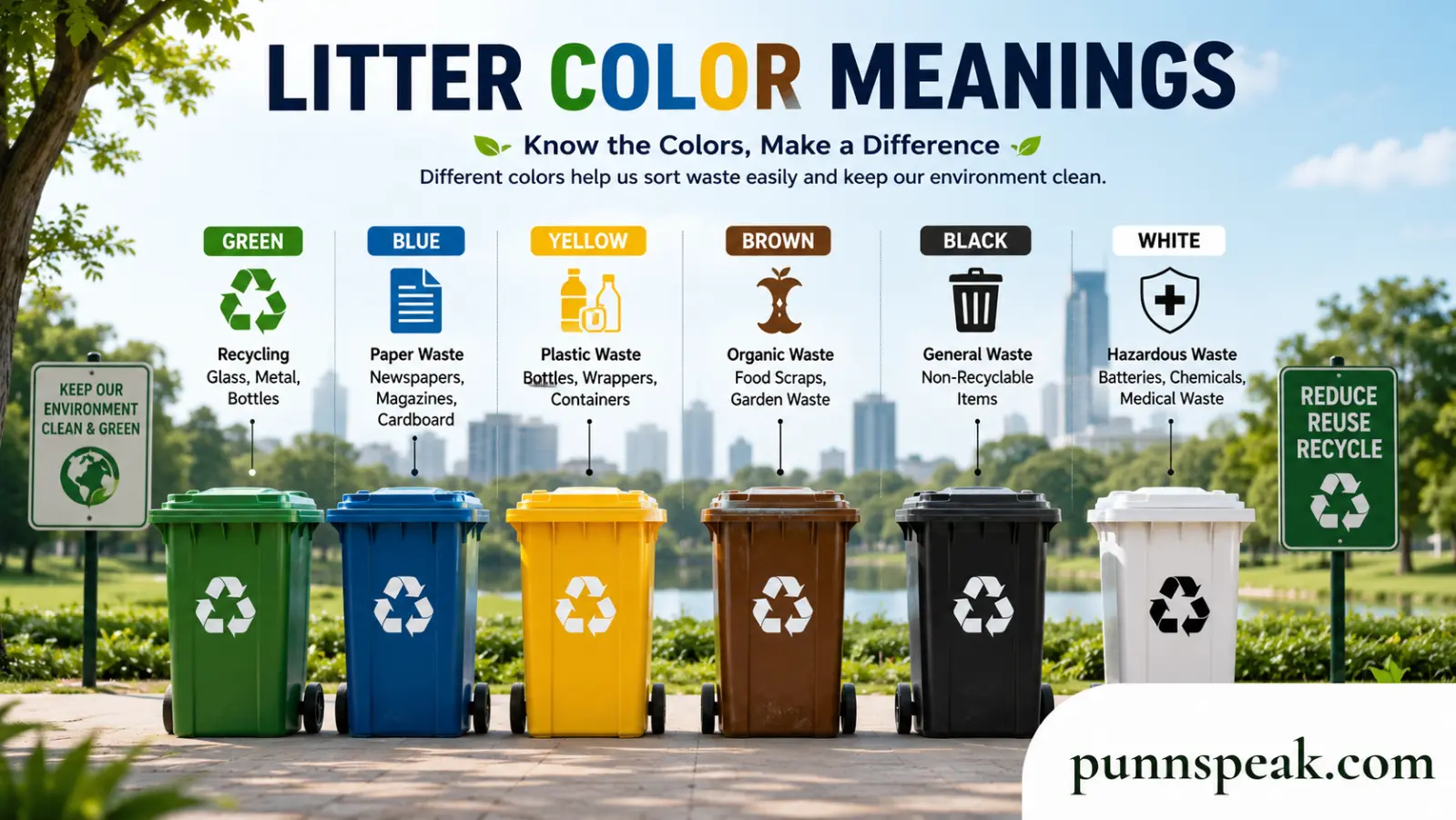
Green, blue, yellow, brown, gray, and white are commonly combined to create clear waste sorting systems.
What does liking organized litter systems say about a person?
It may suggest responsibility, environmental awareness, and appreciation for order and structure.
Why are recycling bins different colors?
Different colors help identify waste categories quickly and improve recycling accuracy.
What is the most common recycling color?
Green is widely associated with recycling and environmental sustainability.
Conclusion
Litter color meanings are closely connected to organization, sustainability, public health, and environmental responsibility. Through color psychology, waste management systems can influence behavior, improve recycling participation, and promote cleaner communities. While interpretations vary across cultures and industries, the overall symbolism of litter colors centers on responsibility, resource conservation, and creating a healthier environment. Understanding these meanings helps individuals and organizations communicate environmental goals more effectively and support long-term sustainability efforts.

Emma Wilson is a dedicated comparison writer and product researcher at ColorMystiic.com. She specializes in creating unbiased product comparisons, detailed reviews, and helpful buying guides. Her goal is to help readers make smarter purchasing decisions with confidence.