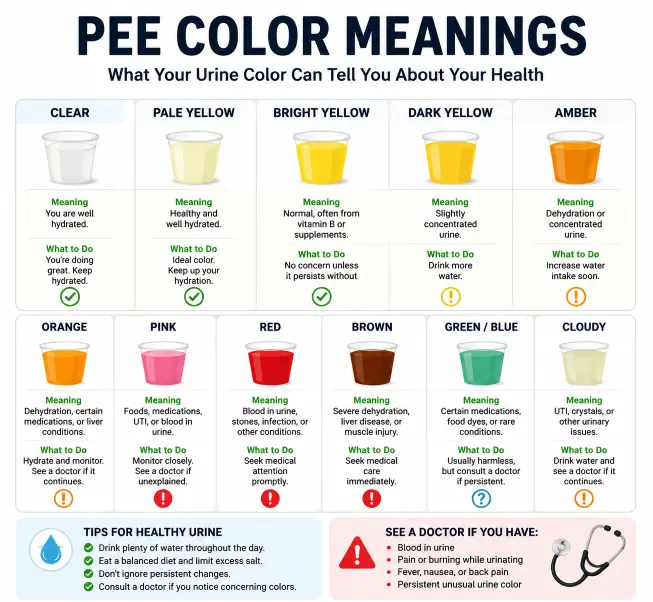
Pee color meaning can offer valuable clues about your body’s hydration, diet, medications, and overall health. While urine is naturally yellow, its color can range from nearly clear to dark amber, and sometimes even appear orange, pink, green, or blue. Most color changes are harmless and temporary, but some may signal a medical condition that deserves attention.
Many people search for pee color meaning because they notice an unusual change and want to know whether it’s normal or a reason to see a doctor. The answer depends on several factors, including what you’ve eaten, how much water you’ve consumed, medications you’re taking, and your current health.
In this complete guide, you’ll learn what each urine color may mean, what affects urine color, when changes are harmless, and when it’s time to contact a healthcare professional.
Quick Answer
Healthy urine is usually pale yellow to light gold. Darker urine often means dehydration, while unusual colors such as red, brown, orange, green, or blue can result from foods, medications, or medical conditions. A temporary color change is often harmless, but persistent or unexplained changes—especially when accompanied by pain, fever, or blood—should be evaluated by a healthcare provider.
What Determines Pee Colors?
The main pigment responsible for urine color is urochrome, also called urobilin. Your body produces this yellow pigment when it breaks down old red blood cells.
Several factors influence urine color:
- Water intake
- Exercise and sweating
- Diet
- Vitamins and supplements
- Prescription medications
- Liver function
- Kidney health
- Urinary tract health
The more hydrated you are, the lighter your urine tends to be. Less water means the pigment becomes more concentrated, making urine appear darker.
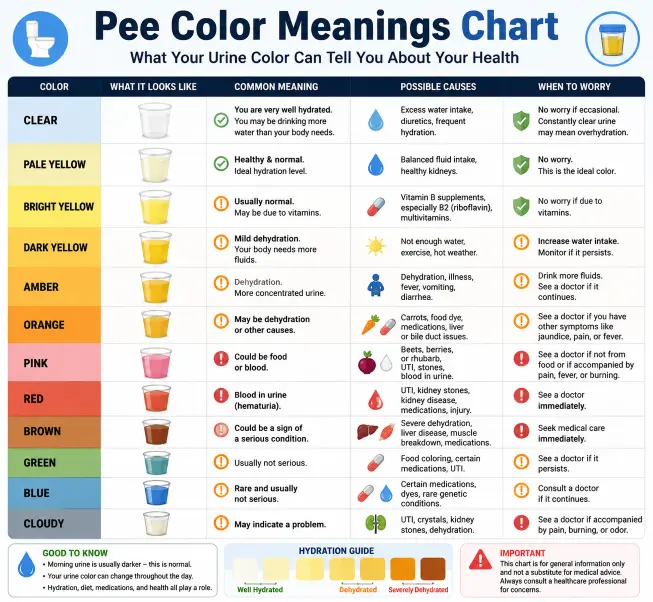
Pee Colors Meaning Chart
| Pee Color | Common Meaning | Usually Serious? |
|---|---|---|
| Clear | Very hydrated | Usually No |
| Pale Yellow | Healthy hydration | No |
| Bright Yellow | Vitamins or concentrated urine | Usually No |
| Dark Yellow | Mild dehydration | Usually No |
| Amber | Dehydration | Sometimes |
| Orange | Dehydration, medications, liver issues | Sometimes |
| Pink | Food or blood | Possibly |
| Red | Blood, food, medications | Yes, if unexplained |
| Brown | Severe dehydration, liver disease, muscle injury | Yes |
| Green | Food coloring, medication, infection | Sometimes |
| Blue | Rare medications or genetic conditions | Sometimes |
| Cloudy | Infection or crystals | Possibly |
Clear Urine Meaning
Clear urine often means you’re drinking plenty of fluids.
It may also occur if you:
- Drink large amounts of water
- Consume lots of tea or coffee
- Take diuretics
- Exercise with frequent hydration
Although clear urine is generally harmless, drinking excessive water over long periods may lower electrolyte levels. Most healthy adults don’t need their urine to be completely colorless all day.
Pale Yellow Pee Meaning
Pale yellow is generally considered the healthiest urine color.
It usually indicates:
- Good hydration
- Normal kidney function
- Balanced fluid intake
Many healthcare professionals consider light yellow urine the ideal color.
Bright Yellow Urine Meaning
Bright or neon yellow urine commonly appears after taking:
- Vitamin B2 (Riboflavin)
- Vitamin B complex supplements
- Multivitamins
This vibrant color may look unusual, but it is typically harmless. Excess water-soluble vitamins leave the body through urine.
Dark Yellow Pee Meaning
Dark yellow urine usually means your body needs more fluids.
Common causes include:
- Hot weather
- Heavy exercise
- Sweating
- Not drinking enough water
Increasing water intake often returns urine to its normal pale yellow color.
Amber Urine Meaning
Amber-colored urine is darker than normal and often indicates more significant dehydration.
Possible reasons include:
- Illness with fever
- Vomiting
- Diarrhea
- Intense physical activity
- Long periods without drinking water
Persistent amber urine despite drinking fluids may require medical evaluation.
Orange Pee Meaning
Orange urine has several possible explanations.
Common Causes
- Dehydration
- Carrots
- Foods containing orange dye
Medication Causes
Certain medications can turn urine orange.
Medical Causes
Sometimes orange urine may indicate:
- Liver problems
- Bile duct disorders
- Increased bilirubin levels
If orange urine occurs alongside yellow skin, pale stools, abdominal pain, or fever, seek medical care promptly.
Pink Pee Meaning
Pink urine is not always caused by blood.
It may result from eating:
- Beets
- Blackberries
- Rhubarb
However, pink urine can also indicate:
- Urinary tract infection
- Kidney stones
- Bladder irritation
- Blood in the urine (hematuria)
If you cannot explain the color by food or medication, it’s best to contact a healthcare professional.
Red Pee Meaning
Red urine often alarms people because it may contain blood.
Possible causes include:
- Kidney stones
- Urinary tract infections
- Kidney disease
- Enlarged prostate
- Bladder conditions
- Certain medications
- Intense endurance exercise
Although some foods can temporarily produce a reddish color, unexplained red urine should never be ignored.
Brown Pee Meaning
Brown urine may develop after:
- Severe dehydration
- Certain medications
- Eating large amounts of fava beans or aloe products
It may also indicate:
- Liver disease
- Muscle breakdown (rhabdomyolysis)
- Kidney disorders
Dark brown urine with muscle pain, weakness, or fever requires immediate medical attention.
Green Pee Meaning
Green urine is uncommon but usually has an identifiable cause.
Possible reasons include:
- Artificial food coloring
- Certain antibiotics
- Medical dyes used during procedures
- Rare bacterial urinary tract infections
Most cases are temporary and resolve once the underlying cause disappears.
Blue Pee Meaning
Blue urine is rare.
Possible causes include:
- Certain medications
- Artificial dyes
- Rare inherited metabolic disorders
Because blue urine is unusual, it’s worth discussing with a healthcare provider, especially if it persists.
Cloudy Urine Meaning
Cloudy urine may occur because of:
- Urinary tract infections
- Kidney stones
- Phosphate crystals
- Dehydration
If cloudy urine is accompanied by burning, pain, fever, or a strong odor, medical evaluation is recommended.
What Else Can Affect Pee Colors?
Foods
Several foods naturally change urine color.
Examples include:
- Beets
- Asparagus
- Blackberries
- Food dyes
- Carrots
Most food-related color changes disappear within a day or two.
Vitamins
High doses of vitamins, especially B vitamins, commonly produce bright yellow urine.
Vitamin C may also slightly change urine appearance in some people.
Medications
Some prescription and over-the-counter medications can alter urine color.
Always read medication information if you notice a new color after starting treatment.
Pee Colors and Hydration
One of the simplest ways to judge hydration is by checking urine color.
Well Hydrated
- Pale yellow
- Light straw color
Mildly Dehydrated
- Dark yellow
Significantly Dehydrated
- Amber
- Honey-colored
Keep in mind that urine color is only one indicator. Thirst, weather, exercise, and medical conditions also affect hydration needs.

Can Pee Colors Change Throughout the Day?
Yes.
Morning urine is usually darker because you drink less while sleeping.
As you consume water during the day, urine typically becomes lighter.
Temporary changes are completely normal.
Pee Colors During Pregnancy
Pregnancy itself does not usually change urine color.
However, pregnancy can increase the risk of:
- Dehydration
- Urinary tract infections
- Vitamin-related color changes
Pregnant individuals who notice red, brown, cloudy, or unusually dark urine should contact their healthcare provider.
When Should You See a Doctor?
Occasional urine color changes are common.
Seek medical advice if you notice:
- Blood in urine
- Red urine without eating red-colored foods
- Brown urine that persists
- Severe dehydration
- Fever with unusual urine color
- Pain during urination
- Back or side pain
- Persistent cloudy urine
- Yellow skin along with orange or dark urine
These symptoms may indicate conditions that require prompt evaluation.
Common Myths About Pee Colors
Myth: Clear urine is always healthiest.
Not necessarily. Constantly clear urine may simply mean you’re drinking more water than your body needs.
Myth: Dark urine always means kidney disease.
Most often, dark urine is simply caused by dehydration.
Myth: Bright yellow urine is dangerous.
Bright yellow urine after taking vitamin supplements is usually harmless.
Myth: Every red urine color means blood.
Certain foods, such as beets, can temporarily create a red or pink appearance.

Practical Tips for Healthy Urine Color
- Drink water regularly throughout the day.
- Increase fluids during hot weather and exercise.
- Eat a balanced diet.
- Follow medication instructions carefully.
- Pay attention to persistent changes.
- Don’t ignore blood in urine.
- See a healthcare provider if unusual colors continue or are accompanied by other symptoms.
Frequently Asked Questions
What is the healthiest pee colors?
Light yellow or pale straw-colored urine is generally considered a sign of good hydration.
Is bright yellow pee normal?
Yes. Bright yellow urine is commonly caused by vitamin B supplements and is usually harmless.
Why is my pee dark even after drinking water?
Persistent dark urine may be related to dehydration, medications, liver conditions, or kidney problems and should be evaluated if it doesn’t improve.
Can dehydration cause orange urine?
Yes. Moderate to severe dehydration can make urine appear dark yellow or orange.
Does food really change urine color?
Yes. Foods like beets, blackberries, carrots, and products with artificial dyes can temporarily change urine color.
Is red urine always blood?
No. Some foods and medications can cause red urine, but unexplained red urine should always be checked by a healthcare professional.
Why is my urine cloudy?
Cloudy urine may result from crystals, dehydration, or a urinary tract infection.
Can vitamins make urine glow yellow?
Yes. Riboflavin (vitamin B2) commonly causes bright neon-yellow urine.
Does morning urine have a different color?
Yes. Morning urine is usually darker because it is more concentrated after several hours without drinking fluids.
When should I worry about urine color?
You should seek medical care if unusual urine color lasts more than a day or two without an obvious cause, or if it is accompanied by pain, fever, blood, vomiting, or jaundice.
Final Thoughts
Understanding pee color meaning is a simple way to stay aware of your hydration and overall health. Most changes in urine color are temporary and caused by everyday factors like fluid intake, food, vitamins, or medications. However, persistent or unexplained colors—especially red, brown, or cloudy urine with other symptoms—should never be ignored.
Checking your urine color occasionally can help you recognize normal patterns and notice changes early. While it is not a diagnosis on its own, it can provide useful clues that encourage healthy habits or prompt timely medical advice when needed.

Emma Wilson is a dedicated comparison writer and product researcher at ColorMystiic.com. She specializes in creating unbiased product comparisons, detailed reviews, and helpful buying guides. Her goal is to help readers make smarter purchasing decisions with confidence.