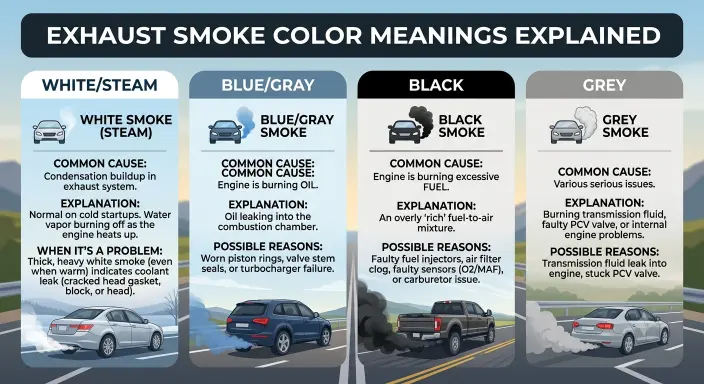
A vehicle’s exhaust does more than release gases—it can also provide important clues about the health of the engine. Different exhaust smoke colors often point to different mechanical conditions, ranging from harmless condensation to serious engine damage.
Many drivers search for exhaust smoke color meanings after noticing unusual smoke from their tailpipe. While smoke color alone cannot diagnose every problem, it is one of the easiest warning signs to recognize before a small issue becomes an expensive repair.
This guide explains what each exhaust smoke color usually means, why it appears, how weather and driving conditions affect it, and when you should seek professional inspection.
Quick Answer: White smoke often suggests condensation or coolant entering the engine, blue smoke usually indicates burning oil, black smoke commonly means excessive fuel is being burned, and gray smoke can point to several mechanical issues that require further diagnosis.
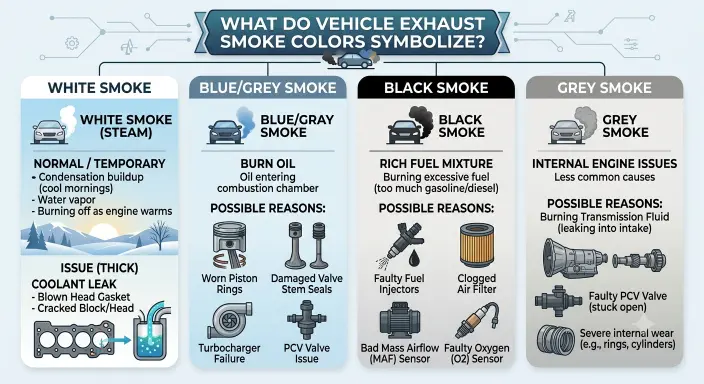
What Do Exhaust Smoke Colors Symbolize?
Unlike decorative or symbolic colors, exhaust smoke colors are practical warning signals produced by combustion inside an engine. Each color reflects changes in fuel, oil, coolant, or air entering the combustion process.
Although two vehicles may produce similar-looking smoke, the underlying causes can differ. Smoke color should always be considered alongside other symptoms such as:
- Engine temperature
- Fuel economy
- Strange noises
- Warning lights
- Unusual smells
- Reduced performance
Understanding these visual clues can help drivers react sooner and potentially avoid major repairs.
Why Exhaust Smoke Changes Color
A healthy gasoline engine normally produces little or no visible smoke once it reaches operating temperature.
Smoke becomes visible when unwanted substances burn inside the engine or when combustion becomes inefficient.
Common factors include:
- Engine oil entering combustion chambers
- Coolant leaks
- Rich fuel mixtures
- Poor combustion
- Moisture in cold weather
- Worn engine components
- Faulty fuel injection systems
The smoke’s color depends on which substance is burning.
White Exhaust Smoke Meaning
White smoke is one of the most misunderstood exhaust colors because not all white smoke indicates a serious problem.
Thin White Smoke
Light white vapor on cold mornings is usually harmless.
It forms because water vapor naturally exists in exhaust gases. When the outside air is cold, the vapor condenses into a visible cloud that disappears quickly.
This is completely normal.
Common causes
- Cold weather
- Morning startup
- High humidity
- Condensation inside the exhaust system
If the smoke disappears after the engine warms up, there is generally no cause for concern.
Thick White Smoke
Persistent, dense white smoke often indicates coolant entering the combustion chamber.
This can happen because of:
- Blown head gasket
- Cracked engine block
- Damaged cylinder head
- Failed intake gasket (on some engines)
When coolant burns, the exhaust may have a slightly sweet smell.
Warning signs
- Engine overheating
- Coolant level dropping
- Milky engine oil
- Rough engine operation
- Poor acceleration
Driving with these symptoms can lead to severe engine damage.
Blue Exhaust Smoke Meaning
Blue smoke almost always indicates that engine oil is burning.
Oil should remain inside the engine’s lubrication system. When it enters the combustion chamber, it burns and produces blue or bluish-gray smoke.
Common Causes
Worn piston rings
Damaged piston rings allow oil to pass into the combustion chamber.
Worn valve seals
Old valve stem seals often leak oil, especially after the vehicle has been parked overnight.
Turbocharger problems
Turbocharged engines may produce blue smoke if turbo seals begin leaking oil.
PCV system failure
A blocked or faulty Positive Crankcase Ventilation (PCV) valve can increase oil consumption.
Other Signs of Burning Oil
- Frequent oil top-ups
- Burning oil smell
- Reduced engine performance
- Oily spark plugs
- Increased emissions
Ignoring blue smoke may shorten engine life significantly.
Black Exhaust Smoke Meaning
Black smoke usually means the engine is burning more fuel than necessary.
This is called a rich fuel mixture.
Too much fuel and not enough air prevent complete combustion, creating dark soot.
Common Causes
Dirty air filter
Restricted airflow reduces the oxygen available for combustion.
Faulty fuel injectors
Injectors may spray excessive fuel into the engine.
Malfunctioning oxygen sensor
Incorrect sensor readings can cause the engine computer to inject too much fuel.
Fuel pressure problems
High fuel pressure may overwhelm the combustion process.
Engine tuning issues
Improper tuning can also create black smoke.
Symptoms
- Poor fuel economy
- Strong gasoline smell
- Loss of power
- Soot around tailpipe
- Failed emissions testing
Diesel engines may briefly produce black smoke under heavy acceleration, but excessive black smoke is still a warning sign.
Gray Exhaust Smoke Meaning
Gray smoke is less specific than white, blue, or black smoke.
It may indicate several mechanical conditions.
Possible causes include:
- Oil burning
- Transmission fluid entering the engine (certain automatic vehicles)
- Turbocharger failure
- PCV valve issues
- Internal engine wear
Professional diagnosis is often needed because gray smoke has multiple possible sources.
Smoke Color Comparison
| Smoke Color | Most Common Meaning | Typical Severity |
|---|---|---|
| White (thin) | Condensation | Low |
| White (thick) | Coolant burning | High |
| Blue | Oil burning | Medium to High |
| Black | Too much fuel | Medium |
| Gray | Mixed mechanical issues | Medium to High |
Why Smoke Color Can Change
Smoke color does not always remain the same.
For example:
- A cold engine may produce harmless white vapor.
- Oil leaks may worsen over time, changing smoke from occasional blue to continuous blue.
- Fuel system faults can produce intermittent black smoke.
- Engine repairs may temporarily create small amounts of smoke as residual fluids burn away.
Observing when smoke appears can help identify the problem.
How Driving Conditions Affect Exhaust Smoke
Context matters.
Cold Weather
Cold temperatures create more visible water vapor.
Heavy Acceleration
Diesel vehicles may temporarily emit darker smoke during hard acceleration.
Long Idle Periods
Oil may seep past worn valve seals while the engine idles.
Towing Heavy Loads
Higher engine loads increase combustion temperatures and may reveal hidden mechanical issues.
Why Lighting Can Make Smoke Look Different
Smoke appearance changes depending on lighting.
For example:
- Morning sunlight may make smoke appear bluer.
- Evening shadows may make gray smoke appear darker.
- Bright daylight can make thin white vapor almost invisible.
For this reason, mechanics often inspect exhaust under consistent lighting conditions.
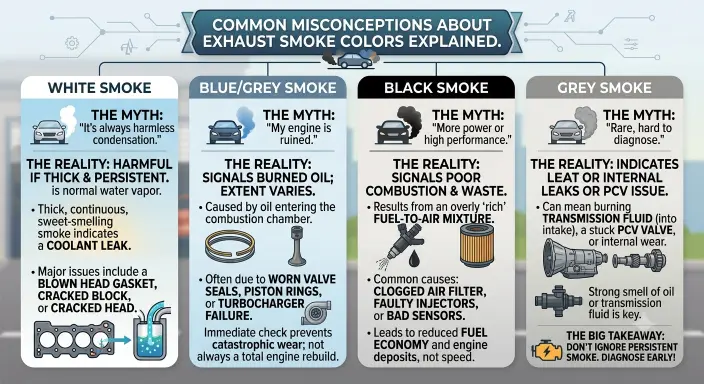
Common Misconceptions About Exhaust Smoke Colors
“All white smoke means a blown head gasket.”
False.
Light white vapor during cold starts is usually normal condensation.
“Blue smoke always means the engine is ruined.”
Not necessarily.
Minor oil leaks from valve seals or a faulty PCV valve can sometimes be repaired before major damage occurs.
“Black smoke only happens in diesel engines.”
False.
Gasoline engines can also produce black smoke if they run too rich.
“Smoke color alone identifies the exact problem.”
Incorrect.
Smoke color provides clues but should be combined with diagnostic testing.
Practical Uses of Exhaust Smoke Observation
Professional mechanics often consider smoke color alongside:
- Engine scan tool data
- Compression testing
- Cooling system pressure testing
- Oil analysis
- Fuel pressure measurements
- Emissions testing
Drivers can also use smoke color as an early warning sign to schedule maintenance before breakdowns occur.
When Should You Be Concerned?
Seek mechanical inspection if you notice:
- Continuous blue smoke
- Thick white smoke after warm-up
- Heavy black smoke
- Gray smoke with power loss
- Smoke combined with overheating
- Smoke accompanied by warning lights
- Sudden increase in oil or coolant consumption
Prompt diagnosis can prevent more expensive engine repairs.
Tips for Preventing Exhaust Smoke Problems
Regular maintenance reduces the likelihood of smoke-related issues.
Good practices include:
- Change engine oil at recommended intervals.
- Replace dirty air filters.
- Monitor coolant levels.
- Repair leaks promptly.
- Use the correct engine oil.
- Replace worn spark plugs.
- Follow manufacturer maintenance schedules.
- Address warning lights early.
Preventive care is usually far less expensive than major engine repairs.
Frequently Asked Questions
What color are exhaust smoke is the most serious?
Persistent thick white smoke and continuous blue smoke often indicate significant engine problems that should be inspected as soon as possible.
Is white exhaust smoke normal?
Yes. Thin white vapor during cold weather is usually normal condensation. Thick white smoke that continues after the engine warms up may indicate coolant entering the engine.
Why is my exhaust smoke blue only when starting?
This often suggests worn valve stem seals that allow a small amount of oil to enter the combustion chamber while the engine is parked.
Can bad fuel cause black smoke?
Yes. Poor-quality fuel, faulty injectors, or an overly rich air-fuel mixture can all contribute to black exhaust smoke.
Does black smoke reduce fuel economy?
Usually. Black smoke indicates fuel is not burning efficiently, meaning more fuel is consumed than necessary.
Is gray smoke the same as blue smoke?
Not always. Gray smoke can result from several issues, including oil burning, transmission fluid leaks, or turbocharger problems.
Can weather affect exhaust smoke?
Yes. Cold temperatures make normal water vapor more visible, which is why many vehicles produce white vapor during winter mornings.
Should I keep driving if my exhaust is smoking?
It depends on the cause. Thin white vapor is generally harmless, but persistent blue, black, gray, or thick white smoke should be inspected promptly to avoid further damage.
Can an engine run normally while producing smoke?
Yes. Some mechanical problems cause smoke before noticeable performance issues appear, making smoke an important early warning sign.
How can I identify the exact cause of exhaust smoke?
Smoke color provides valuable clues, but accurate diagnosis usually requires a mechanic to inspect the engine, check diagnostic codes, and perform additional tests.
Final Thoughts
Understanding exhaust smoke color meanings can help you recognize early signs of engine trouble and make informed maintenance decisions. While smoke color is not a complete diagnosis, it offers valuable insight into what may be happening inside your vehicle.
Paying attention to when the smoke appears, how long it lasts, and what other symptoms accompany it can help prevent minor issues from becoming costly repairs.
Regular maintenance, timely inspections, and addressing warning signs early are the best ways to keep your engine running efficiently and safely for years to come.

Emma Wilson is a dedicated comparison writer and product researcher at ColorMystiic.com. She specializes in creating unbiased product comparisons, detailed reviews, and helpful buying guides. Her goal is to help readers make smarter purchasing decisions with confidence.