Positive Meanings
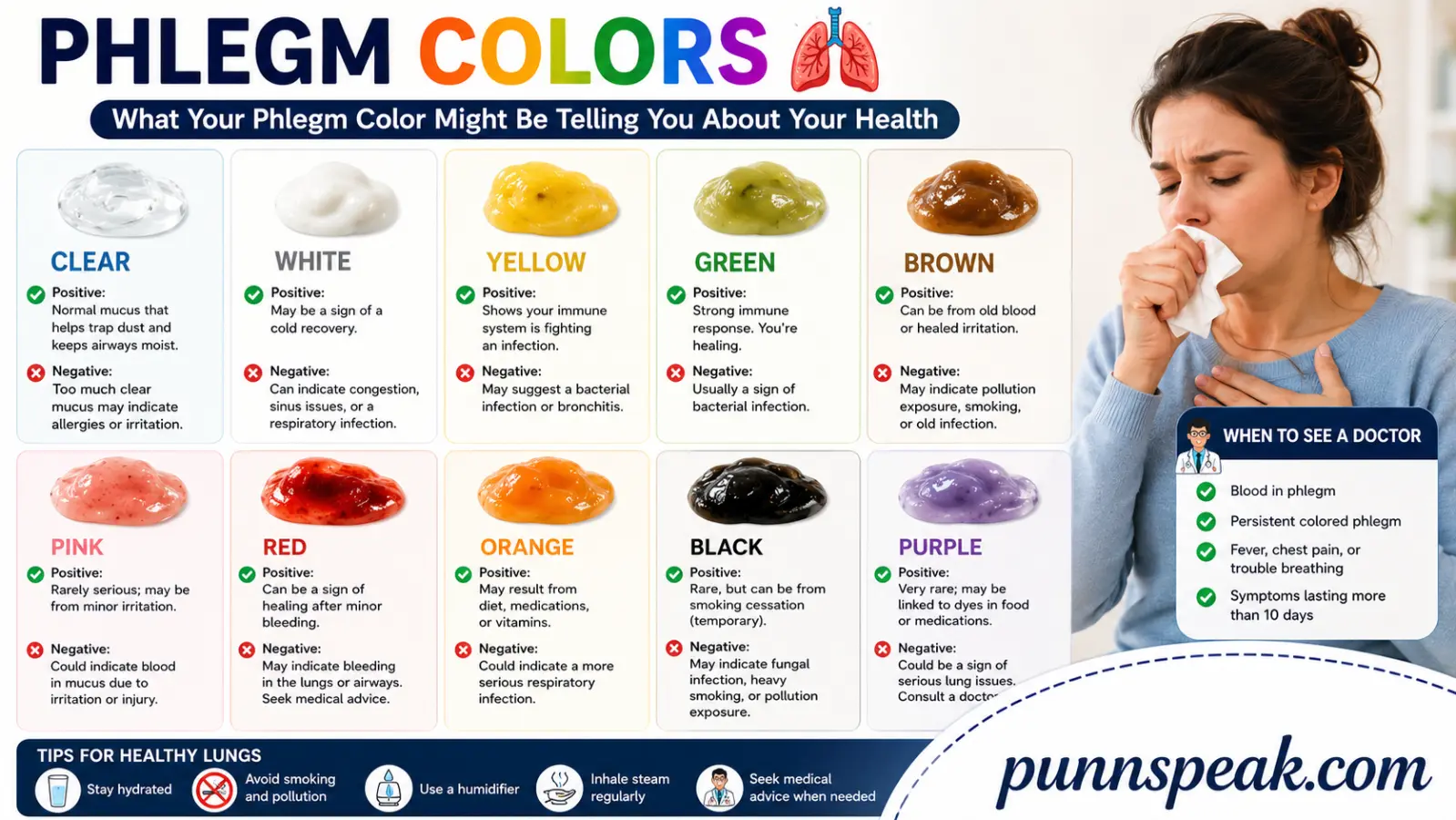
While phlegm colors are primarily health indicators ,phlegm color meanings some colors can represent positive signs related to the body’s natural defense mechanisms.
Clear Phlegm
- Purity
- Balance
- Normal respiratory function
- Healthy hydration
White Phlegm
- Recovery from irritation
- Temporary congestion awareness
- Early healing response phlegm color meanings
Yellow Phlegm
- Active immune response
- Body fighting infection
- Increased health awareness
Green Phlegm
- Strong immune activity
- Healing and recovery process
- Natural defense mechanisms
These colors often indicate that the respiratory system is actively protecting the body from harmful particles and microorganisms.
Negative Meanings
Some phlegm colors may signal irritation, infection, environmental exposure, or other health concerns.
Brown Phlegm
- Exposure to dust or pollution
- Old blood residue
- Smoke-related irritation
Red or Pink Phlegm
- Blood in mucus
- Airway irritation
- Possible inflammation
Black Phlegm
- Heavy pollution exposure
- Smoking-related irritation
- Certain fungal infections
Real-World Examples
- Construction workers may occasionally notice brown phlegm from dust exposure.
- Smokers may develop darker mucus due to inhaled particles.
- Individuals with respiratory infections often notice yellow or green mucus during recovery.
Meanings of Phlegm Colors
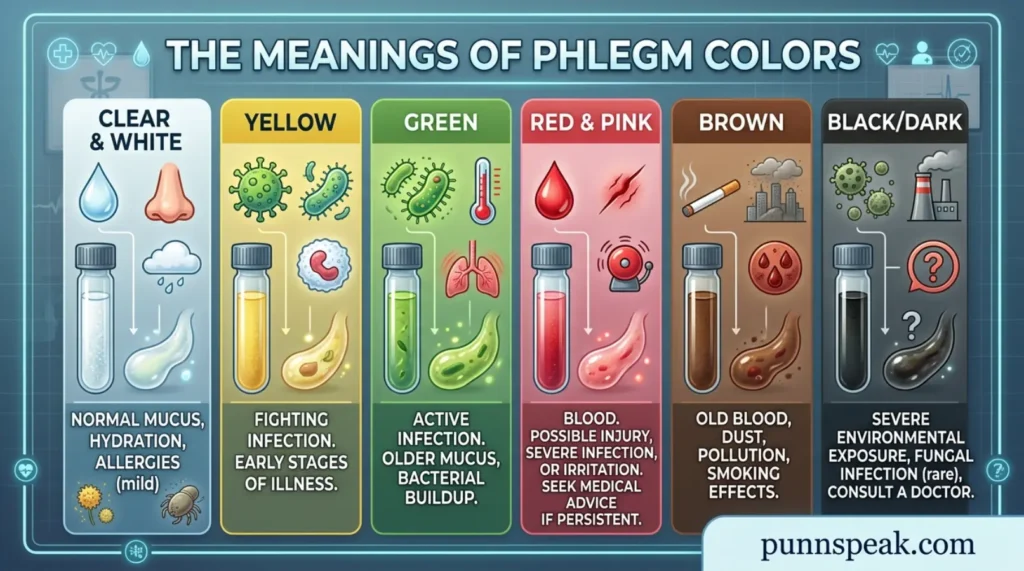
The meaning of phlegm colors depends heavily on context, duration, symptoms, environmental conditions, and overall health status.
A temporary color change may be harmless, while persistent changes accompanied by fever, chest pain, breathing difficulties, or blood should be evaluated by a healthcare professional.
Feng Shui
Although phlegm colors are not traditional Feng Shui colors, their symbolic counterparts can be interpreted through color associations.
Associated Elements
- Clear/White: Metal
- Green: Wood
- Yellow: Earth
- Red: Fire
- Black: Water
Energy Symbolism
- White promotes clarity.
- Green symbolizes renewal.
- Yellow supports positivity.
- Red encourages vitality.
Best Rooms
- White: Home office
- Green: Living room
- Yellow: Kitchen
- Blue: Bedroom
Recommended Color Combinations
- Green and white
- Yellow and cream
- Blue and gray
Home Decorating Tips
Use balanced color palettes inspired by nature to create a healthy and calming environment.
Marketing
Color symbolism influences how health and wellness brands communicate trust and cleanliness.
Branding Psychology
- White symbolizes purity and cleanliness.
- Blue communicates trust and professionalism.
- Green suggests health and wellness.
Consumer Perception
Consumers often associate clean colors with safety and medical credibility.
Trust Signals
Healthcare brands commonly use blue, green, and white because these colors evoke reliability and care.
Product Packaging
- White packaging suggests cleanliness.
- Green implies natural ingredients.
- Blue reinforces trust.
Advertising Applications
Medical and wellness advertisements frequently use soft colors to create feelings of comfort and reassurance.
Examples
Brands such as healthcare providers, pharmacies, and wellness companies commonly use blue, green, and white color schemes.
Design
Interior Design
Colors associated with cleanliness and health are frequently used in clinics, wellness centers, and healthcare environments.
Graphic Design
Health-related infographics often use green, blue, and white to communicate information clearly.
Web Design
Medical websites frequently use blue and white because they improve readability and trust.
User Experience
Clean layouts and calming colors help users feel more comfortable when accessing health information.
Minimalist Aesthetics
White space and neutral palettes support clarity and simplicity.
Fashion
Clothing Symbolism
- White suggests cleanliness and simplicity.
- Green reflects wellness and balance.
- Blue conveys trustworthiness.
Seasonal Use
- Light colors dominate spring and summer.
- Richer colors become more common in fall and winter.
Styling Effects
Health-inspired colors can create a fresh and approachable appearance.
Personality Impressions
People wearing blue may appear dependable, while green often conveys calmness and balance.
Advantages
- Timeless appeal
- Versatility
- Positive first impressions
Disadvantages
- Some colors may appear overly clinical if overused.
Practical Examples
White and blue outfits are frequently chosen in professional healthcare settings because they communicate cleanliness and competence.
Color Associations Are Not Universal
Western Cultures
White often symbolizes cleanliness, purity, and healthcare. Green is associated with wellness and nature.
Eastern Cultures
White may symbolize mourning in some regions, while green often represents growth and prosperity.
Religious Traditions
White commonly symbolizes spiritual purity and holiness across multiple faith traditions.
Historical Interpretations
Historically, color meanings evolved according to cultural customs, available dyes, and social traditions.
Modern Global Interpretations
Today, healthcare organizations worldwide frequently use blue, green, and white because they communicate trust, safety, and professionalism.
What Phlegm Colors Say About Your Personality

Phlegm colors are health indicators, not personality indicators. However, people who prefer the symbolic colors associated with health and wellness may share certain traits.
Strengths
- Health conscious
- Organized
- Practical
- Responsible
- Caring
Weaknesses
- Overthinking
- Health-related anxiety
- Perfectionism
Social Behavior
Individuals drawn to wellness-related colors often value stability, cooperation, and trust.
Work Style
They may prefer structure, organization, and reliability.
Relationships
Trust, honesty, and consistency are often important values.
Emotional Tendencies
Many value security, health, and personal well-being.
Important Note: Color preferences do not determine personality and should be viewed as general tendencies rather than scientific facts.
Frequently Asked Questions
What do phlegm colors mean?
Phlegm colors can provide clues about hydration, allergies, infections, environmental exposure, and respiratory health.
What does clear phlegm symbolize?
Clear phlegm typically indicates normal respiratory function and healthy hydration.
What does white phlegm mean?
White phlegm is often associated with congestion, inflammation, or mild respiratory irritation.
What does yellow phlegm mean?
Yellow phlegm commonly suggests that the immune system is responding to an infection.
What does green phlegm mean?
Green phlegm often appears when the body is actively fighting an infection.
What does brown phlegm mean?
Brown phlegm may result from dust, pollution, smoking, or old blood.
What does red phlegm mean?
Red or pink phlegm can indicate the presence of blood and should be monitored carefully.
What does black phlegm mean?
Black phlegm may occur due to smoke exposure, pollution, or certain medical conditions.
Are phlegm color meanings always accurate?
No. Phlegm color alone cannot diagnose a medical condition and should be considered alongside other symptoms.
When should I see a doctor about phlegm color?
Seek medical advice if unusual colors persist, worsen, or are accompanied by breathing difficulties, fever, chest pain, or blood.
Conclusion
Phlegm color meanings can offer useful insights into respiratory health and the body’s natural defense mechanisms. Clear phlegm generally reflects normal function, while white, yellow, and green may indicate congestion or infection responses. Brown, red, and black phlegm often warrant closer attention because they can be linked to environmental exposure or underlying health concerns. Although color symbolism can provide interesting psychological and cultural interpretations, phlegm colors should primarily be understood as health-related indicators rather than symbolic personality markers. Monitoring changes and consulting healthcare professionals when necessary can help support overall well-being.

Emma Wilson is a dedicated comparison writer and product researcher at ColorMystiic.com. She specializes in creating unbiased product comparisons, detailed reviews, and helpful buying guides. Her goal is to help readers make smarter purchasing decisions with confidence.