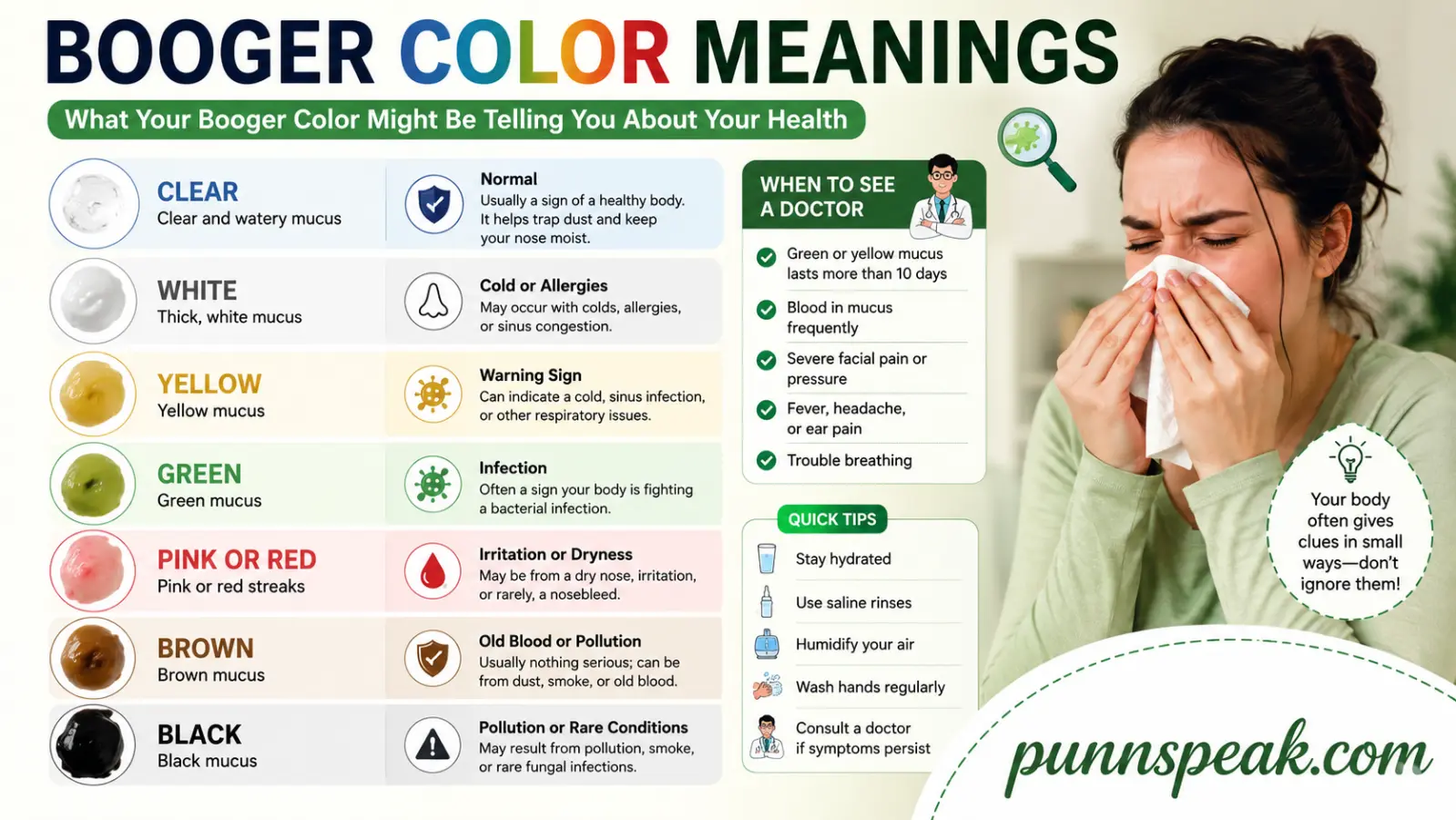
Booger color meanings can provide valuable clues about your overall health, environmental exposure, hydration levels, and how your immune system is functioning. While boogers are simply dried nasal mucus, their color often changes in response to allergies, infections, irritants, and other physical conditions. Understanding these color variations can help people recognize when symptoms are normal and when they may require medical attention.
Different booger colors, including clear, white, yellow, green, red, brown, black, and orange, each carry unique meanings. These colors are influenced by mucus composition, immune responses, blood presence, and environmental factors.
Quick Answer: Booger colors often reflect nasal health. Clear usually indicates normal mucus, white may suggest congestion, yellow and green often signal immune activity, red may indicate blood, while brown or black can result from environmental pollutants or other underlying conditions.
What Does the Color Booger Symbolize?
Unlike traditional colors used in psychology, design, or spirituality, booger colors symbolize physical health conditions and bodily responses. The color of nasal mucus can reveal information about hydration, inflammation, infections, environmental exposure, allergies, and healing processes.
In a health context, booger color symbolism commonly represents:
- Immune system activity.
- Respiratory health.
- Environmental exposure.
- Healing and recovery.
- Nasal irritation.
- Allergic responses.
- Infection progression.
- Overall wellness status.
Healthcare professionals often consider mucus color as one of many diagnostic clues when evaluating symptoms.
Psychological Characteristics of the Color Booger
Although booger colors are not psychological colors in the traditional sense, people often associate different mucus colors with emotional reactions and health perceptions.
Emotional Associations
- Clear mucus is associated with cleanliness and normal health.
- White mucus may create concern about congestion.
- Yellow mucus often suggests the body is actively fighting illness.
- Green mucus is commonly associated with infection and recovery.
- Red mucus may trigger concern because it indicates blood.
- Brown or black mucus can create anxiety due to associations with pollution or smoking.
Psychological Effects
- Changes in mucus color often increase health awareness.
- Unusual colors may encourage people to seek medical advice.
- Normal colors can provide reassurance.
- Dark colors may trigger caution and self-monitoring.
Positive Emotional Responses
- Relief when mucus returns to a clear appearance.
- Confidence during recovery.
- Awareness of healing progress.
- Improved attention to personal health.
Negative Emotional Responses
- Worry about illness.
- Fear of infection.
- Stress related to chronic symptoms.
- Concern over environmental exposure.
Impact on Mood and Behavior
- People may rest more when yellow or green mucus appears.
- Individuals often increase hydration and self-care measures.
- Persistent abnormal colors may encourage medical consultation.
Typical Reactions
- Monitoring symptoms.
- Improving hydration.
- Using nasal care products.
- Seeking healthcare guidance when necessary.
Spiritual Meaning of the Color Booger

Booger colors do not traditionally carry established spiritual symbolism. However, some holistic wellness traditions interpret bodily changes as messages about balance, healing, and self-care.
Common Symbolic Interpretations
- Healing: Yellow and green mucus may symbolize the body’s effort to restore balance.
- Transformation: Illness followed by recovery represents personal renewal.
- Purification: Mucus helps remove irritants and pathogens from the body.
- Protection: Nasal mucus acts as a protective barrier.
- Wisdom: Paying attention to bodily signals encourages self-awareness.
- New Beginnings: Recovery after illness can symbolize a fresh start.
- Power: The immune system demonstrates resilience and strength.
- Enlightenment: Increased awareness of health habits.
- Purity: Clear mucus is often associated with normal respiratory function.
- Eternity: Continuous healing processes reflect the body’s ongoing maintenance mechanisms.
These interpretations are symbolic rather than scientific and vary among spiritual traditions.
Positive and Negative Meanings of the Color Booger
Positive Meanings
Certain booger colors can indicate healthy bodily functions.
Protection
Mucus traps dust, bacteria, allergens, and pollutants before they reach the lungs.
Healing
Yellow and green mucus often reflect active immune responses.
Cleansing
The nasal system continuously removes harmful particles.
Awareness
Color changes encourage attention to health.
Adaptation
The body adjusts mucus production based on environmental conditions.
Recovery
Returning to clear mucus often signals improvement.
Resilience
Mucus production demonstrates the body’s defense mechanisms.
Balance
Healthy mucus supports respiratory wellness.
Negative Meanings
Certain colors may suggest underlying concerns.
Congestion
White mucus often appears when nasal passages become swollen.
Infection
Persistent yellow or green mucus may accompany infections.
Irritation
Red mucus can result from dryness or frequent nose blowing.
Environmental Exposure
Brown mucus may indicate exposure to dust or pollution.
Smoking Effects
Dark mucus can occur in smokers due to inhaled particles.
Chronic Inflammation
Long-lasting color changes may signal ongoing issues.
Dehydration
Thick mucus sometimes develops when fluid intake is insufficient.
Medical Concerns
Black mucus may occasionally require medical evaluation.
Meanings of the Color Booger
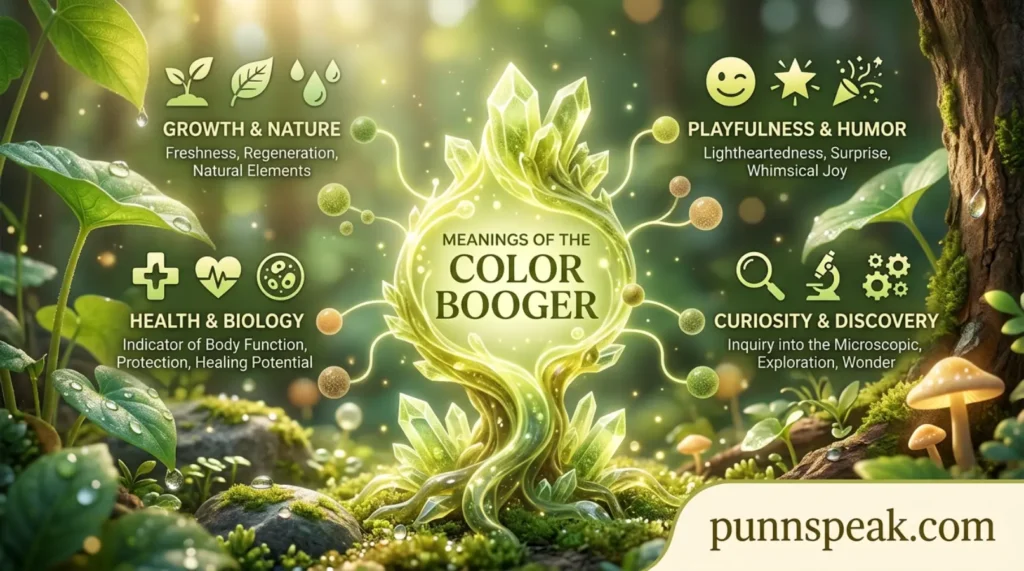
Booger color meanings vary depending on health conditions, environmental exposure, hydration status, and immune system activity.
Clear Boogers
Clear boogers are generally considered normal and healthy. They indicate proper hydration and healthy mucus production.
White Boogers
White mucus often develops when nasal tissues become swollen and mucus flow slows, commonly during colds or congestion.
Yellow Boogers
Yellow mucus frequently appears when the immune system is actively responding to infection or inflammation.
Green Boogers
Green mucus may occur when immune cells accumulate in nasal secretions during illness.
Red or Pink Boogers
These colors usually result from small amounts of blood caused by dryness, irritation, or nose blowing.
Brown Boogers
Brown mucus can occur after inhaling dust, dirt, smoke, or environmental pollutants.
Black Boogers
Black mucus may result from heavy pollution exposure, smoking, or certain occupational environments and should be evaluated if persistent.
Orange Boogers
Orange mucus may occur when blood mixes with mucus or due to environmental factors.
Feng Shui
Booger colors are not traditional Feng Shui colors. However, health-related symbolism connects them to overall wellness and balance.
- Associated Element: Earth and Water.
- Energy Symbolism: Cleansing and restoration.
- Best Rooms: Bathrooms, wellness spaces, and healthcare environments.
- Recommended Color Combinations: Soft blues, greens, whites, and earth tones.
- Home Decorating Tips: Maintain clean air, humidity control, and healthy indoor environments.
Marketing
Booger colors are generally not used directly in branding, but healthcare and wellness industries may reference mucus color guides.
Branding Psychology
Health brands use educational visuals to explain symptoms.
Consumer Perception
Clear and blue tones promote cleanliness and trust.
Trust Signals
Medical illustrations often use mucus color charts for education.
Product Packaging
Cold and allergy products frequently include symptom guides.
Advertising Applications
Healthcare campaigns use color-coded charts to simplify information.
Common healthcare brands emphasize clean, clinical colors rather than mucus colors themselves.
Design
Booger color meanings occasionally appear in educational and medical design.
Interior Design
Healthcare facilities use calming colors to reduce anxiety.
Graphic Design
Color-coded charts help communicate health information.
Web Design
Medical websites use visual guides to explain mucus colors.
User Experience
Simple color systems improve understanding and accessibility.
Minimalist Aesthetics
Clean layouts make health information easier to understand.
Fashion
Booger colors are not fashion colors, but analogous shades can influence clothing choices.
Clothing Symbolism
- Green may symbolize growth.
- Yellow may represent energy.
- White may suggest cleanliness.
Seasonal Use
- Green appears frequently in spring.
- White remains popular year-round.
- Brown is common during autumn.
Styling Effects
Natural tones create grounded and approachable appearances.
Personality Impressions
People may associate green with health-consciousness and white with simplicity.
Advantages
- Versatile neutral shades.
- Natural appearance.
- Easy coordination.
Disadvantages
- Certain shades may carry undesirable health-related associations.
Color Associations Are Not Universal
Interpretations of bodily colors vary among cultures and traditions.
Western Cultures
Western medicine commonly uses mucus color as an indicator of respiratory health. Color charts are widely used for educational purposes.
Eastern Cultures
Traditional health systems may consider mucus characteristics alongside broader assessments of bodily balance and energy.
Religious Traditions
Most religions do not assign specific spiritual meanings to booger colors, though cleanliness and health are often valued.
Historical Interpretations
Historically, bodily fluids were considered important indicators of health long before modern medical diagnostics existed.
Modern Global Interpretations
Today, healthcare providers worldwide recognize mucus color as one potential symptom among many used to assess health conditions.
What Booger Color Says About Your Personality
Booger color does not determine personality. Unlike favorite color psychology, mucus color reflects physical conditions rather than psychological traits.
However, people who closely monitor health indicators may often display:
Strengths
- Attentiveness.
- Self-awareness.
- Responsibility.
- Preventive health habits.
Weaknesses
- Health anxiety.
- Overanalyzing symptoms.
- Excessive self-monitoring.
Social Behavior
- Often proactive about wellness.
- Likely to share health information with family members.
Work Style
- Detail-oriented.
- Organized.
- Safety-conscious.
Relationships
- Caring and protective.
- Encouraging healthy habits.
Emotional Tendencies
- Health-conscious individuals may feel reassured by normal symptoms and concerned by unusual changes.
It is important to remember that color observations alone cannot accurately predict personality traits.
Frequently Asked Questions
What defines booger color?
Booger color is determined by mucus composition, immune activity, hydration levels, blood presence, and environmental exposure.
What does booger color symbolize?
Booger color primarily symbolizes respiratory health, immune responses, and environmental influences.
Why is booger color important?
It can provide useful clues about congestion, allergies, infections, irritation, and overall nasal health.
Is yellow mucus always a sign of infection?
Not always. Yellow mucus often reflects immune activity but does not automatically indicate a bacterial infection.
What emotions do booger colors represent?
People commonly associate clear mucus with health, green or yellow mucus with illness, and red mucus with concern or caution.
What does green mucus mean?
Green mucus often appears when immune cells accumulate during illness or inflammation.
Are clear boogers healthy?
Yes. Clear mucus is usually considered a sign of normal nasal function and hydration.
What causes red boogers?
Small amounts of blood from dryness, irritation, allergies, or frequent nose blowing are common causes.
What causes black boogers?
Black mucus may result from pollution, smoke exposure, occupational dust, or other environmental factors.
When should I see a doctor about booger color?
Medical evaluation may be appropriate if unusual colors persist, symptoms worsen, breathing difficulties develop, or significant bleeding occurs.
What colors pair well with health-related educational designs?
White, blue, green, and soft gray are commonly used because they communicate cleanliness, trust, and wellness.
What does paying attention to booger color say about a person?
It may indicate health awareness and attentiveness, though it does not reveal personality traits with certainty.
Conclusion
Booger color meanings offer valuable insights into respiratory health, immune activity, environmental exposure, and overall wellness. Clear mucus is generally considered normal, while white, yellow, green, red, brown, black, and orange variations can provide clues about congestion, irritation, healing, or potential health concerns. Although booger colors do not carry traditional color psychology symbolism, they remain useful indicators of how the body responds to internal and external factors. Understanding these meanings can help individuals make informed decisions about self-care and recognize when professional medical guidance may be beneficial.

Emma Wilson is a dedicated comparison writer and product researcher at ColorMystiic.com. She specializes in creating unbiased product comparisons, detailed reviews, and helpful buying guides. Her goal is to help readers make smarter purchasing decisions with confidence.