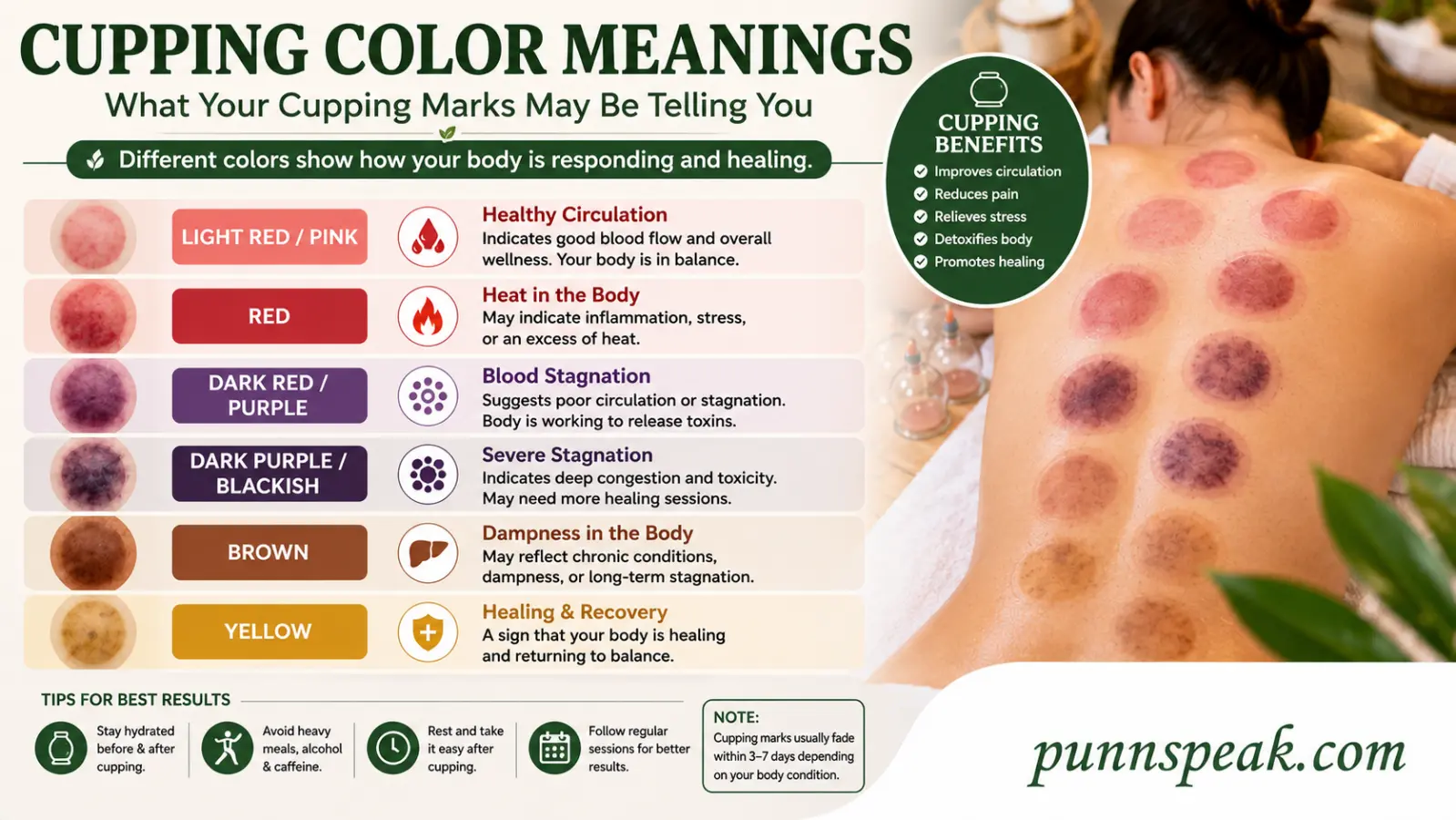
Cupping color meanings refer to the different marks and discolorations that can appear on the skin after cupping therapy, a traditional wellness practice used in many cultures. These colors can range from light pink and red to deep purple, blue, and brown. In traditional interpretations, the colors may symbolize circulation patterns, energy flow, healing responses, and physical recovery. Beyond wellness traditions, cupping colors also carry symbolic, psychological, and cultural meanings associated with transformation, balance, and restoration. Understanding cupping color meanings helps provide insight into both the visual healing process and the broader symbolism connected to health and well-being.
Quick Answer: Cupping color meanings are commonly associated with healing, circulation, recovery, energy flow, transformation, and wellness, with different shades symbolizing varying stages or intensities of the body’s response to cupping therapy.
What Does the Color Cupping Symbolize?
Cupping colors symbolize the body’s response to stimulation and recovery. Different shades are often interpreted as indicators of circulation, healing progress, and energetic balance.
Common symbolic meanings include:
- Healing and restoration
- Energy movement
- Physical recovery
- Transformation
- Resilience
- Balance
- Detoxification symbolism
- Renewal and regeneration
- Awareness of health
- Personal wellness
The symbolism may vary depending on the shade, intensity, and cultural perspective.
Psychological Characteristics of the Color Cupping
Color psychology suggests that the shades seen after cupping can evoke different emotional and psychological responses.
Emotional Associations
- Healing
- Recovery
- Awareness
- Reflection
- Strength
- Patience
Psychological Effects
- Encourages mindfulness about health
- Reinforces wellness-focused behavior
- Creates awareness of body recovery
- Symbolizes personal care and restoration
Positive Emotional Responses
- Hope
- Comfort
- Confidence in recovery
- Relaxation
- Renewal
- Empowerment
Negative Emotional Responses
- Concern about discoloration
- Anxiety about appearance
- Temporary discomfort
- Uncertainty regarding health
Impact on Mood and Behavior
Visible cupping marks often encourage individuals to focus on self-care, rest, hydration, and recovery.
How People Typically React
People commonly view cupping colors as signs of the body’s response to treatment, often associating them with healing and wellness practices.
Spiritual Meaning of the Color Cupping
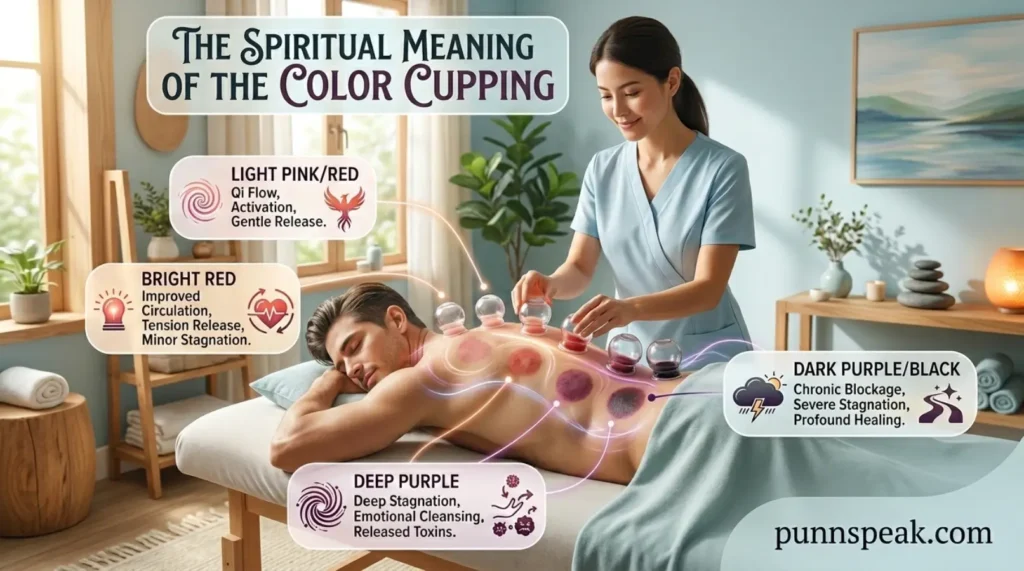
In many traditional wellness philosophies, cupping colors are connected to spiritual balance and energetic transformation.
Spiritual Symbolism
- Holiness: Healing is often viewed as a sacred process.
- Wisdom: Physical recovery can encourage self-awareness.
- Purity: Wellness practices symbolize cleansing and renewal.
- Transformation: Changing colors reflect progress and change.
- Healing: The primary spiritual association of cupping marks.
- Protection: Recovery symbolizes the body’s natural defenses.
- Power: Healing demonstrates inner strength.
- Enlightenment: Wellness journeys often increase awareness.
- New Beginnings: Recovery represents fresh starts.
- Eternity: Healing cycles reflect life’s continuous renewal.
Many spiritual traditions view wellness as a connection between body, mind, and spirit.
Positive and Negative Meanings of the Color Cupping
Positive Meanings
Healing
Cupping colors are widely associated with recovery and restoration.
Hope
The gradual fading of marks symbolizes improvement.
Balance
Many people associate cupping with restoring harmony in the body.
Renewal
The therapy often represents a fresh commitment to wellness.
Clarity
Individuals may become more aware of their health needs.
Freshness
Healing can create a renewed sense of vitality.
Harmony
Cupping is often linked to physical and emotional balance.
Strength
Recovery highlights resilience and endurance.
Negative Meanings
Vulnerability
Visible marks can make some individuals feel exposed.
Example: Feeling self-conscious about cupping marks in public.
Discomfort
Temporary soreness may occur after treatment.
Example: Mild tenderness in treated areas.
Isolation
Some people may avoid social situations due to visible marks.
Example: Choosing clothing that covers cupping marks.
Fear
Unfamiliar marks may create concern.
Example: First-time cupping clients feeling uncertain.
Emotional Distance
Dark marks may be misinterpreted by others.
Example: Questions from people unfamiliar with cupping therapy.
Imperfection
Temporary discoloration can affect appearance.
Example: Visible marks before a special event.
Overanalysis
Some individuals may worry excessively about color variations.
Example: Constantly monitoring the healing process.
Meanings of the Color Cupping
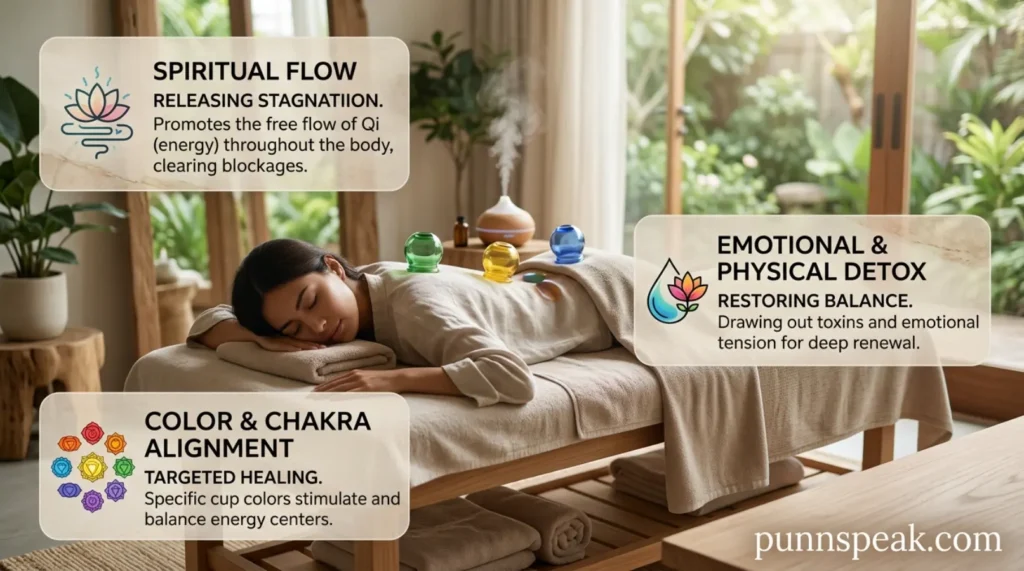
The meaning of cupping colors depends on cultural traditions, wellness philosophies, and personal interpretation.
Feng Shui
Associated Element
- Red: Fire
- Purple: Water
- Brown: Earth
- Pink: Fire and Earth balance
Energy Symbolism
Cupping colors are often associated with moving stagnant energy and restoring balance.
Best Rooms
- Meditation rooms
- Wellness spaces
- Bedrooms
- Relaxation areas
Recommended Color Combinations
- Red and gold
- Brown and beige
- Purple and silver
- Pink and white
Home Decorating Tips
Use calming earth tones and wellness-inspired colors to create restorative environments.
Marketing
Branding Psychology
Wellness brands often use colors similar to cupping marks to communicate healing and care.
Consumer Perception
Consumers associate these colors with recovery, therapy, and holistic wellness.
Trust Signals
Earth tones and soft reds often convey authenticity and comfort.
Product Packaging
Natural wellness products frequently use warm, healing-inspired color palettes.
Advertising Applications
Health and wellness campaigns often emphasize calm, restorative colors.
Examples include:
- Wellness clinics
- Massage therapy brands
- Holistic health companies
- Recovery and rehabilitation services
Design
Interior Design
Earth tones and muted reds create warm, comforting spaces.
Graphic Design
Healing-inspired colors help communicate care and trust.
Web Design
Wellness websites often use soft reds, browns, and neutrals.
User Experience
Gentle color palettes improve comfort and reduce visual stress.
Minimalist Aesthetics
Natural tones support clean and calming designs.
Fashion
Clothing Symbolism
- Red symbolizes vitality.
- Brown symbolizes stability.
- Purple symbolizes transformation.
- Pink symbolizes care and compassion.
Seasonal Use
- Spring: Soft pinks
- Summer: Warm reds
- Autumn: Browns and earth tones
- Winter: Deep purples
Styling Effects
These colors create warm, grounded, and approachable looks.
Personality Impressions
People may perceive wearers as thoughtful, balanced, and health-conscious.
Advantages
- Versatile
- Natural
- Timeless
Disadvantages
- Some shades may appear muted.
Practical Example: A soft brown outfit paired with neutral accessories can create a calming and balanced appearance.
Color Associations Are Not Universal
Western Cultures
In Western countries, cupping marks are often associated with wellness, sports recovery, and alternative therapy practices.
Eastern Cultures
Many Eastern traditions view cupping colors as indicators of energy movement, circulation, and healing progress.
Religious Traditions
Healing-related colors are often linked to restoration, faith, and personal renewal.
Historical Interpretations
Historically, cupping was used in various civilizations as part of traditional healing systems.
Modern Global Interpretations
Today, cupping colors are widely associated with wellness, self-care, recovery, and holistic health.
What Cupping Color Says About Your Personality
People who are drawn to cupping-related colors such as red, pink, purple, and brown may exhibit certain personality tendencies, although color preferences never determine personality with certainty.
Strengths
- Resilient
- Health-conscious
- Compassionate
- Patient
- Grounded
Weaknesses
- Sensitive
- Overly cautious
- Reserved
- Self-critical
Social Behavior
Often supportive, empathetic, and wellness-oriented.
Work Style
Typically disciplined, thoughtful, and focused on long-term improvement.
Relationships
Often value trust, healing, stability, and emotional support.
Emotional Tendencies
May prioritize personal growth, balance, and self-care.
Frequently Asked Questions
What defines cupping color meanings?
Cupping color meanings refer to the symbolism and interpretation of skin discoloration that appears after cupping therapy.
What do cupping colors symbolize?
They commonly symbolize healing, recovery, circulation, transformation, and wellness.
Why are cupping colors important?
They help people understand the body’s visible response to cupping treatment.
Are cupping colors warm or cool colors?
Cupping marks can include both warm and cool shades, depending on their appearance.
What emotions do cupping colors represent?
They often represent healing, hope, resilience, recovery, and awareness.
What is the spiritual meaning of cupping colors?
Spiritually, they symbolize transformation, balance, restoration, and personal growth.
What colors pair well with cupping-inspired shades?
Earth tones, neutrals, soft reds, pinks, browns, and purples complement them well.
What does liking cupping-inspired colors say about a person?
It may suggest a personality that values wellness, balance, resilience, and self-improvement.
Why do cupping marks vary in color?
The appearance varies depending on circulation, skin characteristics, and individual responses.
How long do cupping marks usually last?
Most cupping marks gradually fade over several days to a few weeks.
Conclusion
Cupping color meanings extend beyond simple skin discoloration. They symbolize healing, recovery, transformation, resilience, and wellness across many cultural and traditional perspectives. Whether interpreted through wellness practices, psychology, spirituality, or symbolism, the various shades seen after cupping represent the body’s natural response to care and restoration. Understanding these meanings can provide deeper appreciation for the connection between physical healing, personal growth, and holistic well-being.
Emma Wilson is a dedicated comparison writer and product researcher at ColorMystiic.com. She specializes in creating unbiased product comparisons, detailed reviews, and helpful buying guides. Her goal is to help readers make smarter purchasing decisions with confidence.