A mood ring is more than just a colorful piece of jewelry—it is a fascinating mix of science, symbolism, and human curiosity. For decades, people have searched for mood ring color meanings to understand what different shades might reveal about emotions, personality, and inner feelings. From calming blue tones to energetic red shades, each color has developed its own symbolic interpretation.
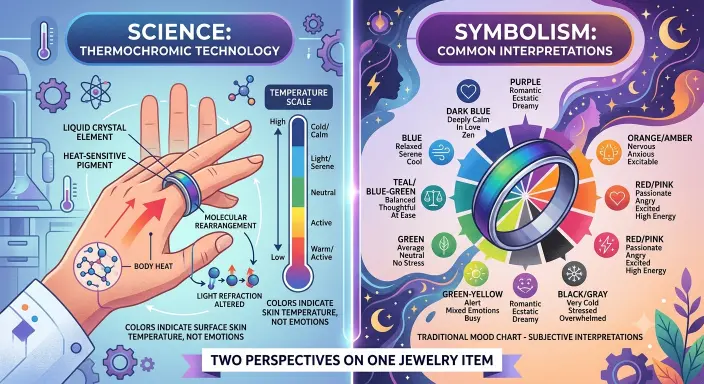
The science behind mood rings is simple: they change color because of temperature-sensitive liquid crystals that react to changes in body heat. However, the meanings connected to these colors come from color psychology, cultural traditions, and personal beliefs rather than direct emotional detection.
This difference between fact and symbolism makes mood rings so interesting. While a mood ring cannot truly read your feelings, its colors can inspire self-reflection and conversations about emotions. Color meanings also change across cultures, experiences, and situations, which is why the same shade may represent different ideas for different people.
In this guide, we will explore Mood Ring Color Meanings: Science vs Symbolism, explaining how mood rings work, what each color traditionally represents, and how psychology, history, and culture influence the way we understand colors.
Quick Answer: Mood ring colors are created by temperature changes, not by directly measuring emotions. Their meanings, such as blue for calmness, green for balance, and red for energy, are symbolic interpretations based on color psychology and cultural associations.
What Are Mood Rings and How Do They Work?
A mood ring is a piece of jewelry containing a temperature-sensitive element called a thermochromic liquid crystal. This material changes its appearance when exposed to different temperatures.
The color change happens because temperature affects the way light reflects through the liquid crystals. As the crystals shift their structure, they display different colors across the visible spectrum.
A warmer finger temperature may produce colors like blue, green, or purple, while cooler temperatures can create darker shades such as black or brown.
The idea that mood rings reveal emotions comes from the connection between feelings and physical reactions. When people experience emotions, their bodies can respond in noticeable ways:
- Stress may cause changes in blood circulation.
- Excitement can increase body temperature.
- Relaxation may create steady warmth.
- Anxiety can sometimes make hands feel colder.
However, the ring does not detect happiness, anger, love, or sadness directly. The meanings attached to each color are symbolic interpretations rather than scientific measurements of emotions.
Understanding Mood Rings Color Meanings
Mood rings became especially popular in the 1970s and remain a symbol of self-expression, curiosity, and emotional awareness. Their appeal comes from combining science, psychology, and symbolism.
For example:
- Warm colors are often linked with energy and strong emotions.
- Cool colors are usually associated with calmness and stability.
- Dark colors may represent mystery, seriousness, or low energy.
The meaning of a mood ring color depends on several factors:
- The person wearing it
- The surrounding temperature
- Lighting conditions
- Cultural background
- Personal associations with colors
A purple mood ring may feel creative and exciting to one person, while another person may connect purple with spirituality or luxury.
The Psychology Behind Mood Ring Colors
Color psychology studies how colors influence human perception, emotions, and behavior. While some emotional reactions to colors are widely observed, researchers recognize that personal experiences and cultural influences also play major roles.
Mood ring colors are interesting because they combine physical changes with emotional interpretation. When someone sees a certain color on their ring, their brain may automatically connect it with a feeling or memory.
Blue: Calmness and Relaxation
Blue is one of the most commonly recognized mood ring colors. It is often associated with:
- Peace
- Relaxation
- Stability
- Trust
- Emotional balance
A blue mood ring is traditionally interpreted as a sign of a relaxed or peaceful state. However, the actual blue color appears because of temperature conditions, not because the ring knows the wearer feels calm.
Green: Balance and Normal Energy
Green is often linked with harmony, growth, and renewal. Many people associate green with nature, freshness, and emotional balance.
Traditional mood ring meanings connect green with:
- A steady mood
- Comfort
- Balance
- Normal emotional state
Green is also widely used in design because it creates a connection with natural environments and can make spaces feel refreshing.
Yellow: Curiosity and Nervous Energy
Yellow is a bright color commonly connected with mental activity and attention.
Mood ring interpretations often associate yellow with:
- Mixed emotions
- Creativity
- Alertness
- Nervousness
- Excitement
Because yellow attracts attention, designers and advertisers often use it to create feelings of energy and optimism.
Scientific View: Do Mood Rings Really Show Your Emotions?
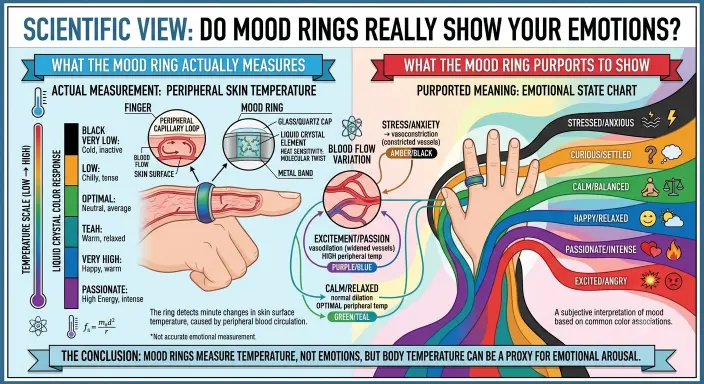
Mood rings do not scientifically measure emotions. Their main function is temperature detection.
The connection between colors and moods comes from symbolic interpretation rather than medical or psychological testing.
For example:
- A person feeling nervous may experience cooler fingers because stress can affect circulation.
- Someone feeling excited may have warmer hands due to increased blood flow.
- A relaxed person may maintain a stable temperature.
These physical responses can sometimes match traditional mood ring meanings, but the relationship is not reliable enough to predict emotions.
A better way to view a mood ring is as a conversation piece or a reminder to check in with yourself.
Instead of asking, “What emotion is this ring detecting?” a more useful question is:
“How am I feeling right now, and why?”
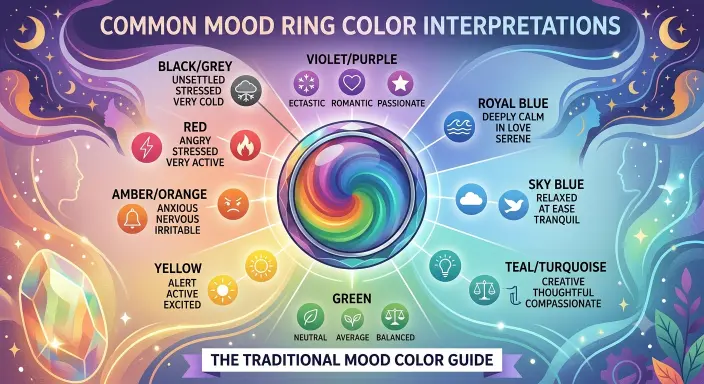
Common Mood Ring Color Chart
| Mood Ring Color | Traditional Meaning | Symbolic Association |
|---|---|---|
| Blue | Calm and relaxed | Peace, stability |
| Green | Balanced mood | Harmony, comfort |
| Yellow | Nervous or active | Energy, curiosity |
| Purple | Emotional intensity | Creativity, passion |
| Red | Excitement | Energy, strong feelings |
| Black | Stress or tension | Mystery, seriousness |
| Brown | Uneasiness | Concern, discomfort |
| Gray | Uncertainty | Confusion, low energy |
These meanings are traditional interpretations, not scientifically proven emotional readings.
Purple Mood Ring Color Meaning
Purple is one of the most fascinating mood ring colors because it combines the calm qualities of blue with the energy of red.
Traditionally, purple represents:
- Creativity
- Imagination
- Passion
- Spiritual awareness
- Luxury
- Individuality
Historically, purple has been connected with royalty because purple dyes were once rare and expensive. This association gave the color meanings of power, wealth, and importance.
In modern psychology and design, purple is often used when brands want to appear creative, unique, or premium.
Red Mood Ring Color Meaning
Red is one of the strongest and most noticeable colors in the mood ring spectrum. It is traditionally connected with powerful emotions, energy, excitement, and passion.
A red mood ring is often interpreted as representing:
- Strong emotions
- Confidence
- Excitement
- Attraction
- Motivation
- Physical energy
However, red can have both positive and negative meanings. It may symbolize love, courage, and determination, but it can also represent anger, impatience, or stress depending on the situation.
In everyday life, red is used carefully by designers and marketers because it creates a sense of urgency and emotional impact.
For example:
- Restaurants often use red because it creates a lively atmosphere.
- Sports teams use red to represent strength and competitiveness.
- Fashion designers use red to create bold and confident looks.
A red mood ring does not prove that someone is feeling passionate or angry, but it can encourage self-reflection about current emotions.
Pink Mood Ring Color Meaning
Pink is traditionally associated with kindness, affection, comfort, and emotional warmth.
A pink mood ring is commonly interpreted as representing:
- Happiness
- Caring feelings
- Affection
- Playfulness
- Emotional openness
Pink combines the energy of red with the softness of white, which is why many people connect it with gentle emotions and compassion.
Pink in Modern Design
Designers often use pink to create:
- Friendly environments
- Youthful branding
- Relaxing spaces
- Feminine or playful styles
Different shades of pink create different impressions:
- Soft pink feels peaceful and comforting.
- Bright pink feels energetic and expressive.
- Deep pink feels confident and dramatic.
Orange Mood Ring Color Meaning
Orange is a warm and energetic color connected with enthusiasm, creativity, and social connection.
Traditional mood ring meanings associate orange with:
- Excitement
- Adventure
- Curiosity
- Energy
- Communication
Orange sits between red and yellow on the color spectrum. It combines red’s energy with yellow’s optimism, creating a color that often feels lively and cheerful.
In psychology, orange is often linked with friendliness and enthusiasm. This is why many entertainment brands, food companies, and creative businesses use orange in their visual identity.
Orange in Daily Life
Orange can create feelings of:
- Warmth in interior spaces
- Energy in advertisements
- Creativity in artistic projects
Black Mood Ring Color Meaning
Black is one of the most misunderstood mood ring colors. Many traditional charts describe black as a sign of stress, sadness, or tension.
However, black can have many different symbolic meanings.
A black mood ring is often interpreted as:
- Stress
- Emotional pressure
- Serious thinking
- Low energy
But black also represents:
- Elegance
- Mystery
- Strength
- Authority
- Sophistication
The appearance of black on a mood ring can also happen when the liquid crystals are outside their ideal temperature range.
Black in Culture and Design
Black has a powerful visual impact:
- Luxury brands often use black to communicate elegance.
- Fashion designers use black for timeless style.
- Interior designers use black as an accent color for depth.
The meaning of black depends heavily on context. A black dress may represent sophistication, while a black mood ring may traditionally suggest a different emotional interpretation.
White Mood Ring Color Meaning
White is often connected with clarity, simplicity, and new beginnings.
Traditional mood ring interpretations associate white with:
- Calm thoughts
- Peacefulness
- Neutral emotions
- Reflection
White is a unique color because it often represents openness and possibility.
Symbolism of White
Across many cultures, white has been connected with:
- Purity
- Cleanliness
- Spiritual ideas
- Fresh starts
White in Design
White is widely used because it creates a feeling of:
- Space
- Cleanliness
- Modern style
- Simplicity
Architects and designers often use white to make rooms appear larger and brighter.
Brown Mood Ring Color Meaning
Brown is an earthy color connected with stability, grounding, and practicality.
Traditional mood ring meanings sometimes associate brown with:
- Uneasiness
- Confusion
- Tension
- Emotional discomfort
However, brown also has positive associations, including:
- Reliability
- Security
- Connection with nature
- Comfort
Brown in Branding
Companies often use brown when they want to appear:
- Natural
- Traditional
- Trustworthy
- Handmade
Brands related to coffee, outdoor products, and organic goods frequently use brown because it creates an earthy impression.
Gray Mood Ring Color Meaning
Gray is often viewed as a neutral color between black and white.
Traditional mood ring meanings connect gray with:
- Uncertainty
- Mixed emotions
- Lack of energy
- Emotional distance
But gray is not always negative.
Modern design often uses gray to represent:
- Balance
- Professionalism
- Modern technology
- Sophistication
Gray works well as a background color because it allows other colors to stand out.
Gold Mood Ring Color Meaning
Some modern mood rings include gold or golden tones. Gold is traditionally associated with:
- Success
- Confidence
- Achievement
- Wealth
- Optimism
In branding and fashion, gold is often used to create a sense of:
- Luxury
- Premium quality
- Celebration
A gold-colored mood ring can create a feeling of positivity and confidence.
Spiritual Meaning of Mood Ring Colors
Many people enjoy exploring the spiritual meanings of colors, although these interpretations differ across cultures and personal beliefs.
Mood ring colors are sometimes connected with ideas such as:
Blue: Peace and Inner Balance
Blue is often viewed as a symbol of calm energy, reflection, and emotional healing.
Purple: Transformation and Awareness
Purple is frequently associated with imagination, wisdom, and spiritual growth in many symbolic traditions.
Green: Renewal and Connection
Green is often connected with nature, growth, and restoring balance.
White: Clarity and New Beginnings
White can symbolize simplicity, peace, and spiritual openness.
Red: Energy and Life Force
Red is often linked with strength, passion, and physical energy.
These meanings are symbolic rather than universal spiritual rules. Different religions, cultures, and personal traditions may interpret colors in different ways.
Cultural Interpretations of Mood Ring Colors
Color meanings change across societies because colors develop their symbolism through history, traditions, and shared experiences.
Western Culture
In many Western countries:
- Blue often represents trust and calmness.
- Red represents passion and action.
- Purple represents creativity and luxury.
- White represents cleanliness.
Eastern Cultures
In many Asian cultures:
- Red is often connected with celebration, luck, and prosperity.
- Gold may symbolize success and wealth.
- White can have different meanings depending on the country and tradition.
Middle Eastern and Other Traditions
Colors may carry meanings connected with spirituality, nature, history, and social customs.
A mood ring color should always be understood within its cultural context rather than treated as having one universal meaning.
History of Mood Rings
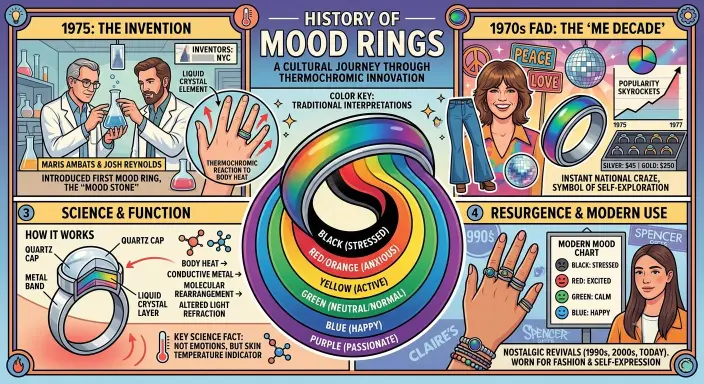
Mood rings became a worldwide trend in the 1970s, when inventors combined thermochromic liquid crystals with jewelry. The idea quickly captured public attention because it mixed science, fashion, and the mystery of emotions into one accessory.
Although mood rings were marketed as jewelry that could “reflect your mood,” they were never intended to be medical or psychological tools. Instead, they became conversation starters and symbols of self-expression.
Over the years, mood rings have appeared in fashion collections, novelty gifts, and pop culture. Today’s versions include rings, necklaces, bracelets, watches, and even phone accessories that use the same temperature-sensitive technology.
Mood Ring Colors in Branding and Marketing
Colors shape first impressions. That’s why marketers carefully choose colors that support a brand’s message.
Although companies don’t use mood ring colors specifically, the meanings behind these colors influence branding decisions.
Blue
Brands often choose blue to communicate:
- Trust
- Reliability
- Security
- Professionalism
Blue is common in technology, finance, and healthcare because it creates a sense of confidence.
Green
- Sustainability
- Health
- Nature
- Freshness
Organic food companies and environmental organizations often use green.
Red
Red attracts attention and creates urgency. It is popular for:
- Sales promotions
- Restaurants
- Sports brands
- Entertainment
Purple
Purple suggests:
- Creativity
- Luxury
- Innovation
- Premium quality
Beauty and luxury brands often incorporate purple into their visual identity.
Black
Black communicates:
- Sophistication
- Elegance
- Exclusivity
- Luxury
Many premium fashion brands use black in logos and packaging because it creates a timeless appearance.
Mood Ring Colors Meanings in Interior Design
Interior designers understand that color influences how a room feels, even though personal preferences always matter.
Blue Rooms
Blue creates a peaceful atmosphere, making it a popular choice for:
- Bedrooms
- Bathrooms
- Reading spaces
Green Spaces
Green brings a natural feeling indoors and works well in:
- Living rooms
- Home offices
- Indoor gardens
Yellow Accents
Yellow adds brightness and energy.
- Kitchens
- Breakfast areas
- Creative workspaces
Purple Details
Purple can add personality and elegance through:
- Accent walls
- Cushions
- Artwork
- Decorative accessories
Black and Gray
Used thoughtfully, darker colors create contrast and sophistication without overwhelming a space.
Lighting also affects color. Natural daylight, warm bulbs, and cool LED lighting can make the same paint color appear different throughout the day.
Mood Ring Colors Meanings in Fashion
Fashion uses color to create impressions before a single word is spoken.
Blue
- Professional
- Relaxed
- Dependable
Green
- Fresh
- Natural
- Balanced
Red
- Bold
- Confident
- Eye-catching
Purple
- Elegant
- Creative
- Luxurious
Black
- Classic
- Formal
- Sophisticated
White
- Clean
- Modern
- Minimal
Accessories can also change the overall look. A bright red scarf adds energy to a neutral outfit, while a blue tie can create a calm and professional appearance.
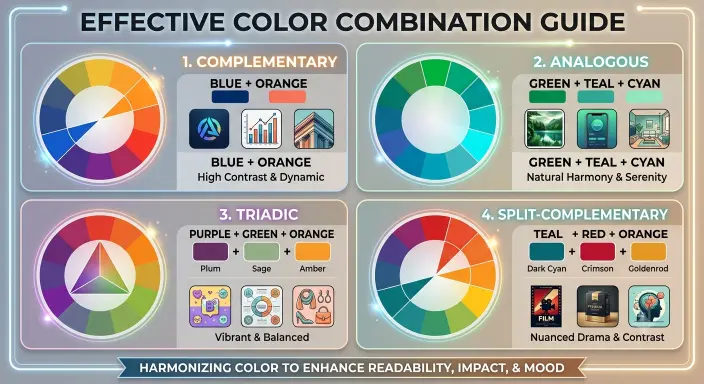
Color Combinations That Work Well
Mood ring colors also inspire attractive color palettes.
Blue + White
Creates a fresh, clean, and calming appearance.
Best for: Coastal interiors, healthcare branding, summer fashion.
Green + Brown
Reflects nature and stability.
Best for: Outdoor brands, eco-friendly products, rustic home décor.
Purple + Gold
Feels luxurious and creative.
Best for: Premium packaging, formal events, elegant designs.
Red + Black
Produces a bold and dramatic look.
Best for: Sports branding, evening wear, promotional graphics.
Gray + Blue
Creates a modern and professional appearance.
Best for: Corporate websites, offices, technology companies.
When combining colors, consider the surrounding lighting, materials, and audience.
Common Misconceptions About Mood Rings
Myth: Mood rings read your thoughts.
Reality: They respond to temperature changes, not thoughts or emotions.
Myth: Every color has one universal meaning.
Reality: Color meanings vary by culture, history, and personal experience.
Myth: Mood rings are scientifically accurate emotion detectors.
Reality: There is no scientific evidence that mood rings can directly identify emotional states.
Myth: Black always means something bad.
Reality: Black can symbolize elegance, authority, mystery, or simply indicate that the ring is too cool.
Myth: Everyone experiences colors in the same way.
Reality: Age, culture, memories, and personal preferences all influence how people interpret colors.
Real-World Applications of Mood Ring Color Meanings
The ideas behind mood ring colors appear in many areas of daily life:
- Business: Choosing colors for logos, packaging, and advertisements.
- Education: Teaching basic color psychology and symbolism.
- Art: Using colors to express mood and emotion.
- Photography: Setting the emotional tone through color grading.
- Home Decoration: Creating spaces that feel relaxing, energetic, or elegant.
- Fashion: Matching colors to personal style or special occasions.
- Entertainment: Films and games often use color to reinforce character personalities and atmosphere.
- Sports: Team colors help communicate energy, tradition, and identity.
Understanding color meanings can help people make more thoughtful choices, even if those meanings are symbolic rather than scientific.
Frequently Asked Questions
1. What do mood ring colors really mean?
Mood ring colors are traditional interpretations linked to temperature changes. They are not scientifically proven measures of emotions.
2. How do mood rings change color?
They contain thermochromic liquid crystals that react to changes in temperature.
3. Which mood ring color is considered the happiest?
Blue and green are commonly associated with calmness, comfort, and emotional balance, though interpretations vary.
4. Why does my mood ring turn black?
Black often appears when the ring becomes too cold or is outside its normal operating temperature. Some charts also associate it with stress.
5. Can mood rings predict emotions?
No. Mood rings respond to body temperature, not thoughts or feelings.
6. Are mood ring meanings scientifically proven?
No. The color changes are scientific, but the emotional meanings are symbolic and based on common color associations.
7. Do mood ring colors have spiritual meanings?
Some people connect colors with spiritual ideas such as healing, growth, or wisdom. These interpretations differ across traditions and should not be viewed as universal truths.
8. Do lighting conditions affect how mood ring colors look?
Yes. Natural light, indoor lighting, and surrounding colors can influence how the ring appears to the eye.
9. Can two people see the same mood ring color differently?
Yes. Human color perception varies slightly, and personal experiences can influence how colors are interpreted.
10. Are mood rings still popular today?
Yes. While they are no longer the fashion craze they were in the 1970s, mood rings remain popular as novelty jewelry, nostalgic accessories, and gifts.
Conclusion
Mood rings combine science, symbolism, and style in a way that has fascinated people for decades. Understanding mood rings color meanings can make these accessories more enjoyable, whether you’re wearing one for fashion, nostalgia, or simple curiosity.
Just remember that no ring can truly read your emotions. Instead, think of a mood ring as a colorful reminder to pause, notice how you feel, and appreciate the many ways color shapes our perceptions, relationships, and everyday experiences.
From branding and interior design to fashion and art, colors influence how we see the world. A mood ring offers a small but fascinating glimpse into that colorful connection—one that continues to spark conversations and curiosity across generations.
Emma Wilson is a dedicated comparison writer and product researcher at ColorMystiic.com. She specializes in creating unbiased product comparisons, detailed reviews, and helpful buying guides. Her goal is to help readers make smarter purchasing decisions with confidence.