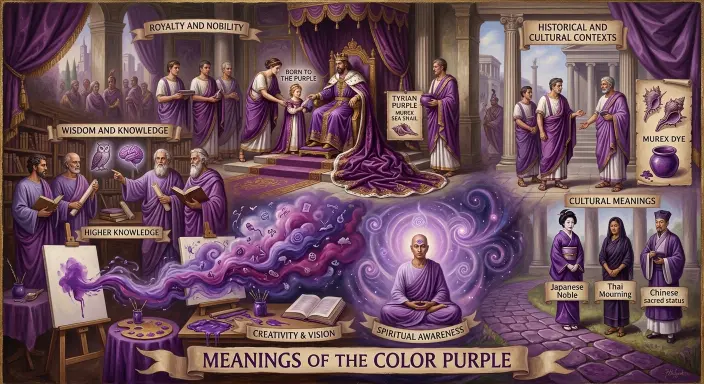
Purple color meaning has fascinated people for centuries with its rich appearance and powerful symbolism. Often associated with royalty, wisdom, creativity, and spirituality, this unique color blends the calming qualities of blue with the energetic nature of red.
Throughout history, purple has represented luxury, ambition, mystery, and higher consciousness. Today, it continues to play an important role in psychology, branding, interior design, fashion, and cultural traditions.
If you’re exploring color psychology, decorating your home, or simply curious about its deeper meanings, understanding the symbolism of purple offers valuable insights into how colors influence emotions, behavior, and perception.
Quick Answer: Purple symbolizes royalty, wisdom, creativity, spirituality, luxury, mystery, imagination, ambition, and transformation. In color psychology, it is often linked to emotional balance, higher thinking, individuality, and personal growth.
What Does the Color purple symbolism?
Purple is one of the most symbolic colors in history. Because it combines the calm stability of blue with the passionate energy of red, it creates a balance between logic and emotion. This unique combination gives purple meanings that are both practical and imaginative.
For thousands of years, purple has been connected with kings, queens, emperors, and religious leaders. In ancient civilizations, producing purple dye required rare natural materials, making it one of the most expensive colors in the world. As a result, wearing purple became a sign of wealth, prestige, and authority.
Today, the meaning of purple extends far beyond royalty. It often represents creativity, independence, spiritual awareness, compassion, and innovation. Many people view purple as a color that encourages original thinking and inspires personal transformation.
Some of the most common symbolic meanings of purple include:
- Royalty and nobility
- Luxury and wealth
- Wisdom and intelligence
- Creativity and imagination
- Spiritual enlightenment
- Mystery and magic
- Ambition and success
- Individuality and uniqueness
- Transformation and personal growth
- Compassion and sensitivity
The exact meaning of purple often depends on its shade. Light lavender tends to symbolize peace, grace, and femininity, while deep violet suggests luxury, power, and spiritual wisdom. Bright purple shades may express creativity and youthful energy, whereas darker purples often convey sophistication and elegance.
Because of its versatility, purple is widely used in art, branding, education, wellness industries, fashion, and interior design to communicate quality, imagination, and emotional depth.
Psychological Characteristics of the Purple color meaning
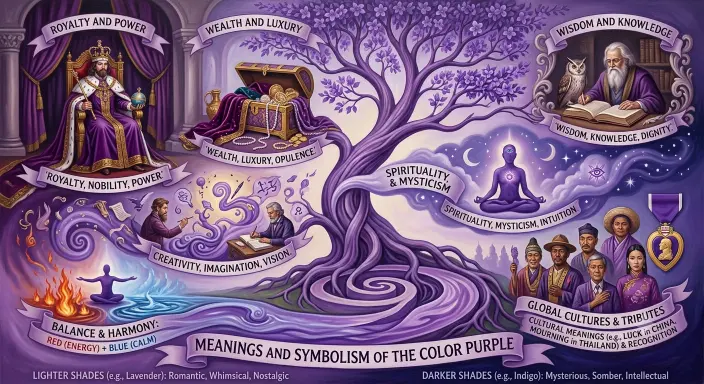
Color psychology suggests that purple stimulates both emotional and intellectual responses. Since it combines two psychologically different colors—blue and red—it creates a unique balance between calm reflection and passionate creativity.
People often associate purple with imagination, innovation, emotional intelligence, and personal development. It encourages deeper thinking while also inspiring artistic expression and curiosity.
Unlike highly stimulating colors such as red or orange, purple heart tends to create a thoughtful and reflective atmosphere. Many wellness spaces, meditation rooms, creative studios, and luxury environments use purple to promote calm concentration and inspiration.
Emotional Associations
Purple commonly evokes emotions such as:
- Creativity and imagination
- Wisdom and maturity
- Peacefulness
- Compassion
- Curiosity
- Inspiration
- Luxury
- Confidence
- Spiritual awareness
- Emotional balance
These emotional associations explain why purple heart frequently appears in creative industries, educational settings, beauty products, wellness brands, and premium packaging.
Psychological Effects
Research in color psychology suggests purple may influence the mind in several ways:
- Encourages creative thinking
- Inspires innovation
- Promotes self-reflection
- Supports meditation and mindfulness
- Increases appreciation for beauty and art
- Encourages problem-solving
- Stimulates curiosity and learning
- Creates a sense of sophistication
Because of these qualities, purple is often used where originality and imagination are valued.
Positive Emotional Responses
purple heart can produce several positive emotional reactions, including:
- Feeling inspired to create
- Greater emotional awareness
- Calm confidence
- Appreciation for beauty
- Increased motivation for personal growth
- Sense of uniqueness
- Mental relaxation
- Optimism about future possibilities
Many people describe purple as comforting while also encouraging them to think beyond ordinary solutions.
Negative Emotional Responses
Although purple has many positive associations, excessive use may create less desirable reactions:
- Feeling overly emotional
- Moodiness
- Isolation
- Escapism
- Arrogance
- Impractical thinking
- Overindulgence
- Emotional sensitivity
Very dark shades can sometimes appear dramatic or intimidating, while excessive bright purple may feel overwhelming in certain environments.
Impact on Mood and Behavior
Purple may influence mood and behavior by:
- Encouraging artistic expression
- Promoting thoughtful conversations
- Supporting relaxation during meditation
- Inspiring innovation at work
- Increasing appreciation for luxury products
- Encouraging self-discovery
- Creating a peaceful yet imaginative environment
These effects make purple especially popular in creative offices, yoga studios, spas, counseling centers, and educational spaces.
How People Typically React to Color Purple
People’s reactions to purple often include:
- Viewing it as elegant and luxurious
- Associating it with intelligence
- Feeling inspired creatively
- Seeing it as unique and memorable
- Connecting it with spirituality
- Considering it sophisticated
- Feeling calm yet mentally stimulated
However, reactions vary depending on personal experiences, cultural background, and the specific shade of purple being used.
Spiritual Purple color meaning
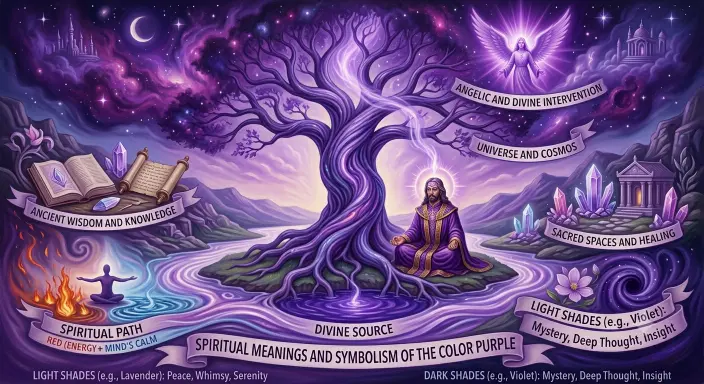
Purple has deep spiritual significance across many cultures and belief systems. It is frequently associated with higher consciousness, enlightenment, divine wisdom, and inner transformation. Many spiritual traditions view purple as a bridge between the physical world and deeper spiritual understanding.
In meditation practices, purple is often connected with intuition, mindfulness, and personal growth. Many people believe it encourages individuals to seek truth, expand awareness, and develop emotional wisdom.
Holiness
Purple has long symbolized holiness and sacred devotion.
- Often worn by religious leaders.
- Represents reverence and spiritual authority.
- Used during important religious ceremonies.
- Encourages humility and reflection.
Its presence in places of worship often reminds believers to focus on faith and spiritual purpose.
Wisdom
Purple is commonly linked with wisdom gained through experience and learning.
- Represents thoughtful decision-making.
- Encourages lifelong learning.
- Symbolizes intellectual growth.
- Reflects mature judgment.
Many educational institutions use purple to communicate academic excellence and intellectual achievement.
Purity
Although white is more traditionally associated with purity, light shades of purple can symbolize inner purity and sincere intentions.
- Honest character
- Moral integrity
- Emotional balance
- Pure thoughts
- Spiritual cleansing
Lavender, in particular, is often connected with gentle purity and peaceful living.
Transformation
Transformation is one of purple’s strongest spiritual meanings.
Purple often represents:
- Personal growth
- Life changes
- Emotional healing
- New perspectives
- Self-discovery
- Inner development
Many people choose purple during periods of transition because it symbolizes positive change and renewal.
Healing
Purple is frequently associated with emotional and spiritual healing.
It may symbolize:
- Emotional recovery
- Stress relief
- Mental clarity
- Inner peace
- Forgiveness
- Compassion
Healing spaces such as meditation rooms, wellness centers, and holistic therapy practices often incorporate soft purple tones to create a soothing atmosphere.
Protection
Some spiritual traditions believe purple provides symbolic protection from negative influences.
It may represent:
- Inner strength
- Emotional resilience
- Spiritual guidance
- Positive energy
- Personal boundaries
- Safe transformation
Because of this symbolism, purple is commonly used in spiritual artwork and meditation practices.
Power
Purple has symbolized power for thousands of years.
Its association with authority includes:
- Leadership
- Confidence
- Prestige
- Influence
- Noble character
- Responsible decision-making
Unlike aggressive displays of power, purple often suggests wisdom combined with compassion.
Enlightenment
Purple is widely connected with enlightenment and higher understanding.
It symbolizes:
- Expanded awareness
- Deep intuition
- Self-realization
- Mindfulness
- Personal insight
- Higher consciousness
These meanings explain why purple frequently appears in meditation imagery and spiritual literature.
New Beginnings
Purple can also symbolize fresh starts after periods of personal growth.
Examples include:
- Beginning a new career
- Starting a creative project
- Recovering from difficult experiences
- Building healthier relationships
- Pursuing lifelong dreams
Its symbolism encourages optimism and confidence during life’s transitions.
Eternity
Many cultures associate purple with eternity because it represents timeless wisdom and enduring spiritual values.
It may symbolize:
- Everlasting knowledge
- Infinite possibilities
- Spiritual continuity
- Lasting hope
- Enduring faith
- Universal connection
This timeless symbolism has helped purple remain one of the world’s most respected and meaningful colors.
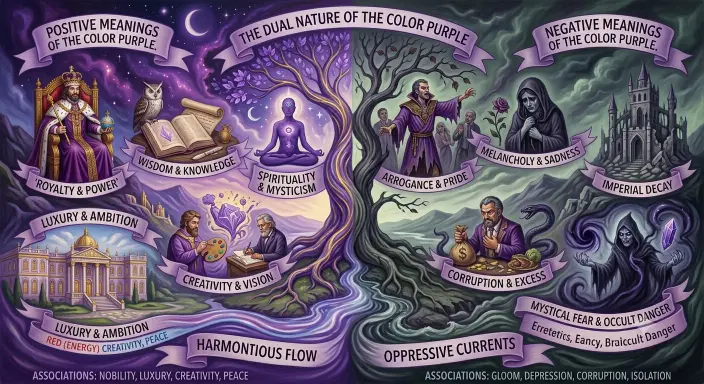
Positive and Negative Purple color meaning
Like every color, purple carries both uplifting and challenging symbolic meanings. The interpretation often depends on the context, cultural background, shade of purple, and the emotions it is intended to communicate. While many people associate purple with creativity, wisdom, and luxury, it can also represent emotional intensity, isolation, or excessive idealism when used in certain situations.
Understanding both the positive and negative symbolism of purple provides a more balanced perspective on its role in psychology, design, branding, and everyday life.
Positive Meanings
Purple is widely admired for its inspiring and sophisticated symbolism. Some of its most positive meanings include:
Wisdom
Purple often represents knowledge gained through learning and life experience.
Real-world example: Universities may use purple in graduation materials or academic branding to emphasize scholarship, intellectual achievement, and lifelong learning.
Creativity
Artists, designers, writers, and musicians frequently associate purple with imagination and original thinking.
Real-world example: A creative agency might decorate brainstorming rooms with purple accents to inspire fresh ideas and innovative solutions.
Luxury
Because purple dye was once extremely rare and expensive, the color still symbolizes wealth, exclusivity, and premium quality.
Real-world example: Luxury cosmetic packaging often features deep purple combined with gold to communicate elegance and sophistication.
Spiritual Growth
Purple encourages reflection, mindfulness, and personal development.
Real-world example: Meditation centers often use lavender walls or purple décor to create a peaceful environment that supports relaxation and inner awareness.
Compassion
Purple can represent empathy, kindness, and emotional understanding.
Real-world example: Mental health organizations may include purple in awareness campaigns to promote compassion and emotional support.
Individuality
Purple celebrates uniqueness and self-expression.
Real-world example: Fashion designers often incorporate purple statement pieces into collections to encourage confidence and personal style.
Ambition
The color also symbolizes determination and the pursuit of meaningful goals.
Real-world example: Professionals may choose a purple tie or scarf during presentations to project confidence, creativity, and leadership.
Positive and Negative Purple color meaning
Negative Meanings
Although purple is often associated with positive qualities, it can also carry negative symbolism depending on the context, shade, and cultural interpretation. Dark or excessive use of purple may create feelings of emotional distance, mystery, or impracticality.
Arrogance
Because purple has long been associated with royalty and luxury, it can sometimes appear proud or elitist.
Real-world example: A company that relies too heavily on luxurious purple branding without delivering quality products may be viewed as pretentious rather than premium.
Isolation
Purple is a reflective color, but too much of it may encourage withdrawal from social interaction.
Real-world example: An office decorated entirely in dark purple tones may feel enclosed or overly serious, making employees feel less energetic.
Escapism
Purple’s connection to imagination can sometimes encourage unrealistic expectations or daydreaming.
Real-world example: Someone who constantly focuses on ideal situations without practical planning may be described as “living in a fantasy world,” symbolically linked to purple’s imaginative qualities.
Emotional Sensitivity
Purple often represents deep emotions, which can occasionally lead to moodiness or emotional overwhelm.
Real-world example: Dark purple artwork in emotionally intense films or theater productions is sometimes used to emphasize grief, mystery, or emotional conflict.
Mystery and Uncertainty
Purple’s mysterious nature may create curiosity, but it can also make situations seem confusing or difficult to understand.
Real-world example: Movie posters for fantasy or supernatural films often feature dark purple backgrounds to build suspense and intrigue.
Excess and Overindulgence
Purple’s luxurious image can sometimes symbolize extravagance or unnecessary spending.
Real-world example: High-end lifestyle advertisements using rich purple and gold may encourage consumers to associate expensive purchases with success or status.
Purple color meaning in History
The emotions associated with the color purple often stem from cultural links. Purple has strong ties to royalty, leading it to be perceived as a regal color. These associations with royalty and wealth can be traced back to ancient times when purple dye was rare and highly expensive.2
Creating this dye was difficult and costly because purple is uncommon in nature. Thus, only the elite could afford purple-dyed items, linking the color to extravagance and aristocracy even today.
In approximately 1200 B.C.E., Tyre, a city in ancient Phoenicia, began producing purple dye from sea snail shells, creating Tyrian purple.3 This dye is famously mentioned in historical texts such as Homer’s “Iliad” and Virgil’s “Aeneid.” It was worn by Alexander the Great and Egyptian kings.
Purple’s connection to royalty continued into modern times. Notably, Queen Elizabeth II wore the Purple Robe of Estate after her 1953 coronation.4
Within the LGBTQ+ community, the purple on the pride flag represents non-binary gender identities. In the bisexual flag, the red and blue overlap to form purple, representing bisexuality.
Purple color meaning and Associations
Some symbolic meanings and associations of the color purple are:
- Creativity
- Emotionality
- Enlightenment
- Femininity
- Imagination
- Inspiration
- Mystery
- Rarity
- Royalty
- Spirituality
People often describe this color as mysterious, spiritual, and imaginative.5
What Color PurpleSays About Your Personality
Many people enjoy learning what their favorite color may reveal about their personality. While color psychology suggests that color preferences can reflect certain emotional tendencies or personal values, there is no scientific evidence that simply liking a color determines personality. Individual experiences, culture, upbringing, and preferences all play important roles.
That said, people who are naturally drawn to purple often share several commonly observed characteristics.
Strengths
Individuals who prefer purple are often described as:
- Creative and imaginative
- Curious about new ideas
- Emotionally aware
- Compassionate
- Thoughtful
- Open-minded
- Visionary
- Independent
- Appreciative of beauty and art
- Interested in personal growth
They frequently enjoy solving problems creatively and exploring subjects beyond everyday routines.
Weaknesses
Like everyone, purple lovers may also have areas for growth.
Possible tendencies include:
- Overthinking situations
- Becoming emotionally sensitive
- Setting unrealistically high expectations
- Escaping into imagination rather than action
- Feeling misunderstood
- Preferring solitude at times
- Being overly idealistic
These qualities do not apply to everyone but are commonly mentioned in discussions of color preferences.
Social Behavior
While color preferences do not define personality with certainty, understanding the meaning of the color purple offers valuable insight into human perception, cultural expression, and the powerful role color plays in everyday life.
People who like purple often value meaningful relationships over large social circles.
They may:
- Prefer deep conversations
- Enjoy helping others
- Respect individuality
- Appreciate honesty
- Value empathy
- Support creativity in friends and family
Although they can be sociable, many also enjoy quiet time for reflection and creative pursuits.
Work Style
In professional settings, purple enthusiasts often thrive in roles that encourage innovation and independent thinking.
They may excel in careers such as:
- Graphic design
- Writing
- Marketing
- Education
- Psychology
- Research
- Art
- Music
- Product development
- Entrepreneurship
They generally appreciate workplaces that encourage creativity, flexibility, and lifelong learning.
Relationships
In personal relationships, people drawn to purple are often viewed as:
- Loyal
- Caring
- Understanding
- Romantic
- Emotionally supportive
- Respectful of individuality
They usually value trust, honest communication, and emotional connection more than superficial interactions.
Emotional Tendencies
Purple is frequently associated with emotional balance and self-awareness.
People who enjoy purple may:
- Reflect deeply before making decisions.
- Appreciate peaceful environments.
- Seek personal improvement.
- Enjoy meditation or mindfulness.
- Feel inspired by art, music, and literature.
- Value emotional authenticity.
However, emotional experiences vary greatly from person to person, and favorite colors should never be used to judge someone’s character.
Frequently Asked Questions
1. What defines the Purple color meaning?
Purple is a secondary color created by combining red and blue. It includes many shades, such as lavender, violet, plum, orchid, mauve, and royal purple. Its meaning often depends on the specific shade and context.
2. What does the color purple symbolize?
Purple commonly symbolizes royalty, wisdom, creativity, spirituality, luxury, imagination, ambition, transformation, and individuality. Its symbolism has evolved from ancient history to modern psychology and design.
3. Why is Color Purpleimportant?
Purple is important because it has influenced art, religion, fashion, branding, interior design, and psychology for centuries. It communicates sophistication while also inspiring creativity and emotional reflection.
4. Is purple a warm or cool color?
Purple can be either warm or cool depending on its balance of red and blue.
- Red-based purples appear warmer.
- Blue-based purples appear cooler.
This flexibility makes purple suitable for many different design styles.
5. What emotions does purple represent?
Purple is often associated with:
- Creativity
- Calmness
- Inspiration
- Wisdom
- Confidence
- Compassion
- Curiosity
- Luxury
- Mystery
- Spiritual awareness
Some darker shades may also evoke seriousness or emotional intensity.
6. What does purple mean spiritually?
While color preferences do not define personality with certainty, understanding the meaning of the color purple offers valuable insight into human perception, cultural expression, and the powerful role color plays in everyday life.. Many traditions also connect it with inner peace and divine guidance.
7. What color pair well with purple?
Purple pairs beautifully with many colors, including:
- White
- Black
- Gray
- Gold
- Silver
- Beige
- Navy
- Emerald green
- Soft pink
- Lavender
- Cream
The best combination depends on whether the goal is elegance, warmth, luxury, or modern simplicity.
8. What does liking purple say about a person?
People who enjoy purple are often described as creative, thoughtful, compassionate, imaginative, and independent. However, favorite colors do not scientifically determine personality, and individual differences always matter.
9. Is purple a good color for branding?
Yes. Purple is widely used in branding because it communicates creativity, innovation, luxury, originality, and premium quality. It works particularly well for beauty, wellness, education, entertainment, and technology brands.
10. Is purple suitable for home décor?
Absolutely. Soft shades like lavender create relaxing bedrooms and meditation spaces, while deeper shades such as plum or royal purple add elegance to living rooms, dining rooms, and accent walls. Pairing purple with neutral colors helps maintain visual balance.
Conclusion
Purple is one of the most meaningful and versatile colors in the world. From its historical association with royalty and wealth to its modern connections with creativity, spirituality, and innovation, purple continues to influence how people think, feel, and communicate.
In psychology, it encourages imagination, emotional awareness, and thoughtful reflection. In design, marketing, and fashion, it conveys elegance, individuality, and premium quality. Across cultures and traditions, its symbolism may vary, but it consistently represents depth, transformation, and inspiration.
While color preferences do not define personality with certainty, understanding the meaning of the color purple offers valuable insight into human perception, cultural expression, and the powerful role color plays in everyday life.
Emma Wilson is a dedicated comparison writer and product researcher at ColorMystiic.com. She specializes in creating unbiased product comparisons, detailed reviews, and helpful buying guides. Her goal is to help readers make smarter purchasing decisions with confidence.