Colors can feel meaningful long before we put those feelings into words. A deep blue sky may suggest peace, while a glowing red candle can feel energetic or intense. For this reason, many spiritual and metaphysical traditions use color as a symbolic language.Metaphysical color meanings are interpretations that connect colors with ideas such as energy, emotions, intention, transformation, protection, wisdom, love, or spiritual awareness.
However, these meanings are not universal scientific facts. They can change according to spiritual tradition, culture, personal experience, and context.
That distinction matters. Color psychology studies how color can affect perception, attention, emotion, and behavior, while metaphysical symbolism gives colors a spiritual or symbolic meaning. These two areas can overlap, but they should not be treated as the same thing.
This guide explores the most commonly associated metaphysical colors, explains where interpretations vary, and shows how people use color in meditation, spiritual practices, art, clothing, home spaces, candles, crystals, and personal rituals.
Quick Answer: What Are Metaphysical Color Meanings?
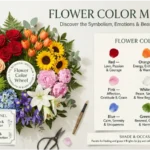
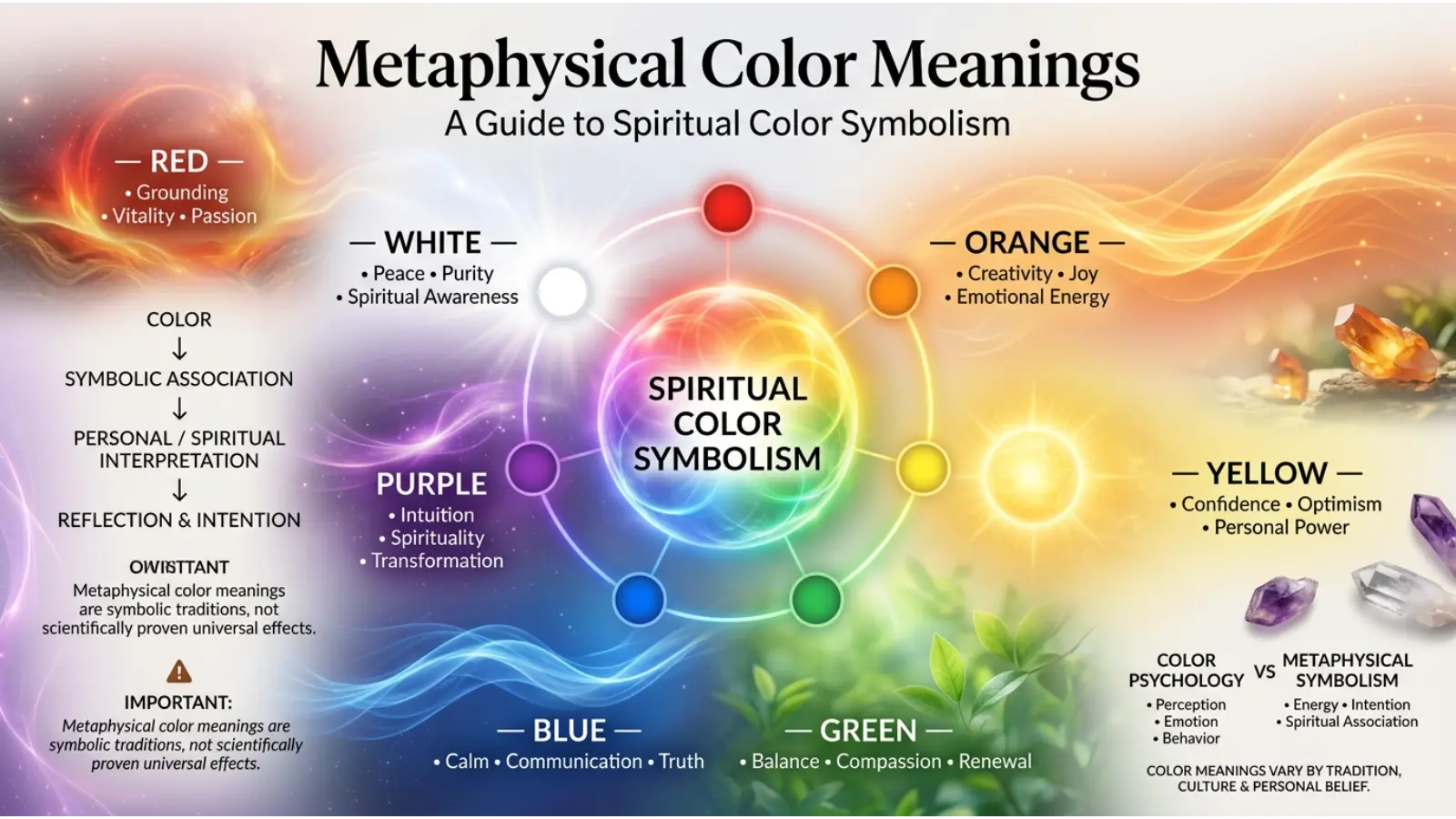
Metaphysical color meanings are spiritual or symbolic associations given to colors. Common interpretations include red for vitality and passion, orange for creativity, yellow for confidence and optimism, green for growth and balance, blue for peace and communication, purple for spirituality and intuition, white for purity and clarity, and black for mystery, protection, or transformation.
These meanings vary between traditions and should be understood as symbolic interpretations rather than scientifically proven effects.
What Does Metaphysical Color Symbolism Mean?
Metaphysical color symbolism treats color as more than a visual property. Instead, a color may represent an idea, emotional state, spiritual intention, or stage of personal development.
For example, someone might choose blue during meditation because they associate it with calmness and inner peace. Another person may choose purple because it represents intuition or spiritual awareness.
Neither interpretation has to be universally correct. Symbolism often works through personal meaning.
Symbolic Meaning vs. Scientific Evidence
There is an important difference between saying:
- “Blue represents peace in this spiritual tradition.”
and saying:
- “Blue scientifically creates spiritual peace.”
The first is a symbolic interpretation. The second would require scientific evidence.
Color can influence perception and emotional responses, but there is no scientific basis for claiming that a particular color automatically produces spiritual energy, heals illness, removes negative energy, or changes someone’s destiny.
Therefore, metaphysical color practices are best approached as symbolic, reflective, cultural, or spiritual practices, rather than medical or scientific treatments.
Metaphysical Color Meanings Chart
| Color | Common Metaphysical Associations | Emotional Associations | Common Symbolic Uses |
|---|---|---|---|
| 🔴 Red | Vitality, passion, courage, grounding | Energy, intensity | Motivation, confidence, ritual intention |
| 🟠 Orange | Creativity, enthusiasm, movement | Warmth, excitement | Artistic work, social energy |
| 🟡 Yellow | Optimism, confidence, mental clarity | Happiness, alertness | Learning, positivity, personal confidence |
| 🟢 Green | Growth, balance, renewal | Calm, freshness | Nature, abundance symbolism, harmony |
| 🔵 Blue | Peace, communication, wisdom | Calm, trust | Meditation, reflection, communication |
| 🟣 Purple | Intuition, spirituality, transformation | Mystery, depth | Meditation, contemplation, spiritual symbolism |
| 🩷 Pink | Love, compassion, tenderness | Warmth, affection | Relationships, self-kindness |
| ⚪ White | Purity, clarity, peace, new beginnings | Cleanliness, simplicity | Prayer, cleansing symbolism, fresh starts |
| ⚫ Black | Mystery, protection, endings, transformation | Seriousness, power | Boundaries, reflection, symbolic release |
| 🟤 Brown | Grounding, stability, connection to nature | Security, comfort | Grounding practices, natural spaces |
| 🩵 Turquoise | Communication, openness, emotional balance | Freshness, calm | Expression, relaxation |
| 🩶 Gray | Neutrality, reflection, transition | Restraint, seriousness | Contemplation, balance |
| 🟨 Gold | Achievement, abundance, illumination | Confidence, prestige | Success symbolism, celebration |
| 🩶 Silver | Intuition, reflection, lunar symbolism | Sophistication, mystery | Meditation, reflective practices |
Red Metaphysical Meaning
Red is commonly associated with life force, vitality, courage, passion, desire, strength, and action.
Because red is visually powerful, it often carries an energetic quality in symbolic systems. It can represent the physical body, determination, survival, or the motivation to act.
In some spiritual practices, red is connected with grounding and physical energy. It may be chosen when someone wants to symbolize courage, confidence, or renewed motivation.
However, red also has a challenging side. It can represent anger, conflict, impatience, aggression, or uncontrolled desire.
When to Use Red Symbolically
Red can work well when the intention involves:
- Courage
- Motivation
- Physical vitality
- Passion
- Determination
- Confidence
- Taking action
Because it is visually intense, a small amount of red can communicate energy without overwhelming a design or room.
Orange Metaphysical Meaning
Orange often symbolizes creativity, enthusiasm, joy, social connection, movement, and emotional warmth.
Its position between red and yellow gives it an interesting symbolic character. It can represent the combination of physical energy and mental brightness.
Metaphysically, orange is sometimes selected for creative activities, emotional expression, confidence, and enthusiasm.
On the other hand, excessive orange symbolism can suggest restlessness, impulsiveness, or overstimulation.
Orange Works Well for
- Creative projects
- Artistic expression
- Social gatherings
- Motivation
- Positive energy
- Personal confidence
- Celebrating change
Orange can be particularly useful when the goal is not simply to feel calm but to encourage active and joyful engagement.
Yellow Metaphysical Meaning
Yellow is frequently associated with light, optimism, confidence, knowledge, mental clarity, and personal power.
Because sunlight is naturally linked with brightness and visibility, yellow has developed strong symbolic connections with illumination and awareness.
In metaphysical interpretations, yellow may represent learning, confidence, optimism, communication, and the ability to see a situation more clearly.
Yet yellow can also have less positive associations. Depending on context, it may symbolize anxiety, caution, jealousy, or mental overstimulation.
Yellow Symbolism Is Useful for
- Study and learning
- Confidence
- Optimism
- Mental focus
- Communication
- Personal growth
- Positive intentions
A soft yellow generally feels gentler than an extremely bright yellow, showing how shade and intensity can change color perception.
Green Metaphysical Meaning
Green is strongly connected with growth, renewal, balance, nature, harmony, and abundance.
Its association with plants and spring makes growth one of its most natural symbolic meanings. Green can suggest something developing, recovering, or returning to balance.
In metaphysical traditions, green is often used to represent harmony and renewal. It may also symbolize compassion, emotional balance, prosperity, and connection with nature.
However, green has other meanings too. It can represent jealousy, envy, immaturity, or uncertainty in certain contexts.
Green Is Often Chosen for
- Renewal
- Balance
- Nature connection
- Emotional harmony
- Growth
- Abundance symbolism
- Fresh beginnings
Green is especially effective in spaces where the desired feeling is natural, calm, and restorative.
Blue Metaphysical Meaning
Blue commonly symbolizes peace, wisdom, communication, truth, trust, reflection, and emotional calm.
The open sky and expansive appearance of water have helped make blue a powerful symbol of depth and tranquility across many cultures.
Metaphysical interpretations may connect blue with communication, inner peace, spiritual reflection, and wisdom.
Nevertheless, blue can also symbolize sadness, emotional distance, or isolation. Therefore, the same color can communicate either serenity or melancholy depending on its setting.
Blue Can Symbolize
- Peace
- Wisdom
- Truth
- Communication
- Reflection
- Trust
- Emotional calm
Dark navy blue may appear serious and authoritative, while pale blue can feel airy and gentle. Color value matters just as much as the basic hue.
Purple Metaphysical Meaning
Purple is one of the colors most strongly associated with spirituality, mystery, intuition, imagination, transformation, and higher awareness.
Historically, purple has also been connected with royalty and status because some purple dyes were difficult and expensive to produce.
In metaphysical symbolism, purple can represent contemplation, inner exploration, spiritual curiosity, and transformation.
However, purple should not automatically be interpreted as proof of supernatural ability. Claims that purple objects or clothing can directly unlock psychic powers are matters of belief rather than established science.
Purple Is Often Used to Symbolize
- Spiritual exploration
- Intuition
- Imagination
- Transformation
- Mystery
- Wisdom
- Contemplation
Deep violet can create a more mysterious impression, while lavender usually feels softer and more peaceful.
Pink Metaphysical Meaning
Pink commonly represents love, compassion, kindness, tenderness, emotional warmth, and affection.
Unlike the intensity of red, pink often expresses a gentler form of love. For this reason, it can symbolize caring relationships, emotional softness, forgiveness, and self-compassion.
In modern culture, pink is also strongly influenced by gender and fashion associations. Those meanings are cultural rather than universal.
Pink Can Represent
- Compassion
- Friendship
- Romantic affection
- Kindness
- Emotional healing symbolism
- Self-love
- Gentleness
Pink is useful when a visual message needs warmth without the intensity associated with bright red.
White Metaphysical Meaning
White is commonly associated with purity, peace, clarity, innocence, simplicity, cleansing, and new beginnings.
Its symbolic meaning often comes from its visual connection with brightness and cleanliness.
Many spiritual traditions use white clothing, objects, or spaces in ceremonies, but the exact meaning varies greatly. White can represent purity in one tradition and mourning in another.
White Symbolism Often Includes
- Peace
- Purity
- Clarity
- Fresh starts
- Simplicity
- Spiritual reflection
- Cleansing symbolism
The White also reflects a large amount of visible light, so surrounding colors and lighting can dramatically change how it appears.
Black Metaphysical Meaning
Black has a complex metaphysical symbolism. It may represent mystery, protection, boundaries, endings, transformation, depth, or the unknown.
Because darkness limits visibility, black naturally became associated with mystery and hidden things. At the same time, black can represent strength and authority.
It is not accurate to describe black as simply “negative.” Its meaning depends heavily on context.
Black May Symbolize
- Protection
- Mystery
- The unknown
- Personal boundaries
- Endings
- Transformation
- Inner reflection
In spiritual or symbolic artwork, black can provide contrast that makes lighter colors appear more powerful.
Brown Metaphysical Meaning
Brown is closely connected with earth, stability, grounding, simplicity, reliability, and nature.
Its earthy appearance makes it useful for symbolism involving roots, physical reality, patience, and stability.
Brown is sometimes overlooked in color symbolism because it lacks the visual intensity of red or purple. Yet that subtlety can be its strength.
Brown Can Represent
- Grounding
- Stability
- Patience
- Nature
- Security
- Simplicity
- Practicality
Brown works especially well with green, beige, cream, and muted gold when creating a natural visual environment.
Gold Metaphysical Meaning
Gold commonly represents abundance, achievement, illumination, wisdom, prosperity, and value.
Its historical connection with precious metals has made it a symbol of wealth and status in many societies.
Metaphysical interpretations may extend these associations toward spiritual illumination or higher understanding. However, these meanings depend on the tradition using them.
Gold can also communicate success without necessarily carrying a religious meaning.
Gold Symbolism Includes
- Abundance
- Achievement
- Wisdom
- Illumination
- Prestige
- Celebration
- Prosperity
The Gold becomes especially powerful when used sparingly. A small gold accent can suggest importance more effectively than covering an entire design with it.
Silver Metaphysical Meaning
Silver is often associated with reflection, intuition, mystery, modernity, and lunar symbolism.
Its reflective surface makes it a natural metaphor for self-reflection. In some spiritual traditions, silver is also connected symbolically with the moon.
Unlike gold, silver often feels cooler and more restrained.
Silver May Represent
- Reflection
- Intuition
- Mystery
- Moon symbolism
- Modernity
- Emotional distance
- Subtle elegance
Silver pairs naturally with white, blue, black, purple, and cool gray.
Spiritual Meaning of Metaphysical Colors
Color symbolism appears in many spiritual and religious settings, but there is no single universal spiritual color dictionary.
Different traditions assign different meanings to the same color. Even within one religion or spiritual movement, interpretation may change according to ceremony, region, historical period, or teacher.
For example, white may symbolize purity in one setting and mourning in another. Red can represent celebration, sacrifice, danger, passion, or power depending on context.
Therefore, it is better to ask:
“What does this color symbolize in this tradition?”
rather than:
“What does this color always mean spiritually?”
That small change creates a much more accurate understanding of metaphysical symbolism.
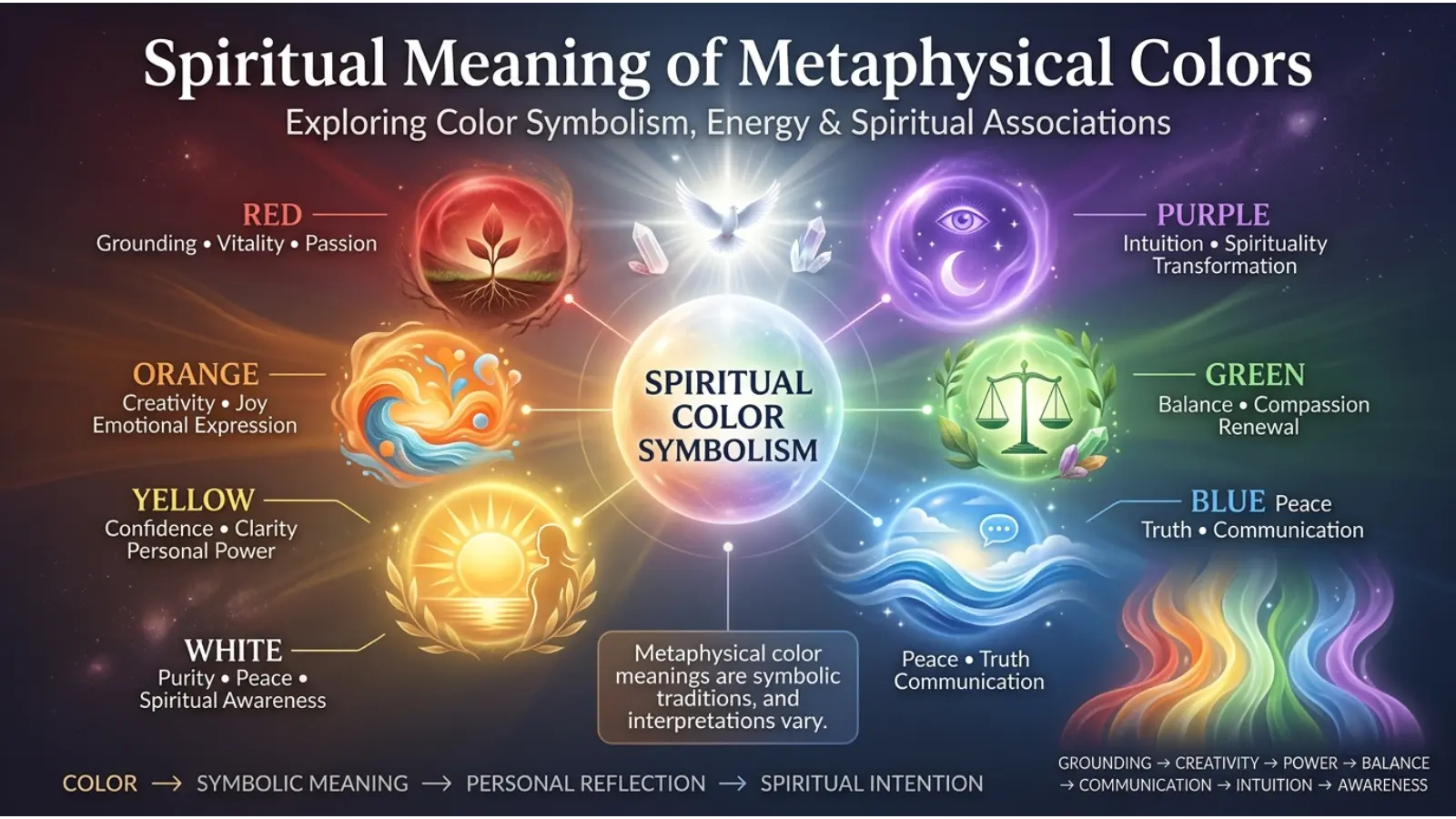
Metaphysical Colors and Energy Symbolism
Some metaphysical systems describe colors as expressions of different kinds of energy. These ideas are especially common in modern spiritual practices involving chakras, meditation, visualization, crystals, candles, and aura interpretation.
A symbolic energy chart might look like this:
| Color | Symbolic Energy Theme | Suggested Intention |
|---|---|---|
| 🔴 Red | Physical vitality | Courage and action |
| 🟠 Orange | Creative energy | Expression and enthusiasm |
| 🟡 Yellow | Mental brightness | Confidence and learning |
| 🟢 Green | Harmonizing energy | Growth and balance |
| 🔵 Blue | Calming energy | Peace and communication |
| 🟣 Purple | Reflective energy | Intuition and contemplation |
| ⚪ White | Clear energy | Peace and new beginnings |
| ⚫ Black | Protective symbolism | Boundaries and reflection |
These are symbolic associations, not measurements of a scientifically established energy field.
That distinction allows readers to enjoy spiritual practices without confusing metaphor with laboratory evidence.
Metaphysical Color Meanings and the Chakras
Chakra systems provide one of the most recognizable modern examples of color symbolism.
A commonly used modern chakra-color sequence is:
Red → Orange → Yellow → Green → Blue → Indigo → Violet
These colors are often associated with different chakra concepts.
| Chakra | Common Color Association | Common Symbolic Theme |
|---|---|---|
| Root | 🔴 Red | Grounding and security |
| Sacral | 🟠 Orange | Creativity and emotion |
| Solar Plexus | 🟡 Yellow | Confidence and personal power |
| Heart | 🟢 Green | Love and compassion |
| Throat | 🔵 Blue | Communication and expression |
| Third Eye | 🟦 Indigo | Intuition and awareness |
| Crown | 🟣 Violet/White | Spiritual connection |
Chakra color associations are part of specific spiritual traditions and modern adaptations. They should not be presented as universal scientific anatomy.
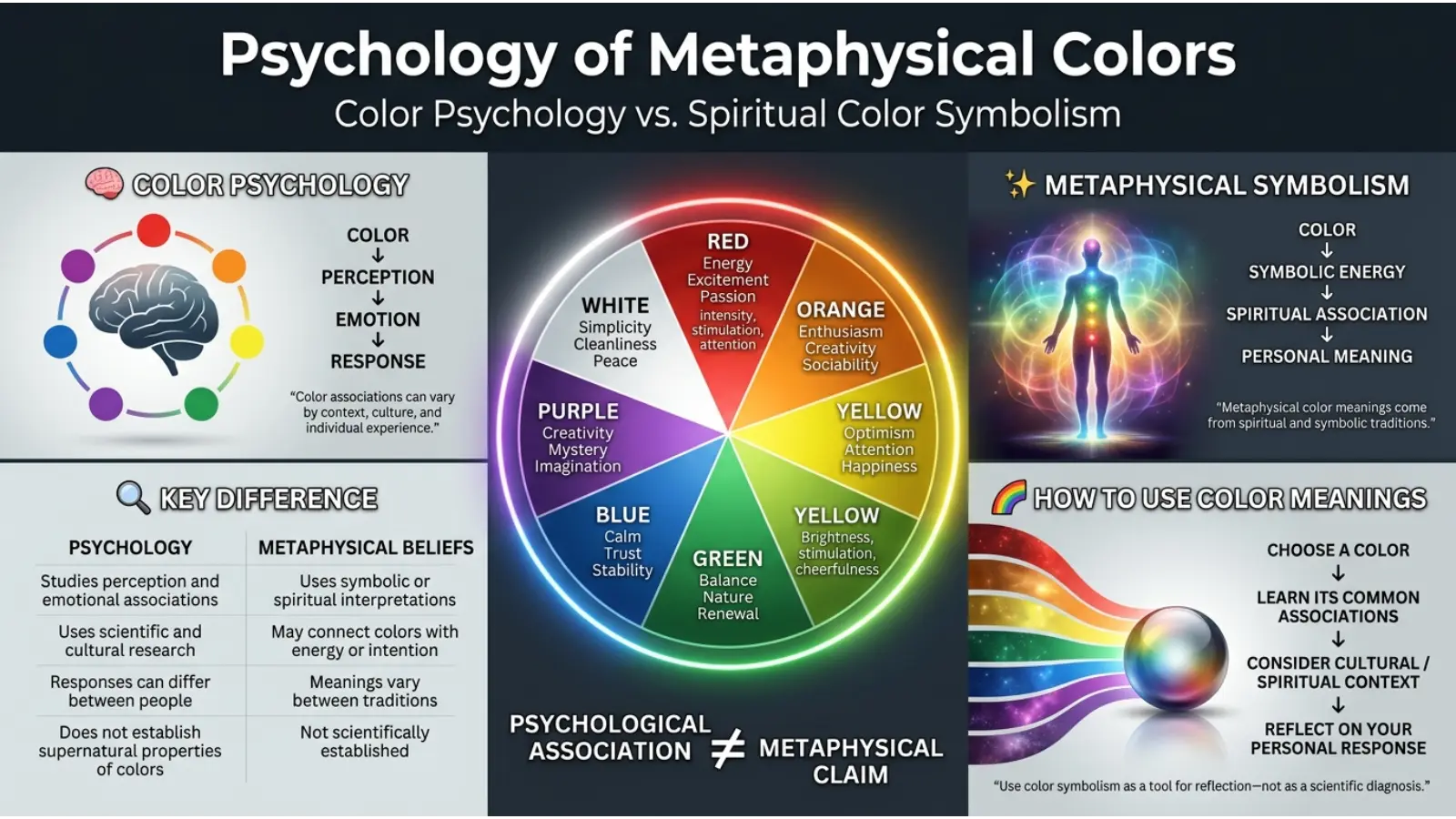
Psychology of Metaphysical Colors
Color psychology and metaphysical symbolism overlap in interesting ways, but they answer different questions.
Color psychology asks: How might people perceive or respond to a color?
Metaphysical symbolism asks: What idea or spiritual meaning does a color represent?
For example, blue may be associated psychologically with calmness or trust in certain contexts, while spiritually it may symbolize wisdom or communication.
Neither interpretation has to replace the other.
Why Color Can Affect Perception
Color can influence attention and visual emphasis. Bright, saturated colors tend to attract more attention than muted ones. Warm and cool colors can also create different visual impressions.
However, responses are shaped by factors such as:
- Culture
- Personal experience
- Age
- Context
- Lighting
- Saturation
- Brightness
- Surrounding colors
- Individual preference
Consequently, color does not produce one identical emotional response in every person.
How Context Changes Metaphysical Color Meaning
The meaning of a color depends heavily on what surrounds it.
Consider red.
A red rose may suggest romantic love.
A red warning sign may communicate danger.
The red sports uniform may suggest energy and competition.
A red ceremonial object may carry a completely different cultural or religious meaning.
The hue has not changed much, but the context has changed the message.
This principle is essential when interpreting metaphysical colors. Symbolism comes from the relationship between color, object, setting, tradition, and intention.
Cultural Differences in Color Symbolism
There is no universal color language.
In many Western contexts, white is strongly associated with weddings and purity. In several East and South Asian cultural traditions, white has also been associated with mourning and death.
Red can symbolize love, danger, celebration, prosperity, sacrifice, or political identity depending on the society and situation.
Yellow can represent happiness and sunlight in one context but carry completely different historical or cultural associations elsewhere.
Therefore, broad statements such as “red means love everywhere” are misleading.
Why Cultural Context Matters
Color symbolism develops through:
- Religion
- Local customs
- Political history
- Clothing traditions
- Natural surroundings
- Art
- Ceremonies
- Language
- Popular culture
A color’s meaning is therefore best understood as contextual rather than universal.
Historical Roots of Color Symbolism
Color meanings have often developed from practical realities.
Purple became associated with wealth and status partly because some historical purple dyes were difficult and costly to produce.
Gold became a symbol of wealth because actual gold was rare, durable, and valuable.
Green became connected with nature because plants provide such an obvious source of green.
White became connected with cleanliness partly because dirt is easier to see on white surfaces.
These examples show that symbolism does not always begin as a mystical idea. Sometimes a physical property or social condition creates the original association, which later becomes symbolic.
Over generations, art, religion, fashion, literature, and popular culture can add new meanings.
Metaphysical Color Meanings in Meditation
Color visualization is commonly used as a focus tool during meditation.
Someone might imagine blue while focusing on calm breathing or visualize green while reflecting on compassion.
The value of this practice does not require the color to possess supernatural powers. A color can simply function as a mental anchor.
For example:
- Choose a color.
- Decide what it represents to you.
- Visualize the color.
- Connect it with a specific intention.
- Return your attention to it when your mind wanders.
This approach turns color into a simple mindfulness cue.
Metaphysical Colors in Candles and Rituals
Color-coded candles are common in some contemporary spiritual and folk practices.
A person may choose:
- 🔴 Red for passion or courage
- 🟢 Green for growth or abundance
- 🔵 Blue for peace
- 🟣 Purple for spiritual reflection
- ⚪ White for clarity or new beginnings
- 🩷 Pink for affection
- 🟡 Yellow for confidence or optimism
These meanings are not universal. Candle-color symbolism differs between magical traditions, spiritual communities, and individual practitioners.
A useful approach is to define your intention first and select a color that reinforces it symbolically.
Metaphysical Colors in Crystals
Crystal practices also use color as a major part of symbolism.
For example, purple crystals are often connected symbolically with intuition, while green stones may be associated with growth, balance, or abundance.
However, a crystal’s color does not scientifically demonstrate that it can heal a physical disease or alter a person’s energy field.
Color can still make crystal practices personally meaningful because people naturally use visual symbols to organize thoughts and intentions.
Personality Associations With Metaphysical Colors
People sometimes connect favorite colors with personality traits.
A person who prefers blue may be described as calm or thoughtful. Someone drawn to red may be described as energetic or bold. A purple preference may be interpreted as imaginative or spiritually curious.
These descriptions can be useful as reflective symbolism, but they should not be treated as personality tests.
Color preference is influenced by culture, memories, fashion, environment, marketing, and individual taste. Therefore, liking a particular color does not prove that someone has a specific personality.
A better question is:
“What does this color mean to you?”
Personal associations can reveal more than a fixed color-personality formula.
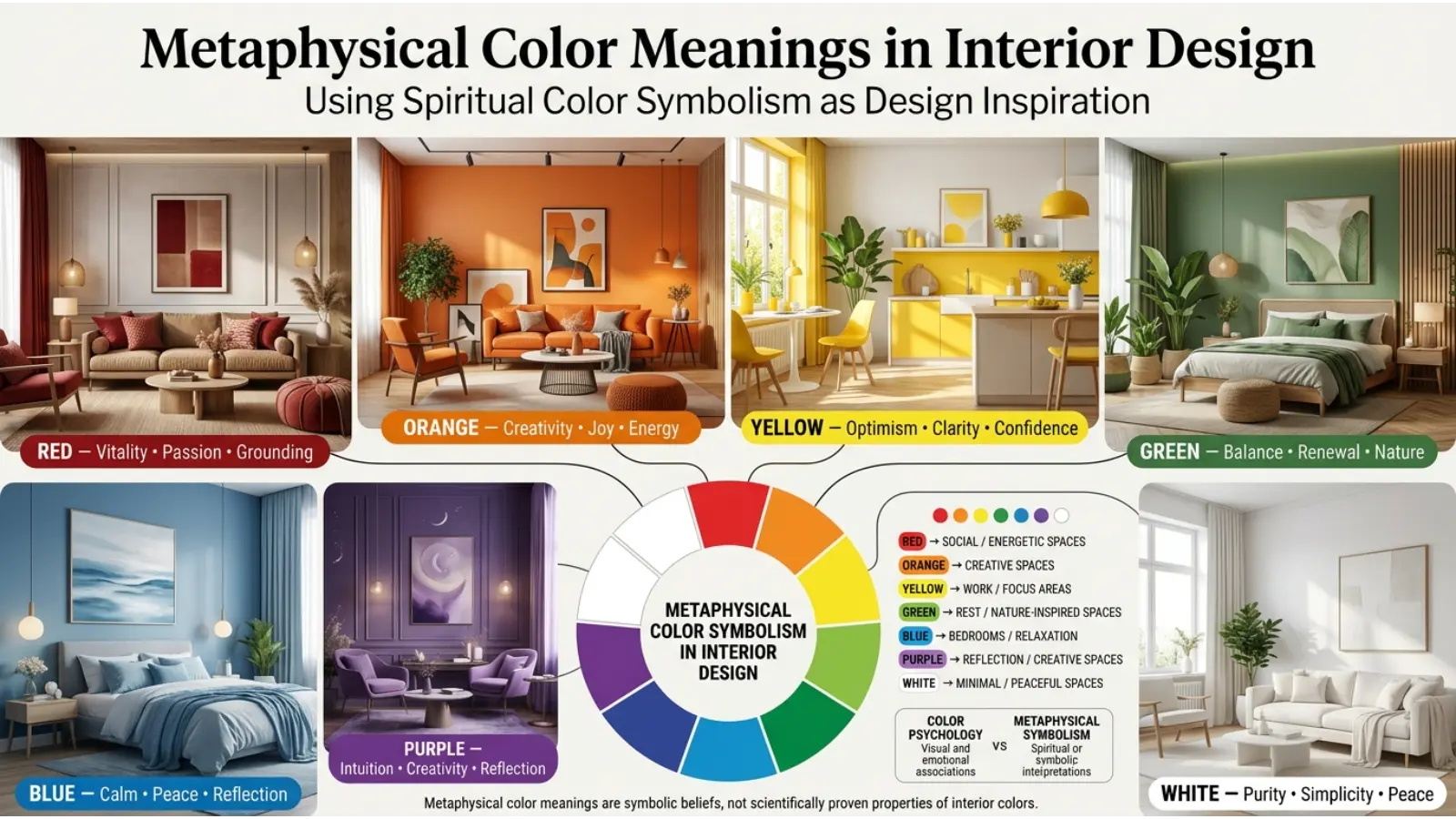
Metaphysical Color Meanings in Interior Design
Color can make a room feel different even when the furniture remains unchanged.
Living Room
Green, blue, beige, and warm neutrals can create a relaxed natural atmosphere.
Purple or deep blue can add a more reflective and dramatic quality.
Bedroom
Soft blue, lavender, muted green, and warm neutrals can support a quiet visual mood.
Office
Yellow accents can add brightness, while blue or green may create a more restrained appearance.
Meditation Space
White, lavender, blue, green, or natural earth colors can reinforce themes of peace and reflection.
The key is balance. A symbolic color does not need to dominate the room. Curtains, artwork, cushions, lighting, or small decorative objects can communicate the intended theme.
Metaphysical Colors in Fashion
Clothing allows people to communicate symbolism without saying anything.
Someone wearing red might want to project confidence or energy. Blue may create a calm or professional impression. Purple can appear creative or distinctive. White can feel clean and simple, while black can communicate formality and strength.
Yet clothing color is interpreted through the entire outfit.
Fabric, texture, cut, accessories, lighting, and social setting can change the message dramatically.
Useful Fashion Pairings
| Main Color | Strong Pairings | Overall Impression |
|---|---|---|
| 🔴 Red | Black, white, beige | Bold and energetic |
| 🟠 Orange | Cream, brown, navy | Warm and creative |
| 🟡 Yellow | Gray, navy, white | Bright and confident |
| 🟢 Green | Cream, brown, gold | Natural and balanced |
| 🔵 Blue | White, gray, beige | Calm and polished |
| 🟣 Purple | Gray, cream, gold | Creative and refined |
| 🩷 Pink | White, gray, navy | Soft and friendly |
| ⚫ Black | White, gold, silver | Strong and formal |
Metaphysical Color Meanings in Branding
Brands use color strategically because color can influence visual recognition and shape expectations.
However, there is no universal rule that says one color guarantees trust, sales, luxury, or success.
Brand meaning comes from the entire identity, including:
- Logo
- Typography
- Product
- Packaging
- Photography
- Language
- Customer experience
- Cultural context
- Color palette
Blue is frequently used by organizations that want to appear dependable or professional, while green is common in brands emphasizing nature or environmental themes.
Luxury brands may use black, gold, cream, or deep jewel tones because these combinations can visually communicate sophistication.
The important lesson is that color supports a brand message; it does not create the entire message by itself.
How Lighting Changes Color Meaning
The same paint, fabric, or object can look completely different under different lighting.
Warm lighting can make white appear creamy and can increase the warmth of red, orange, and yellow.
Cool lighting can make blue and green appear stronger while making warm colors feel less intense.
Natural daylight also changes throughout the day.
Therefore, if you are choosing a metaphysical color for a room, artwork, altar, clothing piece, or website, test it under the lighting where it will actually be used.
Color Combinations and Their Metaphysical Feel
Color combinations can create a stronger symbolic message than individual colors.
Blue + White
Often suggests peace, clarity, openness, and simplicity.
Green + Brown
Creates a strong nature and grounding theme.
Purple + Gold
Can suggest spirituality, wisdom, luxury, or mystery.
Red + Black
Often creates an intense impression involving strength, passion, mystery, or power.
Pink + White
Can communicate softness, affection, innocence, and compassion.
Blue + Purple
Can create a reflective, mystical, or contemplative atmosphere.
The meaning is still contextual. A color palette used in a spiritual painting may communicate something completely different from the same palette used on a sports poster.
Metaphysical Color Meanings in Art and Photography
Artists have long used color to guide attention and create symbolic contrasts.
A dark background can make a bright object appear more significant. A single red object inside an otherwise muted scene can become the visual center.
Photographers can similarly use color temperature and contrast to create emotional atmosphere.
For example:
- Blue shadows can create a cool, distant feeling.
- Warm orange light can create intimacy.
- Green landscapes can suggest renewal.
- Purple lighting can create mystery.
- Black-and-white imagery can emphasize form, texture, and nostalgia.
These effects are artistic tools rather than proof that colors contain supernatural forces.
Common Misconceptions About Metaphysical Colors
Myth 1: Every Color Has One Universal Meaning
Not true. Color symbolism changes between cultures, religions, spiritual traditions, and individuals.
Myth 2: Color Can Automatically Change Your Energy
There is no established scientific evidence that simply looking at a color automatically changes a supernatural energy field.
Myth 3: A Color Can Cure Disease
Color symbolism should never replace medical diagnosis or treatment.
Myth 4: Favorite Colors Reveal Personality With Certainty
Color preference can provide a starting point for reflection, but it cannot reliably determine someone’s complete personality.
Myth 5: Dark Colors Are Always Negative
Black, dark blue, deep purple, and other dark colors can represent strength, mystery, depth, protection, elegance, or transformation.
Myth 6: Spiritual Color Meanings Are Scientifically Proven
Some color effects on perception and behavior have been studied, but metaphysical interpretations are generally matters of tradition, belief, or personal symbolism.
How to Choose a Metaphysical Color for Your Intention
Instead of memorizing a giant list of meanings, start with your purpose.
For Courage
Consider red.
For Creativity
Consider orange or purple.
For Optimism
Consider yellow.
For Growth
Consider green.
For Peace
Consider blue or white.
For Spiritual Reflection
Consider purple, indigo, or white.
For Love and Compassion
Consider pink or green.
For Grounding
Consider brown, green, or red.
For Protection Symbolism
Consider black, deep blue, or white, depending on the tradition.
The strongest symbolic color is often the one whose meaning feels clear and intentional to you.
A Practical Metaphysical Color Guide
| Your Intention | Colors to Consider | Why |
|---|---|---|
| Courage | 🔴 Red | Represents action and vitality |
| Creativity | 🟠 Orange, 🟣 Purple | Suggests expression and imagination |
| Confidence | 🟡 Yellow, 🔴 Red | Associated with brightness and strength |
| Growth | 🟢 Green | Strong connection with nature and renewal |
| Peace | 🔵 Blue, ⚪ White | Common associations with calm and clarity |
| Love | 🩷 Pink, 🔴 Red | Represents affection and passion |
| Spiritual reflection | 🟣 Purple, ⚪ White | Associated with contemplation and clarity |
| Grounding | 🟤 Brown, 🟢 Green | Earth and natural associations |
| Transformation | 🟣 Purple, ⚫ Black | Symbolizes change, mystery, and transition |
| Abundance | 🟢 Green, 🟨 Gold | Common symbols of prosperity and growth |
Why Metaphysical Color Meanings Feel Personal
Symbolism works partly because humans naturally connect sensory experiences with memories and ideas.
A color may remind one person of childhood, another of a religious ceremony, and another of a favorite place.
Consequently, personal symbolism can be stronger than a generic color dictionary.
If blue reminds you of a peaceful ocean, using blue during reflection may help you enter that mental state because of your own association. The effect comes from the meaning you have attached to the color, not necessarily from an invisible property contained inside blue light.
This makes personal interpretation an important part of meaningful color practice.
Frequently Asked Questions About Metaphysical Color Meanings
What is the most spiritual color?
Purple, violet, indigo, white, and sometimes blue are commonly associated with spirituality. However, no single color is universally recognized as the “most spiritual” color.
What color represents spiritual protection?
Black, white, blue, and other colors can symbolize protection depending on the spiritual tradition. The meaning should be understood within its specific cultural or religious context.
What color represents healing?
Green and blue are often used symbolically to represent healing, renewal, peace, or restoration. However, color symbolism is not a substitute for medical treatment.
What color represents transformation?
Purple and black are frequently used as symbols of transformation, mystery, endings, and personal change. Their exact meanings vary by tradition.
What color represents positive energy?
Yellow, orange, red, green, and gold can all symbolize positive energy, depending on the intended message. Bright colors often create a more energetic visual impression.
What color represents wisdom?
Blue, purple, indigo, and gold are commonly associated with wisdom or knowledge in different symbolic systems.
What color represents balance?
Green is one of the strongest general symbols of balance because of its association with nature and harmony. Blue can also represent emotional calm and balance.
What color represents new beginnings?
White, green, and yellow can symbolize new beginnings. White often suggests a clean start, green suggests growth, and yellow can suggest optimism.
Can colors affect your emotions?
Colors can influence perception and emotional responses, but the effect varies between people and situations. Culture, personal experience, lighting, brightness, and context all matter.
Are metaphysical color meanings scientifically proven?
Metaphysical color meanings are generally symbolic or spiritual interpretations rather than scientifically established facts. Some aspects of color perception and psychology are studied scientifically, but that does not prove supernatural properties for individual colors.
Final Thoughts on Metaphysical Color Meanings
Metaphysical color meanings offer a fascinating way to explore symbolism, intention, emotion, spirituality, and personal expression. Red can suggest courage, green can represent growth, blue can evoke peace, purple can symbolize spiritual reflection, and white can suggest clarity or new beginnings.
Still, color meanings are not fixed laws. Culture, history, religion, personal experience, lighting, design, and context all shape the message a color sends.
The most useful way to approach metaphysical color symbolism is to keep both imagination and critical thinking. Use colors as meaningful symbols, meditation cues, creative tools, or reminders of personal intentions, while separating those interpretations from claims that require scientific evidence.
Ultimately, a color becomes especially powerful when you understand why you chose it. Instead of asking only what a color supposedly means, ask what it represents in your culture, your tradition, your surroundings, and your own experience. That is where color symbolism becomes more personal, thoughtful, and meaningful.

Emma Wilson is a dedicated comparison writer and product researcher at ColorMystiic.com. She specializes in creating unbiased product comparisons, detailed reviews, and helpful buying guides. Her goal is to help readers make smarter purchasing decisions with confidence.