Mood-changing rings have fascinated people for decades. They promise to reveal emotions through shifting colors, making them both a fashion accessory and a conversation starter. While many people search for mood changing rings color meanings to understand what each shade represents, the truth is more interesting than many realize.
Unlike mystical objects, mood rings rely on temperature-sensitive technology. As your finger temperature changes, the ring displays different colors that have traditionally been linked to emotional states. Although these meanings are based on popular symbolism rather than scientific proof, they remain widely recognized and enjoyable to explore.
In this guide, you’ll learn how mood rings work, what each color traditionally means, why interpretations vary, and how color psychology, culture, and context influence these fascinating accessories.
Quick Answer:
Mood-changing rings change color because of body temperature, not because they directly detect emotions. However, each color has traditional symbolic meanings. For example, blue often represents calmness, green suggests balance, yellow may indicate excitement or stress, and black usually means the ring is cold or not functioning properly.
How Do Mood-Changing Rings Work?
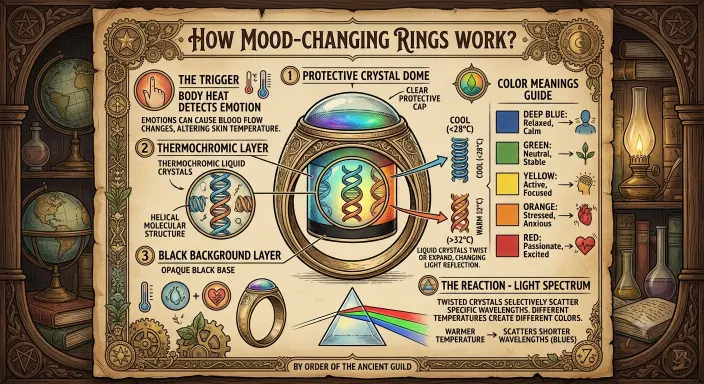
Mood rings contain a special liquid crystal inside a transparent stone or glass.
These thermochromic liquid crystals react to changes in temperature. As your skin becomes warmer or cooler, the crystal structure changes, reflecting different wavelengths of light. That change creates the colorful appearance you see.
Body temperature naturally changes because of many factors, including:
- Emotional reactions
- Physical activity
- Room temperature
- Stress
- Blood circulation
- Illness
- Weather
Because emotions can influence body temperature, mood rings sometimes appear to reflect feelings. However, they are measuring temperature, not emotions themselves.
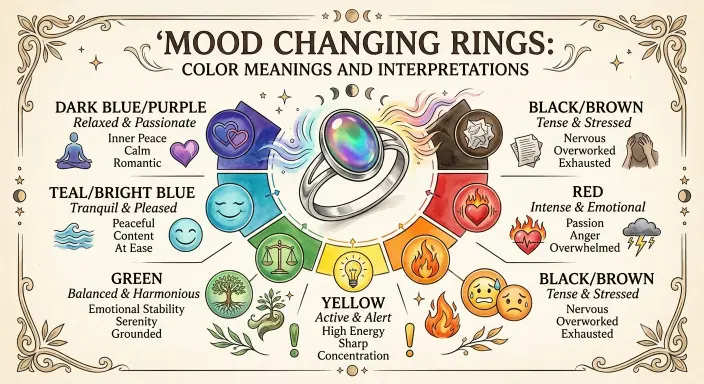
Mood Changing Rings Color Meanings Chart
| Color | Traditional Meaning |
|---|---|
| Black | Cold, stressed, inactive, or ring not warmed |
| Brown | Nervous, restless, unsettled |
| Amber | Mixed emotions, uncertainty |
| Yellow | Excited, curious, energetic |
| Orange | Adventurous, ambitious, stimulated |
| Green | Calm, balanced, comfortable |
| Light Blue | Relaxed, peaceful |
| Dark Blue | Happy, confident, content |
| Purple | Passionate, creative, romantic |
| Violet | Inspired, imaginative |
| Pink | Loving, affectionate, joyful |
Remember that these meanings are symbolic traditions rather than scientifically verified emotional readings.
What Does Black Mean on a Mood Ring?
Black is often misunderstood.
Many people assume it represents anger or bad luck. In reality, black usually means the liquid crystals are too cold to activate properly.
Traditional interpretations include:
- Stress
- Fatigue
- Anxiety
- Cold hands
- Low circulation
If your mood ring stays black indoors, it may simply need more warmth.
Brown Mood Ring Meaning
Brown generally symbolizes emotional uncertainty.
It is commonly associated with:
- Worry
- Restlessness
- Fatigue
- Mental overload
- Temporary discomfort
Since cooler fingers often produce darker colors, brown may simply indicate lower skin temperature.
Amber or Gold Mood Ring Meaning
Amber sits between warm and cool shades.
It traditionally represents:
- Mixed feelings
- Curiosity
- Anticipation
- Decision-making
- Mild excitement
People often notice amber during moments of transition rather than strong emotional extremes.
Yellow Mood Ring Meaning
Yellow usually appears when body temperature begins rising.
Traditional symbolism includes:
- Excitement
- Alertness
- Curiosity
- Creativity
- Nervous energy
Because yellow is naturally stimulating, it is often connected with active thinking and social interaction.
Orange Mood Ring Meaning
Orange combines the energy of red with the optimism of yellow.
Mood ring interpretations often include:
- Enthusiasm
- Motivation
- Adventure
- Confidence
- Excitement
However, intense activity or exercise may also produce warmer colors like orange.
Green Mood Ring Meaning
Green is considered one of the most desirable mood ring colors.
It traditionally represents:
- Balance
- Calmness
- Stability
- Comfort
- Normal emotional state
Many manufacturers even describe green as the “ideal” everyday color because it often appears at average skin temperatures.
Light Blue Mood Ring Meaning
Light blue is associated with peaceful emotions.
Common interpretations include:
- Relaxation
- Serenity
- Emotional comfort
- Patience
- Openness
Many people see blue while reading, resting, or enjoying quiet moments.
Dark Blue Mood Ring Meaning
Dark blue is one of the classic mood ring colors.
It traditionally symbolizes:
- Happiness
- Confidence
- Satisfaction
- Emotional security
- Inner peace
Because blue often appears when the body is comfortably warm, many mood ring charts label it as the happiest emotional state.
Purple Mood Ring Meaning
Purple combines calmness with imagination.
Traditional meanings include:
- Passion
- Creativity
- Romance
- Inspiration
- Personal growth
Its connection with luxury and mystery also makes purple one of the most popular symbolic colors.
Violet Mood Ring Meaning
Some rings distinguish violet from purple.
Violet commonly represents:
- Imagination
- Spiritual reflection
- Artistic thinking
- Original ideas
- Personal insight
These interpretations come mainly from color symbolism rather than scientific research.
Pink Mood Ring Meaning
Pink usually appears among the warmest colors.
Traditional meanings include:
- Love
- Happiness
- Friendship
- Affection
- Joy
Many people associate pink with positive social experiences and emotional warmth.
Why Mood Changing Rings Color Meanings Cannot Actually Read Emotions
One of the biggest misconceptions is that mood rings directly detect feelings.
Scientific evidence does not support this claim.
Instead, mood rings measure changes in skin temperature.
Emotions can influence temperature because:
- Stress narrows blood vessels.
- Relaxation improves circulation.
- Embarrassment increases facial warmth.
- Anxiety may cool the hands.
- Exercise raises body temperature.
Therefore, mood rings sometimes appear accurate because emotions and temperature are connected indirectly.
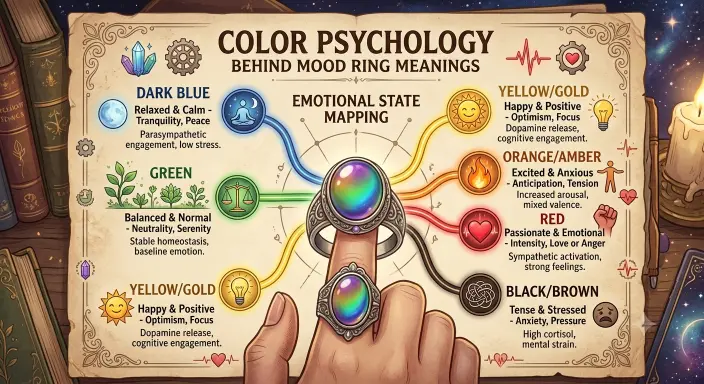
Color Psychology Behind Mood Ring Meanings
Many mood ring interpretations reflect general color psychology.
For example:
- Blue is widely associated with calmness.
- Green symbolizes balance and nature.
- Yellow suggests mental stimulation.
- Purple represents creativity.
- Pink evokes kindness and affection.
- Orange communicates enthusiasm.
- Black often represents mystery or uncertainty.
These psychological associations developed over centuries through art, culture, and design rather than laboratory testing.
Cultural Interpretations of Mood Ring Colors
Color meanings vary across cultures.
Western Cultures
- Blue often represents trust.
- Green symbolizes health.
- Purple reflects royalty.
- Black may suggest elegance or mourning.
East Asian Traditions
Some colors carry different historical meanings.
For example:
- White may symbolize mourning.
- Red often represents celebration and prosperity.
- Purple can signify nobility.
Modern Global Culture
Today, social media, branding, and fashion have blended many traditional meanings. As a result, mood ring color charts generally use a modern Western interpretation, although individual experiences may differ.
Spiritual Perspectives
Some people enjoy assigning spiritual meanings to mood ring colors.
Common symbolic interpretations include:
- Blue for inner peace
- Green for healing
- Purple for intuition
- Pink for compassion
- Yellow for optimism
These ideas come from various spiritual traditions and modern metaphysical beliefs. They should be viewed as symbolic interpretations rather than established facts.
Personality Associations
People often wonder whether their favorite mood ring color reflects their personality.
Research does not show that color preference determines personality. However, many people identify with common symbolic traits.
For example:
- Blue lovers may value stability.
- Green enthusiasts often appreciate nature.
- Purple fans may enjoy creativity.
- Yellow admirers sometimes prefer optimism.
- Pink supporters may value kindness.
These associations are descriptive rather than predictive.
Mood Rings in Fashion
Mood rings remain popular because they combine jewelry with interactive design.
They pair especially well with:
- Casual outfits
- Vintage fashion
- Bohemian styles
- Festival clothing
- Everyday accessories
Since the colors change throughout the day, they create a unique visual experience that standard gemstones cannot offer.
Mood Rings in Popular Culture
Mood rings became especially popular during the 1970s.
They quickly evolved from novelty jewelry into cultural icons.
Today they appear in:
- Fashion collections
- Gift shops
- Pop culture
- Retro trends
- Social media videos
Their nostalgic appeal continues to attract both collectors and first-time buyers.
Common Myths About Mood Rings
Myth: Mood rings detect thoughts.
False. They respond only to temperature changes.
Myth: Black always means anger.
Not necessarily. Cold temperatures often produce black.
Myth: Everyone gets the same colors.
No. Individual circulation, environment, and body temperature differ.
Myth: Mood rings predict the future.
There is no scientific evidence supporting predictive abilities.
Myth: Mood rings are magical.
They use thermochromic liquid crystal technology rather than supernatural forces.
Real-World Applications of Color Symbolism
Although mood rings are novelty items, their color meanings mirror principles used in many industries.
Marketing
Brands use calming blues to build trust and energetic oranges to attract attention.
Interior Design
Green and blue often create relaxing spaces, while yellow adds energy.
Fashion
Different colors communicate different impressions, from elegance to confidence.
Art
Artists use color symbolism to guide emotional responses.
Photography
Color grading helps establish atmosphere and mood in images.
Factors That Affect Mood Ring Colors
Several conditions can influence the colors you see.
These include:
- Room temperature
- Outdoor weather
- Finger size
- Blood circulation
- Exercise
- Stress
- Illness
- Age of the ring
- Quality of liquid crystals
Because these variables constantly change, the same person may see different colors throughout the day.
Frequently Asked Questions
Do mood rings really show your mood?
Not directly. They respond to changes in skin temperature, which emotions can influence but do not completely control.
Why is my mood ring always black?
It is usually too cold or not receiving enough body heat. Older rings may also lose their ability to change color.
What is the happiest mood ring color?
Many traditional charts identify dark blue as the happiest or most content emotional state.
What does green mean on a mood ring?
Green generally symbolizes balance, calmness, and emotional comfort.
Can mood rings predict emotions?
No. They measure temperature rather than emotions.
Why do mood ring meanings vary?
Different manufacturers use different color charts, and symbolic interpretations differ across cultures.
Are expensive mood rings more accurate?
Higher-quality rings may respond more consistently to temperature, but they still cannot scientifically measure emotions.
Can weather affect mood ring colors?
Yes. Cold weather often produces darker colors, while warmer temperatures create brighter shades.
How long do mood rings last?
With proper care, quality mood rings can last several years, although moisture may eventually damage the liquid crystals.
Are mood rings safe to wear?
Most modern mood rings are safe for everyday use, but they should not be exposed to excessive water, harsh chemicals, or prolonged heat.
Final Thoughts
Mood-changing rings blend science, symbolism, and style into a single accessory. Their shifting colors come from temperature-sensitive liquid crystals rather than emotion-detecting technology. Even so, the traditional mood changing rings color meanings remain enjoyable because they draw on familiar ideas from color psychology and cultural symbolism.
Instead of treating a mood ring as a scientific emotional detector, think of it as a playful reminder that our surroundings, bodies, and feelings are constantly changing. Its colors can spark conversations, encourage self-reflection, and add a touch of curiosity to everyday life—making the experience just as meaningful as the jewelry itself.
Emma Wilson is a dedicated comparison writer and product researcher at ColorMystiic.com. She specializes in creating unbiased product comparisons, detailed reviews, and helpful buying guides. Her goal is to help readers make smarter purchasing decisions with confidence.