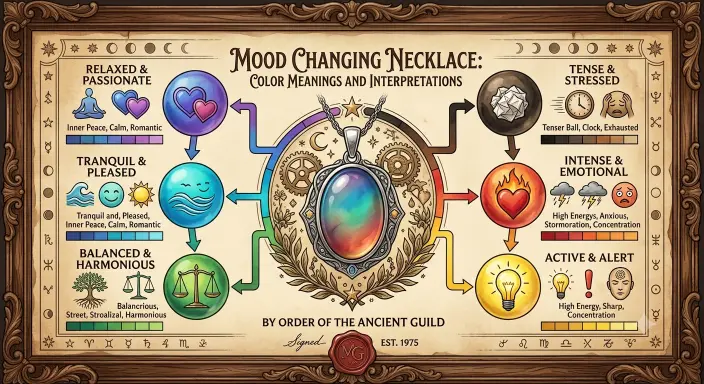
Mood changing jewelry has fascinated people for decades. A simple ring or necklace that appears to change color feels almost magical. However, the appeal goes beyond the color shift itself. Many people want to know what each color supposedly means and whether it reflects their emotions.The phrase Mood Changing Necklace Color Meanings refers to the traditional interpretations assigned to the different colors displayed by mood necklaces.
While these meanings are popular in jewelry marketing and popular culture, they should not be confused with scientifically proven emotional measurements. Instead, they combine color symbolism, psychology, and decades of cultural tradition.
Throughout this guide, you’ll learn how mood-changing necklaces work, what every color commonly symbolizes, how interpretations differ across cultures, and how these fascinating accessories are used in fashion and everyday life.
Quick Answer:
Mood changing necklace colors are created by thermochromic liquid crystals that react to temperature changes rather than directly reading emotions. Each color has a traditional symbolic meaning—such as blue for calmness, green for balance, purple for creativity, and red for passion—but these meanings are interpretive rather than scientifically verified.
How Does a Mood Changing Necklace Work?
Many people believe a mood necklace can detect emotions directly. In reality, it works through changes in temperature.
Inside the pendant is a layer of thermochromic liquid crystals. These crystals twist differently as they warm or cool. As a result, they reflect different wavelengths of light, causing the necklace to appear in various colors.
Your skin temperature changes naturally because of factors like:
- Emotional responses
- Physical activity
- Room temperature
- Sunlight
- Blood circulation
- Stress
- Relaxation
Because emotions can influence body temperature, people began associating specific colors with different moods. Even so, temperature alone cannot identify a person’s feelings with certainty.
Mood Changing Necklace Color Meanings Chart
| Color | Common Meaning |
|---|---|
| Black | Cold, stressed, inactive, or the necklace is cooling down |
| Gray | Nervousness, uncertainty, or low energy |
| Brown | Restlessness or anxious feelings |
| Amber | Excitement, mixed emotions, or anticipation |
| Yellow | Happiness, optimism, curiosity |
| Green | Balance, calmness, growth |
| Blue-Green | Relaxed, peaceful, emotionally steady |
| Blue | Calm, confident, comfortable |
| Dark Blue | Deep relaxation, security, reflection |
| Purple | Creativity, imagination, spiritual awareness |
| Pink | Affection, kindness, romance |
| Red | Passion, excitement, high energy |
These meanings vary by manufacturer, so two mood necklaces may use slightly different interpretation charts.
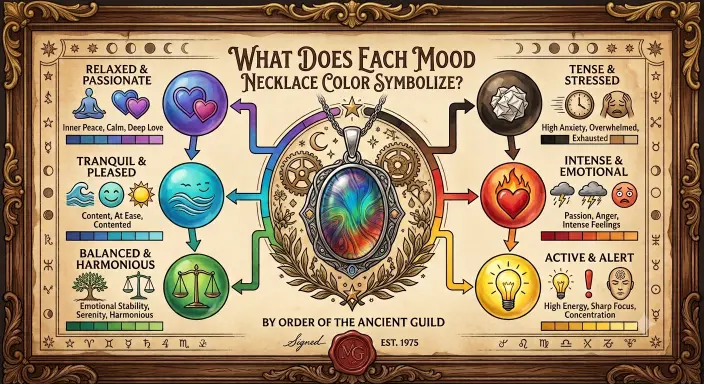
What Does Each Mood Necklace Color Symbolize?
Black
Black usually appears when the necklace is cool or not being worn. Symbolically, it has become associated with stress, exhaustion, or emotional distance.
In color psychology, black can also represent sophistication, authority, mystery, and protection.
Gray
Gray often symbolizes uncertainty or emotional neutrality.
Rather than indicating sadness alone, gray may simply suggest that emotions are changing or difficult to identify.
Brown
Brown commonly represents nervous energy or restlessness in mood jewelry.
Outside mood jewelry, brown symbolizes stability, reliability, nature, and comfort.
Amber
Amber combines the warmth of yellow with the energy of orange.
People often associate it with:
- Curiosity
- Excitement
- Adventure
- Motivation
- New experiences
Yellow
Yellow is traditionally linked with:
- Joy
- Optimism
- Learning
- Confidence
- Mental activity
However, very bright yellow can sometimes represent nervous excitement or overstimulation.
Green
Green is one of the most balanced colors on most mood charts.
It often symbolizes:
- Emotional stability
- Healing
- Personal growth
- Patience
- Renewal
Many people also connect green with nature, making it feel peaceful and refreshing.
Blue–Green
Blue-green blends the peaceful qualities of blue with the restorative nature of green.
It often represents:
- Harmony
- Balance
- Inner peace
- Relaxation
- Emotional control
Blue
Blue is one of the most commonly displayed colors on mood necklaces because normal skin temperature often falls within the range that produces blue shades.
Traditional meanings include:
- Calmness
- Confidence
- Security
- Trust
- Emotional comfort
Research in environmental psychology also suggests that blue surroundings may encourage feelings of relaxation in certain settings, although responses differ among individuals.
Dark Blue
Dark blue usually symbolizes:
- Deep peace
- Reflection
- Wisdom
- Confidence
- Emotional stability
It often appears when the body is warm but not overheated.
Purple
Purple has long been connected with:
- Creativity
- Imagination
- Spiritual exploration
- Luxury
- Individuality
Many people also associate purple with artistic thinking and self-expression.
Pink
Pink commonly symbolizes:
- Love
- Compassion
- Kindness
- Friendship
- Emotional warmth
Lighter pinks often represent gentle affection, while brighter shades may suggest excitement or romance.
Red
Red traditionally represents:
- Passion
- Energy
- Excitement
- Determination
- Strong emotions
Since higher skin temperatures often produce warmer colors, red became associated with intense emotional states.
Psychology Behind Mood Necklace Colors
Humans naturally connect colors with emotions. These associations develop through culture, personal experience, and environmental learning.
For example:
- Blue skies often encourage feelings of calm.
- Green forests are linked with restoration.
- Red attracts attention and signals urgency.
- Yellow reminds many people of sunshine and optimism.
Although these associations are widely recognized, scientific research does not support the idea that one color always represents one specific emotion.
Instead, color perception depends on context, personality, and experience.
Mood Necklace Color Meanings Scientifically Accurate?
The short answer is no—not in the way many advertisements suggest.
Scientists agree that mood necklaces react to temperature, not emotions themselves.
However, emotions can sometimes influence body temperature by affecting blood flow. For example:
- Stress may cool fingers.
- Excitement may increase warmth.
- Relaxation may improve circulation.
Therefore, mood necklaces can occasionally appear to reflect emotional changes indirectly.
Still, they cannot accurately measure happiness, anger, sadness, or love.
Spiritual Meaning Mood Changing Necklace Colors
Many people enjoy assigning spiritual symbolism to mood necklace colors. These interpretations vary among traditions and should be viewed as symbolic rather than universal beliefs.
Common spiritual associations include:
- Blue: Peace, communication, inner truth
- Green: Healing and growth
- Purple: Wisdom and intuition
- Pink: Compassion and unconditional love
- Yellow: Personal confidence
- Red: Life force and courage
Different spiritual practices interpret colors differently, so no single meaning applies to everyone.
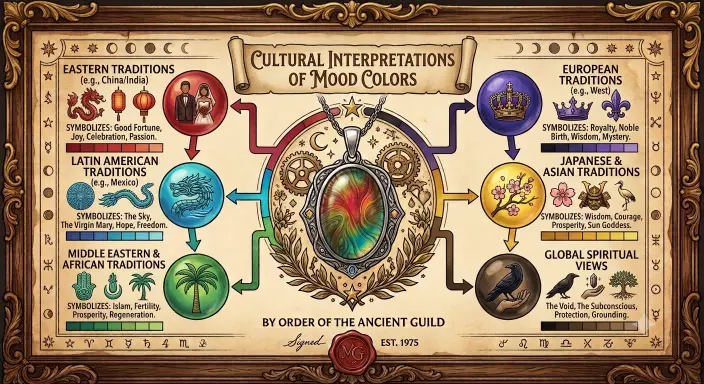
Cultural Interpretations of Mood Colors
Color symbolism changes around the world.
Western cultures
- Blue often represents trust.
- Green symbolizes nature.
- Black may represent elegance or mourning.
- White usually symbolizes purity.
East Asian traditions
White often relates to mourning rather than celebration, while red commonly symbolizes happiness, prosperity, and good fortune.
Middle Eastern traditions
Green frequently carries positive religious and cultural significance.
Indigenous traditions
Many Indigenous cultures connect colors with nature, seasons, animals, or spiritual teachings. These meanings differ greatly between communities.
Because symbolism varies widely, mood necklace interpretations should be viewed as flexible rather than universal.
Mood Necklace Color Changes
Many everyday factors influence necklace colors, including:
- Outdoor temperature
- Air conditioning
- Exercise
- Holding a warm drink
- Cold weather
- Stress
- Sleep
- Illness
- Sun exposure
As a result, the same person may see several different colors within a single day.
Mood Changing Necklaces in Fashion
Mood necklaces remain popular because they combine style with personal expression.
They work well with:
- Casual outfits
- Bohemian fashion
- Vintage clothing
- Festival wear
- Layered necklaces
- Statement accessories
Many people also enjoy using them as conversation starters.
Mood Changing Necklaces in Gift Giving
These necklaces make thoughtful gifts because they carry symbolic meaning.
Popular occasions include:
- Birthdays
- Valentine’s Day
- Mother’s Day
- Friendship gifts
- Graduation
- Anniversary celebrations
The changing colors add an interactive element that many recipients enjoy.
Why People Still Love Mood Jewelry
Despite limited scientific evidence, mood jewelry remains popular for several reasons.
People appreciate:
- Nostalgia
- Color symbolism
- Interactive design
- Fashion appeal
- Personal meaning
- Conversation value
In many ways, the emotional connection comes from what the colors represent rather than what they scientifically measure.
Common Misconceptions About Mood Changing Necklace Color Meanings
Myth: The necklace reads your mind.
Reality: It responds to temperature changes.
Myth: Every company uses the same color chart.
Reality: Manufacturers often assign different meanings.
Myth: One color always means one emotion.
Reality: Human emotions are complex and cannot be identified through color alone.
Myth: Mood necklaces predict the future.
Reality: There is no scientific evidence supporting this claim.
Practical Uses Beyond Mood Reading
Today, mood necklaces are valued more for creativity than emotional measurement.
People wear them for:
- Personal style
- Fashion accessories
- Ice-breaker conversations
- Nostalgic memories
- Color appreciation
- Symbolic self-expression
Artists and designers also use color-changing materials to create interactive jewelry and decorative objects.
Frequently Asked Questions
What do mood changing necklace colors really mean?
They represent traditional symbolic interpretations based on color psychology and popular culture rather than scientifically verified emotional states.
Does a mood necklace actually detect emotions?
No. It reacts to changes in skin temperature using thermochromic liquid crystals.
Why is my mood necklace always blue?
Blue often appears at normal skin temperatures, making it one of the most common colors.
What does black mean on a mood necklace?
Black usually means the necklace is cool, not being worn, or exposed to lower temperatures.
Can stress change a mood necklace’s color?
Sometimes. Stress may affect blood circulation and skin temperature, which can indirectly influence the displayed color.
Are mood necklace color meanings universal?
No. Different manufacturers and cultures may interpret colors differently.
Is purple the best mood necklace color?
Not necessarily. Purple traditionally symbolizes creativity and imagination, but no color is objectively better than another.
Do mood necklaces stop working?
Yes. Over time, moisture, age, scratches, or damaged liquid crystals may reduce their ability to change color.
Can children wear mood necklaces?
Many designs are suitable for older children, but parents should check age recommendations and small-part safety guidelines.
Are mood necklaces still popular?
Yes. Vintage fashion, nostalgia, and interest in color symbolism continue to keep mood jewelry popular with many people.
Final Thoughts
Mood changing necklace color meanings combine science, symbolism, fashion, and personal interpretation in a unique way. While the necklace itself responds to temperature rather than emotions, the colors have become powerful symbols that many people enjoy exploring.
Blue may remind someone of calm, green may suggest balance, and red may evoke confidence or passion. Yet these meanings are shaped by culture, personal experience, and context.
Rather than treating a mood necklace as an emotional detector, think of it as a creative accessory that invites reflection and conversation. Its changing colors can encourage you to notice your surroundings, appreciate the psychology of color, and recognize how deeply symbolism influences the way we see the world.
Emma Wilson is a dedicated comparison writer and product researcher at ColorMystiic.com. She specializes in creating unbiased product comparisons, detailed reviews, and helpful buying guides. Her goal is to help readers make smarter purchasing decisions with confidence.