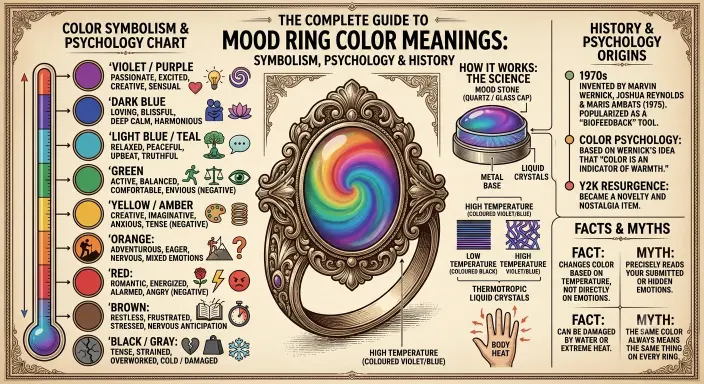
Mood rings have fascinated people for decades because they appear to change color based on body temperature and create a visual connection between colors and emotions. Many people search for a mood ring color meanings Symbolism, Psychology & History list because they want to understand what each shade represents and what their mood ring may be “saying.”
Although mood rings do not scientifically read emotions, their colors are based on thermochromic liquid crystals that respond to changes in temperature. When your finger temperature changes because of your environment, stress, relaxation, activity, or circulation, the crystal changes color. The meanings attached to these colors come from symbolism, popular culture, and traditional color psychology.
Therefore, mood ring colors should be viewed as a fun reflection tool rather than a scientific emotional test. However, colors do influence how humans think, feel, and interpret the world around them.
This guide explains the meaning behind common mood ring colors, including their psychological associations, cultural symbolism, personality connections, and practical uses in fashion, design, and branding.
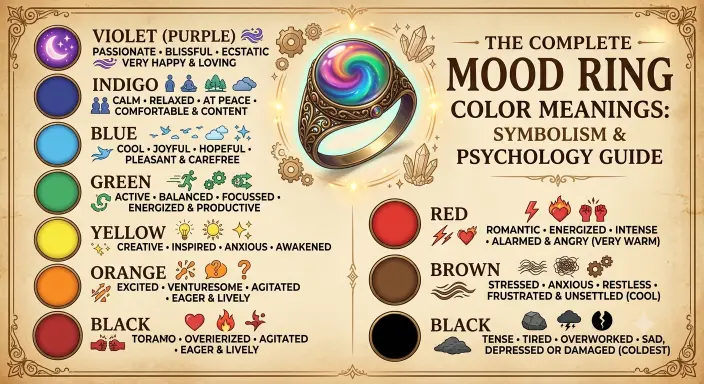
Quick Answer: A mood ring color meanings list usually connects colors like blue with calmness, green with balance, yellow with happiness or energy, purple with creativity, black with tension or cold temperature, and red with excitement or strong emotions. These meanings are symbolic rather than scientifically proven.
Mood Ring Color Meanings List: Complete Symbolism Guide
What Do Mood Ring Colors Symbolize?
Mood rings became popular in the 1970s as novelty jewelry that combined science, fashion, and emotional symbolism. The colors displayed by a mood ring are often interpreted as emotional states, but the meanings are mostly based on cultural associations with colors.
Because colors communicate feelings quickly, people naturally connect certain shades with specific experiences. For example, blue is often connected with peace because people associate it with clear skies and calm water. Similarly, red is often linked with energy because it resembles fire, passion, and movement.
However, context changes meaning. A dark blue shade may represent relaxation in one situation, while a blue color in a workplace design may communicate trust and professionalism.
Blue Mood Ring Meaning
Blue is one of the most common mood ring colors and is traditionally associated with calmness, relaxation, and emotional balance.
When a mood ring appears blue, popular interpretations often describe:
- Peaceful feelings
- Relaxation
- Comfort
- Stability
- Emotional calm
From a psychology perspective, blue is often considered a calming color because humans commonly associate it with nature elements such as oceans and skies. Many companies also use blue because it can create feelings of reliability and trust.
However, blue can sometimes represent sadness in certain cultural expressions, such as the phrase “feeling blue.”
Blue in Daily Life
Blue appears frequently in:
- Bedrooms for a peaceful atmosphere
- Business branding for trust
- Clothing for a professional appearance
- Artwork representing calm environments
Green Mood Ring Meaning
Green is commonly linked with balance, growth, and harmony.
A green mood ring color is often interpreted as:
- Normal emotional state
- Balance
- Peace
- Connection with nature
- Stability
Green has strong natural associations because plants and forests surround humans with this color. As a result, many people connect green with renewal and freshness.
In branding, green is frequently used by companies connected with:
- Nature
- Health
- Sustainability
- Organic products
However, green can also represent jealousy or inexperience depending on the situation.
Yellow Mood Ring Meaning
Yellow is usually associated with happiness, optimism, and mental activity.
A yellow mood ring may traditionally represent:
- Curiosity
- Positive energy
- Creativity
- Excitement
- Alertness
Bright yellow attracts attention quickly, which is why designers often use it for warning signs, advertisements, and cheerful branding.
At the same time, too much yellow can sometimes feel overwhelming because the color is visually powerful.
Purple Mood Ring Meaning
Purple is connected with imagination, mystery, creativity, and spirituality.
A purple mood ring is often interpreted as:
- Creativity
- Inspiration
- Emotional depth
- Luxury
- Intuition
Historically, purple was associated with royalty because purple dyes were rare and expensive. Therefore, the color became connected with power and prestige.
Today, purple is popular in:
- Creative industries
- Beauty branding
- Luxury products
- Fantasy themes
Red Mood Ring Meaning
Red represents energy, passion, and strong emotions.
A red or reddish mood ring color is often associated with:
- Excitement
- Confidence
- Passion
- Strong feelings
- Physical energy
Red attracts attention faster than many other colors, which is why it appears frequently in advertising and entertainment.
However, red can also represent anger or warning because it is visually intense.
Black Mood Ring Meaning
Black is often interpreted as stress, nervousness, or emotional pressure in traditional mood ring charts.
However, scientifically, a black mood ring often means the liquid crystals are not showing warmer temperature colors. It may appear black when the ring is cold or not functioning properly.
Symbolically, black can represent:
- Mystery
- Strength
- Protection
- Elegance
- Seriousness
In fashion, black is considered timeless because it creates a sophisticated appearance.
Orange Mood Ring Meaning
Orange is associated with enthusiasm, creativity, and social energy.
Traditional interpretations include:
- Excitement
- Adventure
- Motivation
- Confidence
- Playfulness
Orange combines the energy of red with the happiness of yellow, creating a color that feels active and friendly.
Designers often use orange when they want to create a youthful and energetic impression.
Pink Mood Ring Meaning
Pink is commonly connected with affection, kindness, and emotional warmth.
A pink mood ring may symbolize:
- Love
- Care
- Happiness
- Gentleness
- Emotional openness
Pink is often used in products related to beauty, relationships, and self-care because it creates a softer emotional impression.
Brown Mood Ring Meaning
Brown is connected with stability, comfort, and connection to nature.
Traditional meanings include:
- Grounded emotions
- Security
- Practical thinking
- Comfort
Brown is often used in interior design because it creates a warm and natural environment.
White Mood Ring Meaning
White is usually associated with clarity, simplicity, and freshness.
Symbolic meanings include:
- Peace
- Clean energy
- New beginnings
- Calmness
White is widely used in modern design because it creates a feeling of openness and space.
Psychology of Mood Ring Color Meanings
Color psychology studies how colors influence human perception and behavior. While some emotional reactions to colors are widely observed, personal experiences and cultural backgrounds also influence responses.
A person may find blue relaxing because it reminds them of peaceful places. Another person may associate blue with a difficult memory. Therefore, color meanings are not universal rules.
Mood rings are interesting because they encourage people to notice colors and reflect on their feelings. The value comes more from personal interpretation than from accurate emotional measurement.
Spiritual Mood Ring Color Meanings
Many people enjoy connecting colors with spiritual ideas such as energy, balance, and personal growth. However, these interpretations vary between traditions and should not be considered universal facts.
Common symbolic connections include:
- Blue: Peace and communication
- Green: Healing and growth
- Purple: Wisdom and transformation
- White: Purity and renewal
- Red: Strength and energy
Different cultures and spiritual systems may interpret colors differently.
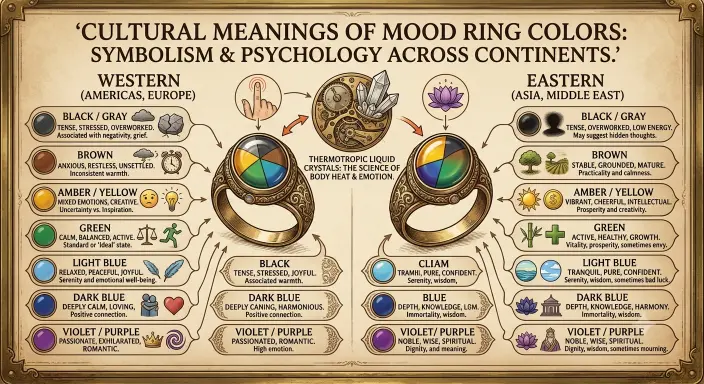
Cultural Meaning of Mood Ring Colors
Colors do not have identical meanings around the world.
Western Interpretations
In many Western cultures:
- White often represents simplicity and purity
- Black can represent elegance or mourning
- Red symbolizes passion and power
- Blue represents trust and calmness
Eastern Interpretations
Some Eastern cultures connect colors with:
- Spiritual traditions
- Festivals
- Historical symbolism
- Social meanings
For example, certain colors may represent prosperity or celebration depending on the country.
Modern Global Culture
Today, social media, fashion, movies, and advertising influence how people understand colors. A color’s meaning can change quickly based on trends.
Historical Meaning of Mood Rings
Mood rings themselves became famous in the 1970s during a period when people were interested in self-expression, personal identity, and new technology.
The idea of linking colors with emotions was attractive because it combined science with personality. Although mood rings were marketed as emotional indicators, their popularity came mainly from entertainment and fashion.
Over time, mood rings became nostalgic accessories connected with creativity and personal style.
Personality Associations With Mood Ring Colors
Many people enjoy choosing colors that match their personality. However, research does not prove that a favorite color determines personality.
Common associations include:
- Blue lovers may be seen as calm and dependable
- Purple lovers may appear creative and imaginative
- Red lovers may seem confident and energetic
- Green lovers may value balance and nature
- Black lovers may prefer elegance and independence
These are cultural impressions, not personality tests.
Mood Rings in Branding and Marketing
Although mood rings are personal accessories, their color symbolism connects strongly with branding.
Companies choose colors carefully because colors influence first impressions.
Examples:
- Blue can communicate trust
- Green can suggest natural products
- Purple can create luxury feelings
- Red can encourage excitement
- Yellow can create cheerful energy
Marketers use colors in logos, packaging, websites, and advertisements because visual impressions often happen before customers read information.
Mood Rings in Interior Design
Mood ring colors can inspire home decoration ideas.
Calm Spaces
Blue and green tones can create relaxing environments.
Good uses:
- Bedrooms
- Reading areas
- Meditation spaces
Creative Spaces
Purple, orange, and yellow can encourage a lively atmosphere.
Good uses:
- Art rooms
- Offices
- Creative studios
Warm Spaces
Brown and red tones can create comfortable and energetic rooms.
Lighting also changes how colors appear. A color may look warmer under yellow lighting and cooler under white lighting.
Mood Rings and Fashion Meaning
Mood rings remain popular because they combine jewelry with personal expression.
They can add:
- Nostalgia
- Playfulness
- Colorful style
- Individual personality
Fashion choices involving mood ring colors often depend on:
- Outfit colors
- Season
- Occasion
- Personal preference
For example, blue and silver combinations often create a modern look, while purple and gold combinations feel more luxurious.
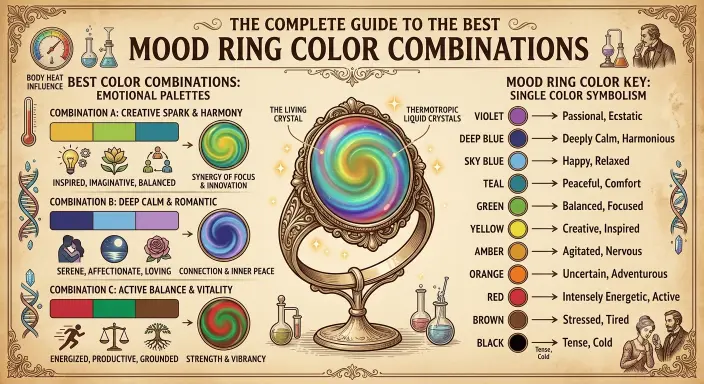
Best Color Combinations Inspired by Mood Rings
Blue and White
Creates a clean and peaceful appearance.
Purple and Gold
Creates a luxurious and creative feeling.
Green and Brown
Creates a natural and earthy style.
Red and Black
Creates a bold and powerful impression.
Yellow and Blue
Creates a cheerful and energetic combination.
Common Misconceptions About Mood Ring Colors
Myth: Mood Rings Read Exact Emotions
Mood rings do not measure feelings directly. They respond to temperature changes.
Myth: Each Color Has One Fixed Meaning
Color meanings depend on culture, personal experience, and context.
Myth: Your Favorite Color Reveals Your Personality Completely
Color preference can show interests or emotions, but it does not define who someone is.
Real-World Uses of Mood Ring Color Symbolism
Mood ring colors influence many areas beyond jewelry.
Daily Life
People use colors to express personality through clothing and accessories.
Business
Brands use color psychology to create emotional connections.
Art
Artists use colors to communicate feelings without words.
Photography
Photographers choose colors to create specific moods.
Entertainment
Movies and games use colors to represent characters, emotions, and themes.
Frequently Asked Questions About Mood Ring Color Meanings
What does a blue mood ring mean?
A blue mood ring is traditionally associated with calmness, relaxation, and emotional balance. It is a symbolic interpretation, not a scientific measurement.
Are mood ring colors scientifically accurate?
No. Mood rings detect temperature changes, not emotions. The meanings attached to colors are mainly cultural and symbolic.
What does a purple mood ring mean?
Purple is commonly connected with creativity, imagination, mystery, and luxury.
Why does my mood ring turn black?
A black mood ring may appear when the ring is cold or unable to display warmer colors properly.
What color represents happiness on a mood ring?
Yellow is often associated with happiness, optimism, and positive energy.
Can mood rings predict emotions?
No. They cannot predict emotions, but they can be a fun way to reflect on feelings.
Why do mood rings change colors?
Mood rings contain temperature-sensitive crystals that change appearance when exposed to different temperatures.
What is the rarest mood ring color?
The rarest color depends on the type of liquid crystal used, but many traditional charts include unusual shades like gray or dark purple.
Do mood ring meanings change between cultures?
Yes. Different cultures attach different meanings to colors based on history, traditions, and social experiences.
Conclusion
A mood ring color meanings list offers a fascinating look at how humans connect colors with emotions, personality, and symbolism. While mood rings cannot scientifically reveal feelings, they represent something deeper: our natural desire to understand ourselves through visual symbols.
Colors influence fashion, branding, design, art, and everyday choices. A single shade can create feelings of calmness, excitement, luxury, or connection depending on where and how it is used.
The next time your mood ring changes color, consider it a moment for reflection and creativity rather than a simple emotional prediction. Colors are powerful because they tell stories, and those stories change with people, cultures, and experiences.
Emma Wilson is a dedicated comparison writer and product researcher at ColorMystiic.com. She specializes in creating unbiased product comparisons, detailed reviews, and helpful buying guides. Her goal is to help readers make smarter purchasing decisions with confidence.