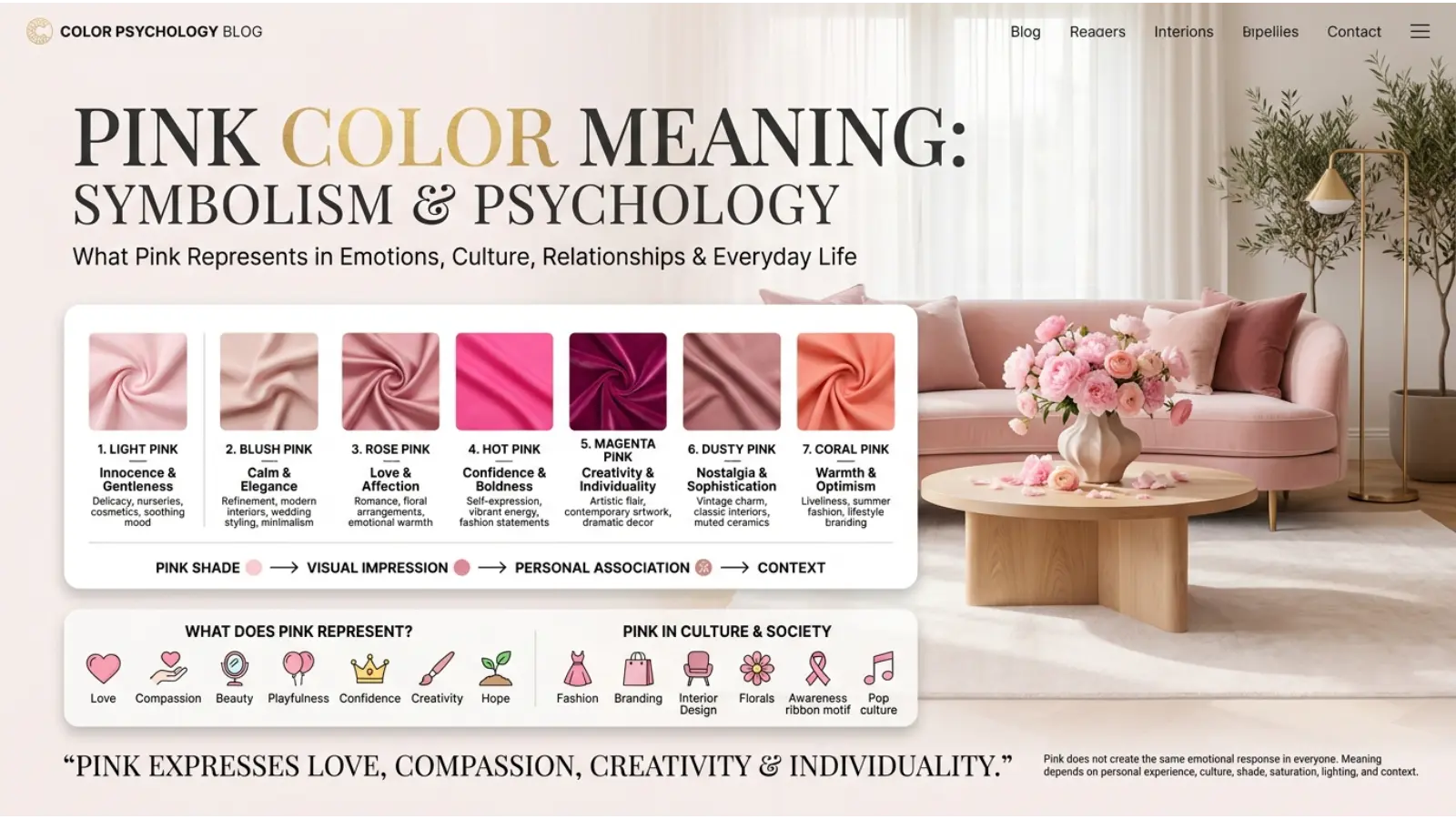
Pink is often associated with love, kindness, romance, and softness. However, the pink color meaning goes far beyond flowers, affection, and feminine style. Depending on its shade and setting, pink can express comfort, playfulness, confidence, creativity, or even boldness. A pale blush pink may feel peaceful, while a bright hot pink can look energetic and attention-grabbing.
People search for pink color symbolism to understand emotions, personality associations, spiritual interpretations, fashion choices, and design trends. Yet, color meanings are not universal. Personal experiences, cultural traditions, age, and social expectations all influence how people interpret pink. In this guide, you will discover its psychological associations, historical background, cultural meanings, and practical uses in everyday life.
Quick Answer: What Does Pink Mean?
Pink commonly symbolizes love, compassion, tenderness, romance, hope, and emotional warmth. Light pink is often associated with gentleness and innocence, while bright pink can represent confidence, excitement, and individuality. Its spiritual and cultural meanings vary by tradition, and liking pink does not determine someone’s personality.
What Does the Pink Color Symbolize?
Pink combines the visual qualities of red with the lightness created by adding white. Because red is often associated with passion and intensity, pink can express a softer or more approachable form of affection. Nevertheless, different shades create different impressions.
Here are the most common symbolic meanings of pink.
| Symbolic Meaning | What It Represents |
|---|---|
| Love and romance | Affection, tenderness, and emotional connection |
| Compassion | Kindness, empathy, and care for others |
| Gentleness | Softness, patience, and a peaceful approach |
| Hope | Encouragement, optimism, and fresh possibilities |
| Innocence | Youthfulness, simplicity, and playfulness |
| Confidence | Self-expression, individuality, and boldness |
| Creativity | Imagination, originality, and artistic expression |
| Sensitivity | Emotional awareness and vulnerability |
These meanings depend on context. For example, pink roses can communicate affection, while a neon pink jacket may express confidence and a desire to stand out. Therefore, pink does not always mean quietness or delicacy.
Positive Meanings of Pink
Pink is frequently connected with warmth and emotional care. It can make a message, gift, or visual design feel more personal and welcoming.
Its positive associations include:
- Love: Pink can communicate affection without the intensity often associated with deep red.
- Kindness: It can suggest a caring, gentle, and supportive attitude.
- Hope: Pink flowers and skies can remind people of beauty, renewal, and new beginnings.
- Joy: Bright pink adds playfulness and liveliness to clothing, artwork, and decorations.
- Self-expression: Bold pink allows people to challenge expectations and show their individuality.
As a result, pink can suit both intimate settings and expressive creative projects.
Negative or Complex Meanings of Pink
Although pink is often viewed positively, it can also communicate less favorable ideas in certain situations.
For instance, very pale pink may appear overly delicate or sentimental to some viewers. Excessive use of bright pink can feel visually overwhelming, particularly when combined with other highly saturated colors. In addition, pink has sometimes been used to reinforce restrictive ideas about gender and femininity.
Pink can also suggest immaturity or artificial sweetness when a design relies too heavily on childish visual elements. However, these are contextual impressions rather than fixed meanings of the color.
Psychology of Pink Color Meaning: How It Influences Emotions
Color psychology explores how colors relate to perception, emotion, and behavior. Pink is often described as warm, gentle, affectionate, or playful, but its effects depend on the person and environment.
Why Pink Can Feel Calm and Comforting
Soft pink shades can create a delicate visual impression. When used with warm lighting, natural materials, and uncluttered surroundings, blush and dusty pink may contribute to a comfortable atmosphere.
People may also connect pink with caring experiences, such as childhood memories, flowers, gifts, or familiar spaces. These learned associations can influence emotional responses just as much as the color itself.
However, pink does not automatically reduce stress or create calmness in every person. Research on color and emotion shows that responses can vary with context, saturation, brightness, and individual experience.
Why Bright Pink Feels Energetic
Hot pink, fuchsia, and vivid magenta attract attention more readily than many muted pink shades. Their strong visual presence can make a design feel lively, modern, and expressive.
Consequently, designers often use bright pink for promotional graphics, fashion statements, creative packaging, and digital content. A small amount can create a focal point, while large areas of intense pink may compete with other visual elements.
Pink and Emotional Expression
Pink is frequently linked with affection, sensitivity, and emotional openness. In visual storytelling, it can help communicate a caring relationship, a hopeful moment, or a character’s playful side.
Nevertheless, pink should not be treated as a scientific measure of someone’s feelings. A person wearing pink is not necessarily more loving, sensitive, or emotionally expressive than someone wearing another color.
Spiritual Pink Color Meaning
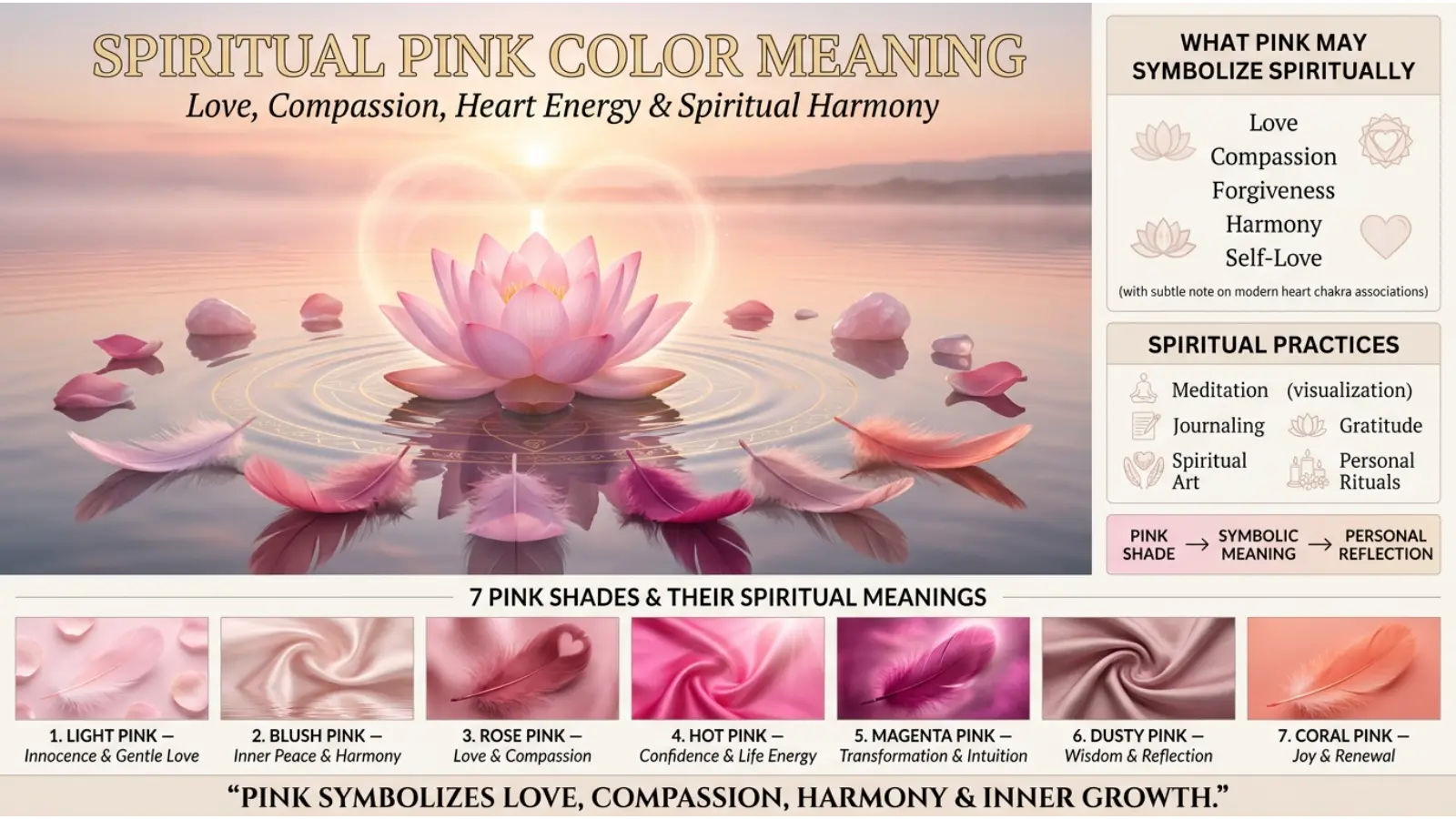
In contemporary spiritual symbolism, pink is often associated with love, compassion, emotional healing, and harmony. People may use pink objects, candles, crystals, or artwork as reminders of personal intentions.
These interpretations belong to spiritual and symbolic traditions rather than established scientific evidence. Their meanings can differ among communities and individuals.
Pink as a Symbol of Love and Compassion
Pink can represent gentle love, including friendship, family affection, romantic care, and kindness toward oneself. Compared with the intense passion often assigned to red, pink may suggest a more tender and nurturing form of connection.
Some people use pink in meditation spaces, journals, or personal rituals to focus on patience, forgiveness, and emotional openness. The color serves as a symbolic reminder rather than a proven source of healing.
Pink and Emotional Healing
In spiritual contexts, pink is sometimes associated with recovery from emotional pain, self-acceptance, and renewed trust. A pink object might remind someone to treat themselves with greater kindness during a difficult period.
However, color alone cannot treat trauma, depression, anxiety, or other health conditions. Spiritual practices can hold personal meaning, but they should not replace appropriate professional support when needed.
Pink and the Heart Chakra
In modern chakra-related interpretations, pink is sometimes connected with the heart chakra because of its association with love and compassion. Green is more commonly identified as the heart chakra’s principal color in many contemporary chakra charts.
Does Pink Represent Protection or Hope?
Some people use pink as a personal symbol of comfort, hope, or emotional reassurance. In this sense, it can represent the intention to approach life’s challenges with kindness.
Protection is not a universal meaning of pink, however. Its interpretation depends on the particular spiritual practice, tradition, or personal belief involved.
Pink Color Meaning in Different Cultures
Pink does not have one fixed meaning around the world. Its interpretation changes with social customs, historical influences, clothing traditions, celebrations, and media.
Pink in Western Cultures
In many contemporary Western settings, pink is associated with femininity, romance, affection, and celebrations such as Valentine’s Day. Pink flowers, greeting cards, and decorative gifts frequently communicate warmth or appreciation.
At the same time, bright pink has become a recognizable color of bold fashion, creative identity, and self-expression. Therefore, pink can appear delicate in one setting and rebellious in another.
Pink in South Asian Cultures
Across South Asia, pink appears in clothing, weddings, festivals, textiles, cosmetics, and decorative arts. Depending on the occasion and community, it may communicate celebration, beauty, romance, or elegance.
Their significance depends on the event, local customs, garment design, and personal taste rather than a single shared cultural rule.
Pink in East Asian Cultures
In Japan, pink cherry blossoms are widely associated with spring and the beauty of seasonal change. Because cherry blossoms bloom for a relatively short period, they can also symbolize the temporary nature of life.
Pink may additionally appear in popular culture, fashion, and contemporary design. Its meaning depends on the specific image or situation, so cherry blossom symbolism should not be applied automatically to every use of pink.
Pink in Modern Global Culture
Social media, entertainment, international fashion, and global advertising have helped spread pink aesthetics across borders. Pink may represent beauty, nostalgia, playfulness, activism, or confidence depending on the community using it.
However, global trends do not erase local traditions. The same pink garment may carry different associations in a wedding, a business meeting, a music performance, or a religious celebration.
History of Pink Color Meaning: How Its Meaning Changed
Pink has not always carried the same cultural associations. Its modern connection with femininity developed over time rather than existing as a universal rule throughout history.
Pink in European Fashion
Pale pink fabrics, elaborate embroidery, and decorative garments could communicate fashionability, status, and luxury.
How Pink Became Associated With Femininity
During the nineteenth and twentieth centuries, changing clothing customs, commercial marketing, children’s products, and popular media helped strengthen the association between pink and girls in many Western societies.
However, the development was neither immediate nor identical everywhere. Clothing conventions changed over time, and different communities adopted them in different ways.
Pink in Modern Fashion and Social Movements
Today, pink can express femininity, but it can also challenge traditional gender expectations. Designers, performers, and individuals use it for formal wear, streetwear, sportswear, and bold artistic statements.
Pink ribbons and pink-themed campaigns have also become prominent in breast cancer awareness. In this context, the color communicates solidarity and public awareness rather than simply romance or beauty.
Pink Color Meaning Personality: What Does Liking Pink Mean?
People sometimes associate a preference for pink with kindness, sensitivity, affection, or creativity.
Someone may prefer pink because it reminds them of a favorite flower, a childhood memory, a fashion trend, or a place they enjoy. Another person may simply like how the color looks against their skin tone or favorite clothing.
Soft pink often suits products associated with personal care, gifts, and lifestyle, while vivid pink can support an energetic and unconventional identity.
Common Personality Associations
People who enjoy pink are sometimes described as:
- Caring and affectionate
- Imaginative and artistic
- Romantic or sentimental
- Playful and expressive
- Interested in comfort and beauty
These are symbolic associations, not traits that can be reliably inferred from color preference alone.
Does Your Favorite Shade Matter?
The shade someone chooses may reveal something about their current style preferences, even though it cannot establish their personality.
For example, someone who chooses dusty pink may prefer muted, understated colors. Someone who wears hot pink may enjoy a vivid, attention-grabbing style. Both preferences can change with mood, occasion, or fashion trends.
Nevertheless, pink should not be treated as a scientific measure of someone’s feelings. A person wearing pink is not necessarily more loving, sensitive, or emotionally expressive than someone wearing another color.
Pink Color Meaning in Branding and Marketing
Brands use pink to shape visual identity, attract attention, and communicate a particular mood. Its effectiveness depends on the product, target audience, surrounding colors, and the expectations customers bring to the brand.
Why Businesses Choose Pink
Pink can help a brand appear friendly, youthful, creative, romantic, or beauty-focused. Soft pink often suits products associated with personal care, gifts, and lifestyle, while vivid pink can support an energetic and unconventional identity.
However, pink is not limited to beauty products or products marketed to women. Businesses can use it to express innovation, humor, modernity, or a distinctive visual personality.
Pink Packaging and Advertising
Pink packaging may make a product feel playful, sweet, elegant, or gift-worthy. For example, pale pink packaging paired with a clean typeface can create a refined appearance, while bright pink with bold lettering can feel youthful and energetic.
Nevertheless, packaging must also communicate practical information clearly. Readable text, strong contrast, and an appropriate visual hierarchy matter more than choosing a fashionable color.
Pink and Brand Identity
A consistent pink palette can help a business become recognizable, especially when it uses the same shades across packaging, websites, advertisements, and social media.
Before choosing pink, a brand should consider its audience and category. A luxury skincare company may benefit from muted rose tones, whereas a creative entertainment brand might prefer fuchsia. Neither choice guarantees sales; product quality, messaging, trust, and customer experience remain essential.
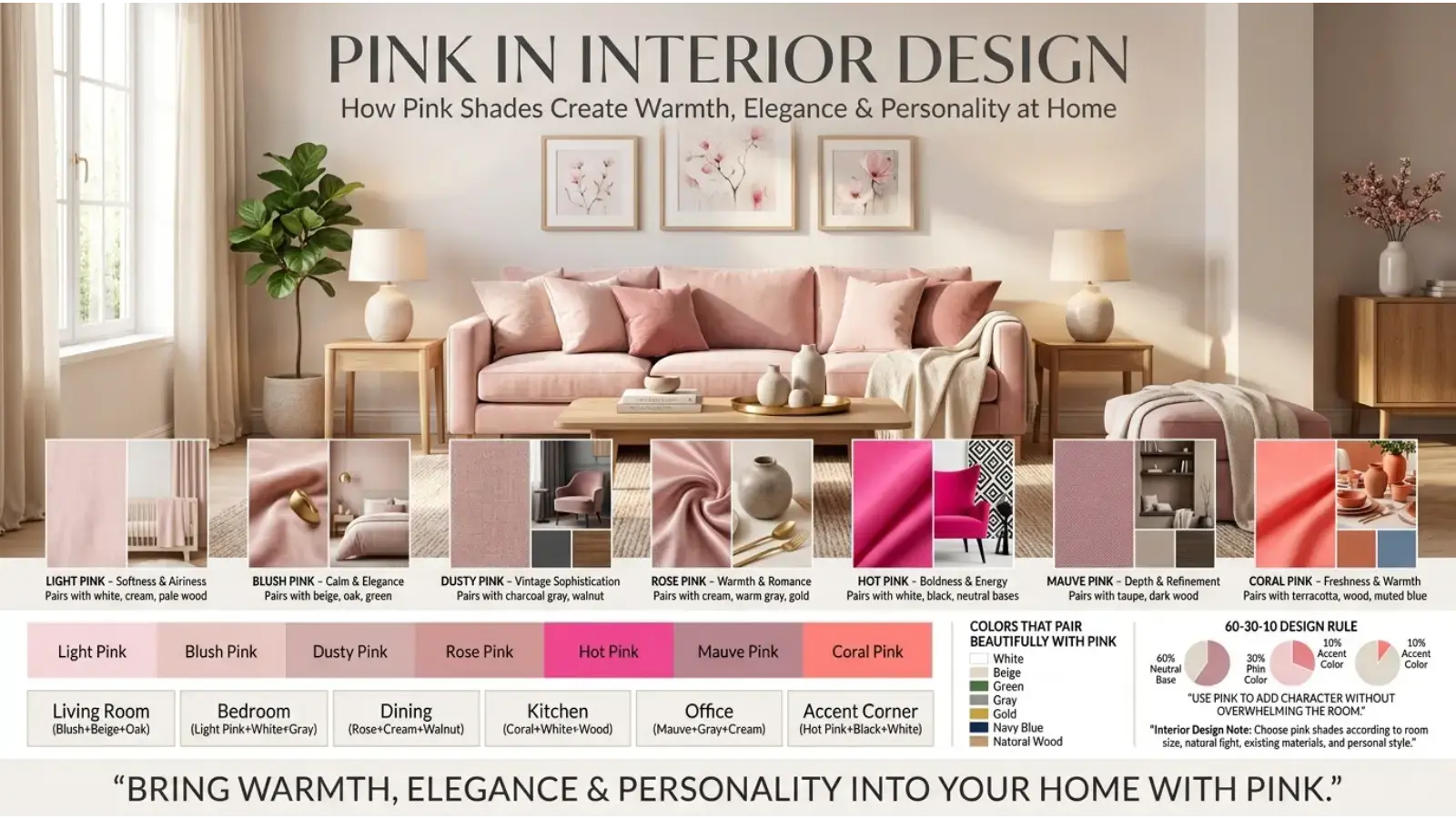
Pink Color Meaning in Interior Design
Pink can create very different moods depending on its shade, the amount used, lighting, and surrounding materials. It works in many interior styles, from soft and traditional to modern and dramatic.
Pink in the Living Room
Blush pink walls or upholstery can create a warm, welcoming look. Combine them with cream, natural wood, or muted green for a balanced interior.
For a more contemporary effect, use pink in cushions, artwork, lampshades, or a single accent chair instead of covering every surface. This approach adds color without making the room feel visually crowded.
Pink in the Bedroom
Muted pink can work well in bedrooms because it often creates a soft visual atmosphere. Dusty rose bedding, pale pink curtains, and neutral walls offer a subtle combination.
For a stronger look, combine rose pink with burgundy, dark wood, or charcoal accents. The contrast makes pink feel more mature and dramatic.
Pink in the Kitchen
Pink cabinets, tiles, or small appliances can add personality to a kitchen. Pale pink pairs naturally with white, cream, and light wood, while deeper pink works with dark metal finishes and contrasting countertops.
If you are unsure about using pink permanently, begin with accessories or a backsplash. These smaller changes make it easier to adjust the palette later.
Lighting Changes the Appearance of Pink
Natural daylight, warm bulbs, and cool artificial lighting can make the same pink paint appear noticeably different. A pale pink may look peachy under warm light but cooler or more muted in a different environment.
Therefore, test paint samples on the actual wall and observe them at different times of day before making a final decision. Also consider the room’s natural light and the colors of nearby furniture.
Pink Color Meaning in Fashion
Pink is versatile in fashion because its shades range from understated neutrals to highly saturated statement colors. The right combination can make pink appear elegant, relaxed, playful, or professional.
Light Pink and Blush
Light pink often creates a soft, delicate appearance. It works well in shirts, dresses, knitwear, scarves, and accessories.
Nevertheless, pink should not be treated as a scientific measure of someone’s feelings. A person wearing pink is not necessarily more loving, sensitive, or emotionally expressive than someone wearing another color.
For a balanced outfit, combine blush pink with white, beige, gray, or navy. These colors allow pink to remain noticeable without dominating the overall look.
Hot Pink and Fuchsia
Hot pink makes a stronger visual statement. It can communicate confidence, creativity, and a willingness to experiment with personal style.
For everyday wear, pair a bright pink top with neutral trousers or jeans. For a more expressive outfit, combine it with red, purple, or orange while keeping the shapes and textures balanced.
Pink in Professional Clothing
Pink can also work in professional settings. A pale pink shirt, muted rose blouse, or dusty pink blazer can add warmth without looking overly casual.
The impression depends on the garment’s cut, fabric, fit, and workplace expectations. Structured tailoring and simple accessories can make pink look polished and appropriate for many professional environments.
Pink Accessories
Pink bags, shoes, watches, scarves, and jewelry offer an easy way to experiment with the color. A small pink accessory can brighten a neutral outfit, while a pink handbag or coat can become the main focal point.
Pink Color Combinations and What They Communicate
The colors placed beside pink can change its appearance and symbolic effect. Some combinations feel soft and traditional, while others appear bold or modern.
| Color Combination | Overall Impression | Practical Use |
|---|---|---|
| Pink and white | Clean, fresh, gentle | Bedrooms, invitations, skincare packaging |
| Pink and red | Romantic, passionate, energetic | Fashion, Valentine’s Day designs |
| Pink and black | Dramatic, modern, confident | Branding, clothing, posters |
| Pink and gray | Balanced, understated, elegant | Offices, websites, interiors |
| Pink and green | Natural, lively, refreshing | Floral designs, home decoration |
| Pink and navy blue | Polished, balanced, dependable | Professional clothing, branding |
| Pink and gold | Glamorous, warm, luxurious | Gifts, event decoration, packaging |
| Pink and purple | Creative, expressive, playful | Art, beauty products, digital graphics |
| Pink and orange | Vibrant, youthful, energetic | Summer fashion, advertisements |
| Pink and brown | Earthy, warm, contemporary | Interiors, clothing, lifestyle branding |
How to Choose the Right Combination
Start by deciding what mood you want to create. For a peaceful bedroom, combine muted pink with cream and natural wood. For a bold promotional graphic, pair hot pink with black or deep purple.
Also consider contrast. Light pink text on a white background can be difficult to read, so use a darker text color or a stronger background contrast. In digital design, check text readability rather than relying on appearance alone.
Pink in Art, Photography, and Visual Storytelling
Artists use pink to guide attention, create emotional contrasts, and shape the atmosphere of an image. Its meaning often comes from how it interacts with the subject rather than from the color alone.
Pink in Art
A painter might use pale pink to soften a portrait or bright pink to create tension within a dark composition. Pink flowers can suggest beauty or tenderness, while a large field of artificial-looking pink may feel surreal or unsettling.
These different effects show how composition, subject matter, and contrast shape interpretation.
Pink in Photography
Pink lighting can create a romantic, dreamy, playful, or dramatic mood. Fashion photography may use bright pink backgrounds to make clothing stand out, while soft pink light can complement portraits and beauty photography.
However, colored lighting changes how skin, fabric, and other objects appear. Photographers should check skin tones and product colors carefully, particularly when accurate color representation matters.
Pink in Film and Entertainment
Films, music videos, and stage productions often use pink to communicate a character’s style, create a fantasy-like setting, or contrast sweetness with danger.
A bright pink costume may signal confidence, while a pale pink room might initially appear comforting but become unsettling when the story introduces tension. The surrounding narrative determines which interpretation feels convincing.
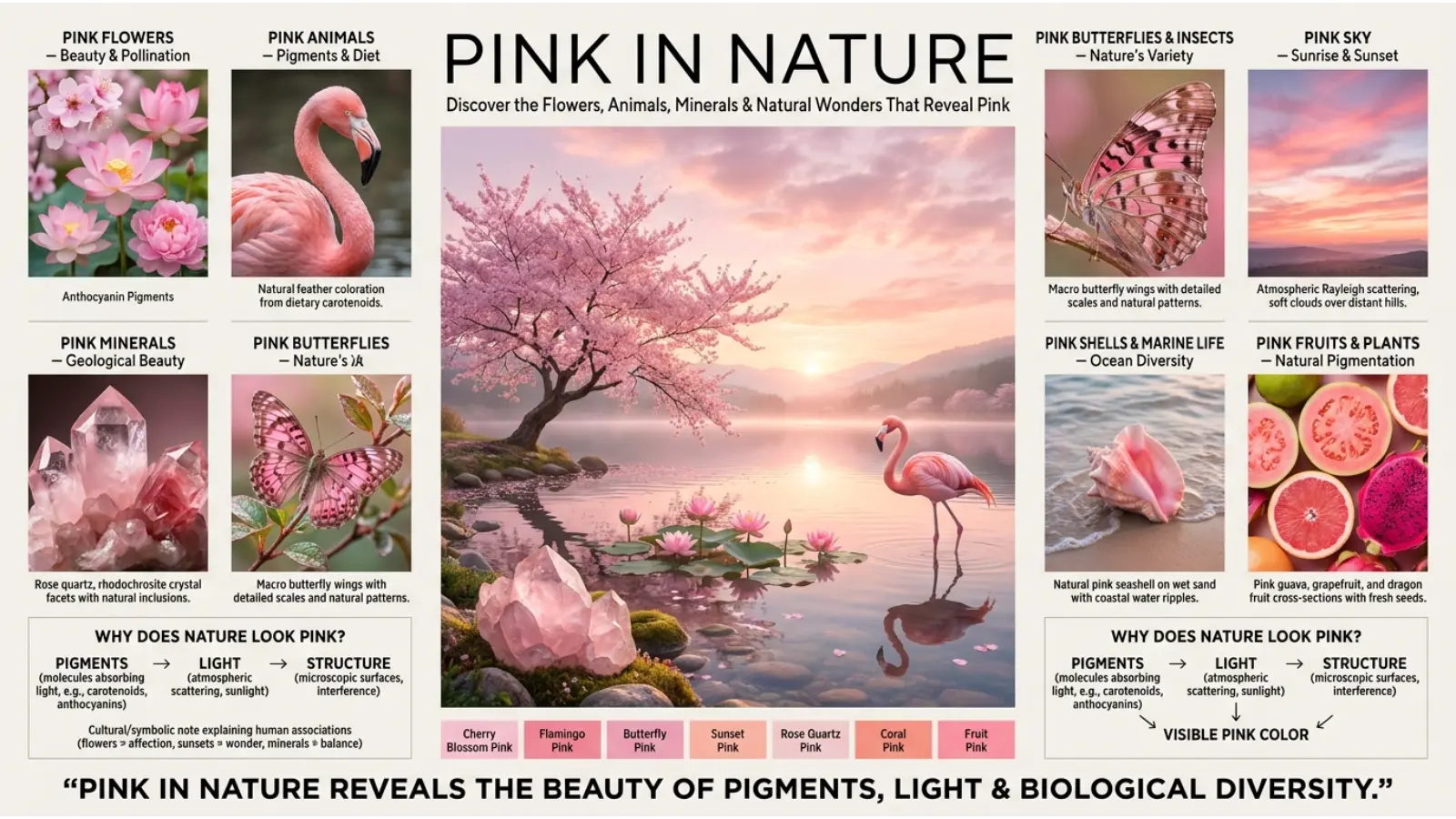
Pink Color Meaning in Nature
Pink occurs naturally in flowers, sunsets, feathers, minerals, and other parts of the environment. These examples often influence the way people understand the color.
Pink Flowers
Roses, cherry blossoms, carnations, and tulips are familiar examples of pink flowers. Depending on the flower and occasion, pink blooms can communicate appreciation, affection, gratitude, or admiration.
Pink Skies and Sunsets
The Pink skies can appear when sunlight travels through the atmosphere under particular conditions, scattering and filtering different wavelengths of light. Clouds may reflect or scatter the remaining light, producing pink, peach, and orange tones.
Nevertheless, pink should not be treated as a scientific measure of someone’s feelings. A person wearing pink is not necessarily more loving, sensitive, or emotionally expressive than someone wearing another color.
Symbolically, people may connect a pink sunset with peace, hope, romance, or a fresh start. These are personal and cultural interpretations rather than fixed meanings of the natural phenomenon.
Common Misconceptions About Pink
Several popular ideas about pink oversimplify its meaning.
Myth 1: Pink is only for women. Pink is worn by people of all genders. Its association with femininity is a cultural convention that has changed over time.
Myth 2: Pink always means romance. Pink can also express friendship, creativity, playfulness, confidence, and compassion.
Myth 3: Pink automatically makes people calm. Color responses vary, and the effects of pink depend on the shade, environment, and individual experience.
Myth 4: People who love pink have the same personality. Color preference alone cannot reliably establish someone’s character, behavior, or emotional needs.
Myth 5: Pink has the same meaning in every culture. Local customs, historical developments, celebrations, and social expectations can give pink different meanings.
Myth 6: Light pink and hot pink communicate the same message. Pale pink often appears softer, while vivid pink tends to attract attention and create a stronger visual impact.
Understanding these distinctions helps people use pink more thoughtfully in personal style, communication, and design.
Frequently Asked Questions About Pink Color Meaning
1. What is the main meaning of pink?
Pink most commonly symbolizes love, compassion, tenderness, romance, and warmth. Depending on its shade and context, it can also represent playfulness, confidence, creativity, and individuality.
2. What does pink mean spiritually?
In modern spiritual symbolism, pink is often associated with unconditional love, self-compassion, emotional healing, and harmony. These meanings vary among traditions and personal belief systems and are not established scientific effects.
3. What does pink say about your personality?
Popular color symbolism links pink with kindness, sensitivity, affection, and creativity. However, liking pink does not prove that someone has these traits. Personality is more complex than a favorite color.
4. Why is pink associated with femininity?
The association developed through changing clothing conventions, marketing, children’s products, and popular culture, particularly in modern Western societies. Pink has not always been reserved for women, and its use varies across cultures.
5. What does light pink symbolize?
Light pink often represents gentleness, tenderness, innocence, affection, and softness. It is commonly used in romantic designs, baby products, floral arrangements, and interiors with a peaceful atmosphere.
6. What does hot pink symbolize?
Hot pink often communicates energy, confidence, boldness, creativity, and individuality. Because it attracts attention, designers frequently use it for statement clothing, promotional graphics, and expressive branding.
7. What does pink mean in love?
Pink often represents tenderness, affection, admiration, and caring relationships. It can communicate romantic interest, but it is also suitable for friendship, family appreciation, and expressions of gratitude.
8. What colors go best with pink?
Pink pairs well with white, gray, navy blue, green, black, brown, and gold. The best combination depends on the desired mood, the shade of pink, and the contrast needed for the design.
9. Is pink a positive or negative color?
Pink is often viewed positively because of its associations with affection, kindness, and hope. However, it may appear overly sweet, immature, or visually overwhelming in certain settings. Its meaning depends on context and personal preference.
10. What does pink symbolize in different cultures?
Pink can represent romance and femininity in some modern Western settings, while pink cherry blossoms in Japan are associated with spring and life’s transience. In South Asian clothing and celebrations, pink may express beauty, festivity, or elegance. Interpretations differ within each region.
Conclusion
The pink color meaning includes far more than romance or femininity. Pink can communicate affection, compassion, hope, creativity, confidence, and individuality, depending on its shade and the situation in which it appears.
Soft pink may suit a peaceful bedroom or a thoughtful gift, while hot pink can bring energy to fashion, art, and branding. Cultural traditions and personal experiences also shape how people respond to the color.
Rather than assuming pink always sends the same message, consider its surroundings, purpose, and shade. When used thoughtfully, pink can become a powerful way to express emotion, create atmosphere, and communicate a distinctive visual identity.

Emma Wilson is a dedicated comparison writer and product researcher at ColorMystiic.com. She specializes in creating unbiased product comparisons, detailed reviews, and helpful buying guides. Her goal is to help readers make smarter purchasing decisions with confidence.