A simple string bracelet can carry a surprising amount of meaning. The color you choose may suggest friendship, love, peace, confidence, protection, hope, or personal identity. That is why people search for string bracelet color meanings when making friendship bracelets, choosing handmade jewelry, giving gifts, or wearing colored strings for symbolic reasons.
Still, a bracelet color does not have one universal definition. Meaning changes with culture, personal experience, religious tradition, fashion, and the situation in which the bracelet is worn. A red string, for example, can represent love or passion in one setting, while red string traditions have specific spiritual or cultural meanings in others.
This guide explains the most common meanings associated with bracelet colors while separating popular symbolism from established cultural traditions.
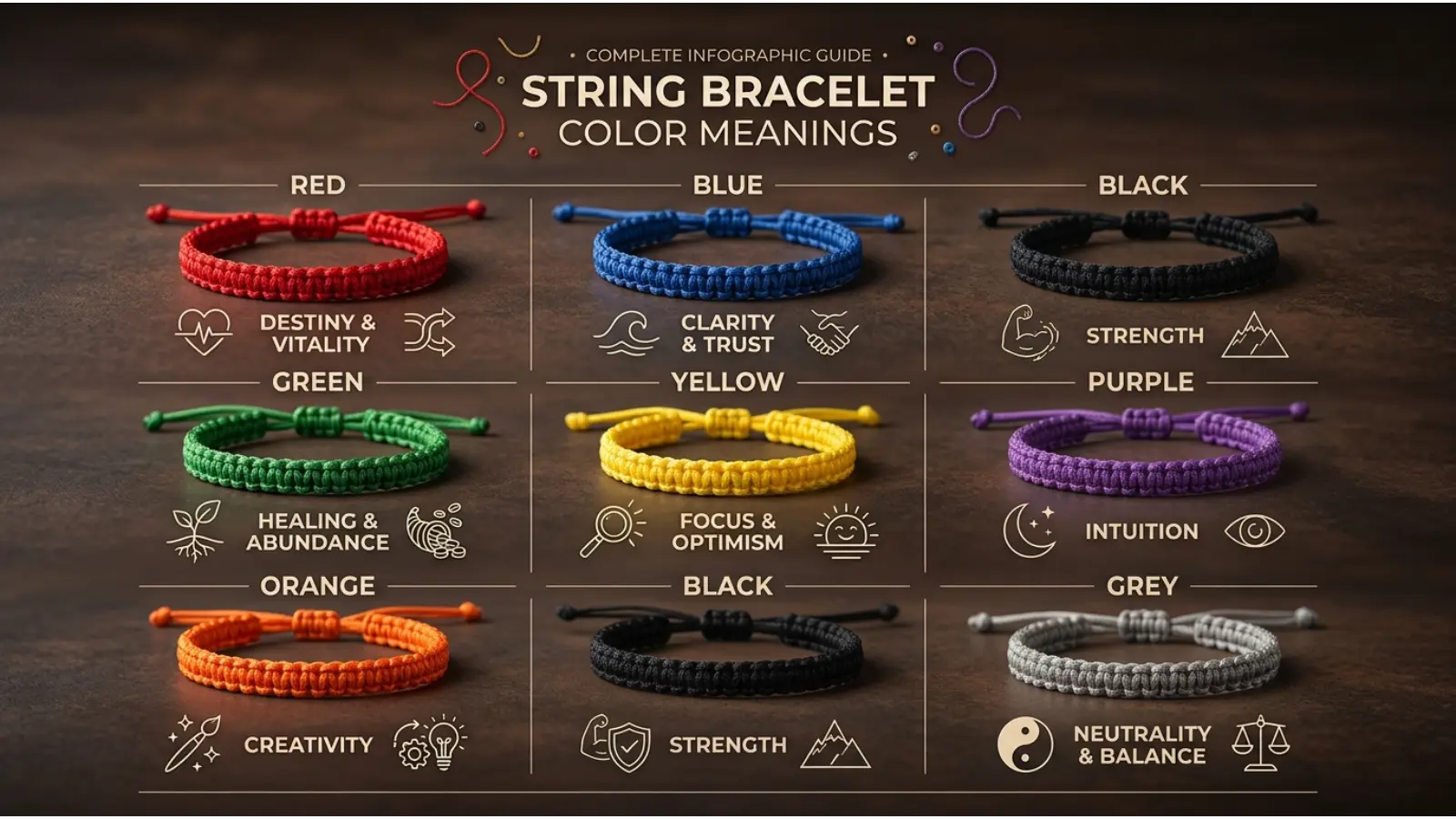
Quick Answer: String bracelet colors are commonly associated with different ideas: red with love and energy, pink with affection, orange with enthusiasm, yellow with happiness, green with growth and nature, blue with peace and trust, purple with creativity and spirituality, black with strength and mystery, white with peace and simplicity, and brown with stability and nature. These meanings are symbolic rather than universal rules.
String Bracelet Color Meanings Chart
| Bracelet Color | Common Meaning | Emotional Impression | Popular Use |
|---|---|---|---|
| ❤️ Red | Love, passion, courage | Energetic, bold | Romance, motivation |
| 🩷 Pink | Affection, kindness, friendship | Gentle, caring | Friendship bracelets |
| 🧡 Orange | Energy, enthusiasm, creativity | Warm, lively | Fun and confidence |
| 💛 Yellow | Happiness, optimism, friendship | Cheerful, bright | Positive messages |
| 💚 Green | Growth, nature, renewal | Balanced, fresh | Nature and wellness |
| 💙 Blue | Peace, trust, calm | Relaxing, dependable | Friendship and support |
| 💜 Purple | Creativity, imagination, spirituality | Rich, thoughtful | Artistic expression |
| 🖤 Black | Strength, independence, mystery | Serious, powerful | Fashion and personal style |
| 🤍 White | Peace, purity, simplicity | Clean, calm | Minimalist bracelets |
| 🤎 Brown | Stability, earth, reliability | Warm, grounded | Natural designs |
| 🩵 Light Blue | Calm, openness, freedom | Soft, peaceful | Relaxation themes |
| 🩶 Gray | Balance, neutrality, maturity | Quiet, controlled | Modern fashion |
| 🌈 Multicolor | Diversity, joy, individuality | Playful, expressive | Friendship bracelets |
The chart is a useful starting point, but context matters. A color can communicate something different when combined with another color, a particular pattern, a personal message, or a cultural tradition.
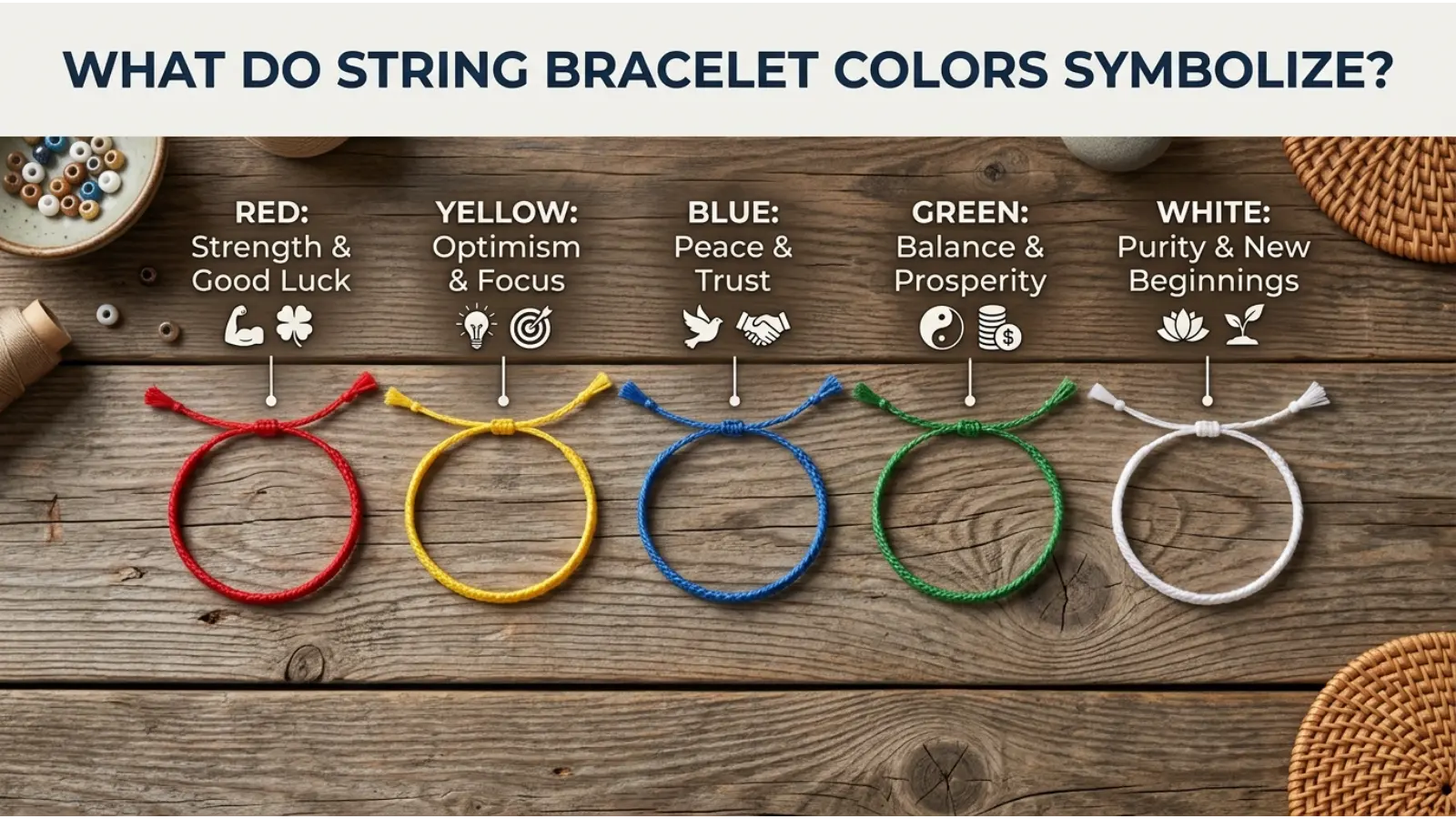
What Do String Bracelet Colors Symbolize?
String bracelets are often used because they are simple enough to personalize. The meaning may come from the color itself, the person who gives the bracelet, or the reason it was created.
For example, a blue bracelet given to a close friend might represent trust and loyalty. The same blue bracelet worn simply as part of an outfit may have no symbolic meaning at all.
This distinction matters because color symbolism is not the same as a scientific code. Colors can influence perception and emotion, but a bracelet color cannot reliably tell you what someone feels or what kind of person they are.
Red String Bracelet Meaning
Red is one of the most emotionally powerful bracelet colors. It is commonly associated with love, passion, courage, energy, confidence, and strong emotion.
A red friendship bracelet may communicate a deep bond or affection. In fashion, it creates a noticeable accent because red tends to attract visual attention.
Red string bracelets can also have specific religious or cultural meanings. For example, red thread or string appears in several traditions, but these traditions are not interchangeable. A particular red string practice should be understood within its own cultural or religious context rather than being reduced to a general “luck” meaning.
Pink String Bracelet Meaning
Pink commonly represents affection, kindness, tenderness, compassion, and friendship.
A pink bracelet can feel softer than a red one. That makes it popular for gifts between friends, couples, family members, and people who want to express care without using a strongly romantic color.
Light pink often creates a gentle impression, while hot or vivid pink feels more energetic and playful.
Orange String Bracelet Meaning
Orange is associated with enthusiasm, creativity, warmth, confidence, and social energy.
An orange bracelet can be a good choice when the message is about adventure, motivation, or having fun. Its warm appearance also makes it useful for summer accessories and youthful designs.
Because orange is visually active, a small amount can create a strong accent against neutral clothing.
Yellow String Bracelet Meaning
Yellow is commonly linked with happiness, optimism, friendship, hope, and positive energy.
A yellow friendship bracelet can symbolize a cheerful relationship or a desire to encourage someone. However, yellow can also have less positive meanings in some contexts, including caution or jealousy.
Therefore, the surrounding design matters. Bright yellow combined with playful colors may feel joyful, while muted yellow paired with darker shades can appear more serious.
Green String Bracelet Meaning
Green is strongly associated with nature, growth, renewal, balance, health, and freshness.
It can work well for bracelets connected with environmental interests, personal growth, new beginnings, or a love of nature.
Different shades change the impression. Forest green can feel mature and grounded, while lime green is more energetic and youthful.
Blue String Bracelet Meaning
Blue commonly symbolizes calmness, trust, loyalty, stability, peace, and reliability.
That makes blue one of the natural choices for friendship bracelets. It can communicate a steady relationship rather than intense emotion.
Dark blue often feels more formal and dependable. Light blue tends to create a softer and more relaxed impression.
Purple String Bracelet Meaning
Purple is often connected with creativity, imagination, individuality, mystery, luxury, and spirituality.
A purple bracelet may appeal to someone who enjoys artistic expression or wants a color that feels distinctive.However, modern purple has many more meanings than wealth or royalty.
Black String Bracelet Meaning
Black commonly communicates strength, independence, sophistication, mystery, and protection.
It is also one of the easiest bracelet colors to wear because it works with almost any outfit.
Black does not automatically mean sadness or negativity. In fashion, it can simply provide a clean, modern appearance. In other settings, however, black may be connected with mourning or grief.
White String Bracelet Meaning
White is often associated with peace, simplicity, cleanliness, innocence, and new beginnings.
A white string bracelet can create a minimalist appearance. It can also represent a peaceful intention or a fresh start.
Its meaning changes across cultures, particularly in relation to ceremonies and mourning, so a universal definition would be misleading.
Brown String Bracelet Meaning
The Brown is associated with earth, stability, reliability, simplicity, and natural materials.
Brown string bracelets often have an earthy, handmade appearance. They work particularly well with wooden beads, natural stones, leather details, and outdoor-inspired designs.
The Psychology Behind Bracelet Colors
Color psychology is useful, but it is frequently overstated online.
Research supports the idea that color can influence perception, attention, preferences, and emotional responses. However, color does not produce exactly the same psychological reaction in every person. Personal experience, culture, surroundings, brightness, saturation, and context all matter.
A bracelet is also a small visual object. Its effect can be different from the effect of a large red wall or a bright yellow advertisement.
Warm Colors Feel More Active
Red, orange, and yellow are generally considered warm colors. They can create a more energetic or noticeable visual impression.
That does not mean everyone wearing red feels energetic. Instead, the color can contribute to how the bracelet is perceived.
Cool Colors Often Feel Calmer
Blue and some greens commonly create associations with calmness, nature, stability, and relaxation.
That is one reason these colors appear frequently in designs related to water, wellness, nature, and peaceful environments.
Saturation Changes the Message
Color name alone is not enough.
A soft pastel blue can appear gentle and peaceful. A highly saturated electric blue may feel energetic and modern.
The same principle applies to green, pink, purple, orange, and almost every other color.
Lighting Changes Bracelet Colors
A bracelet can look completely different under sunlight, warm indoor lighting, cool LED lighting, or a phone camera.
For example, a purple string under warm yellow lighting may appear closer to burgundy. A green bracelet under certain artificial lights can appear duller than it does outdoors.
This matters when matching bracelets with clothing or selling handmade jewelry online.
Spiritual and Traditional String Bracelet Color Meanings
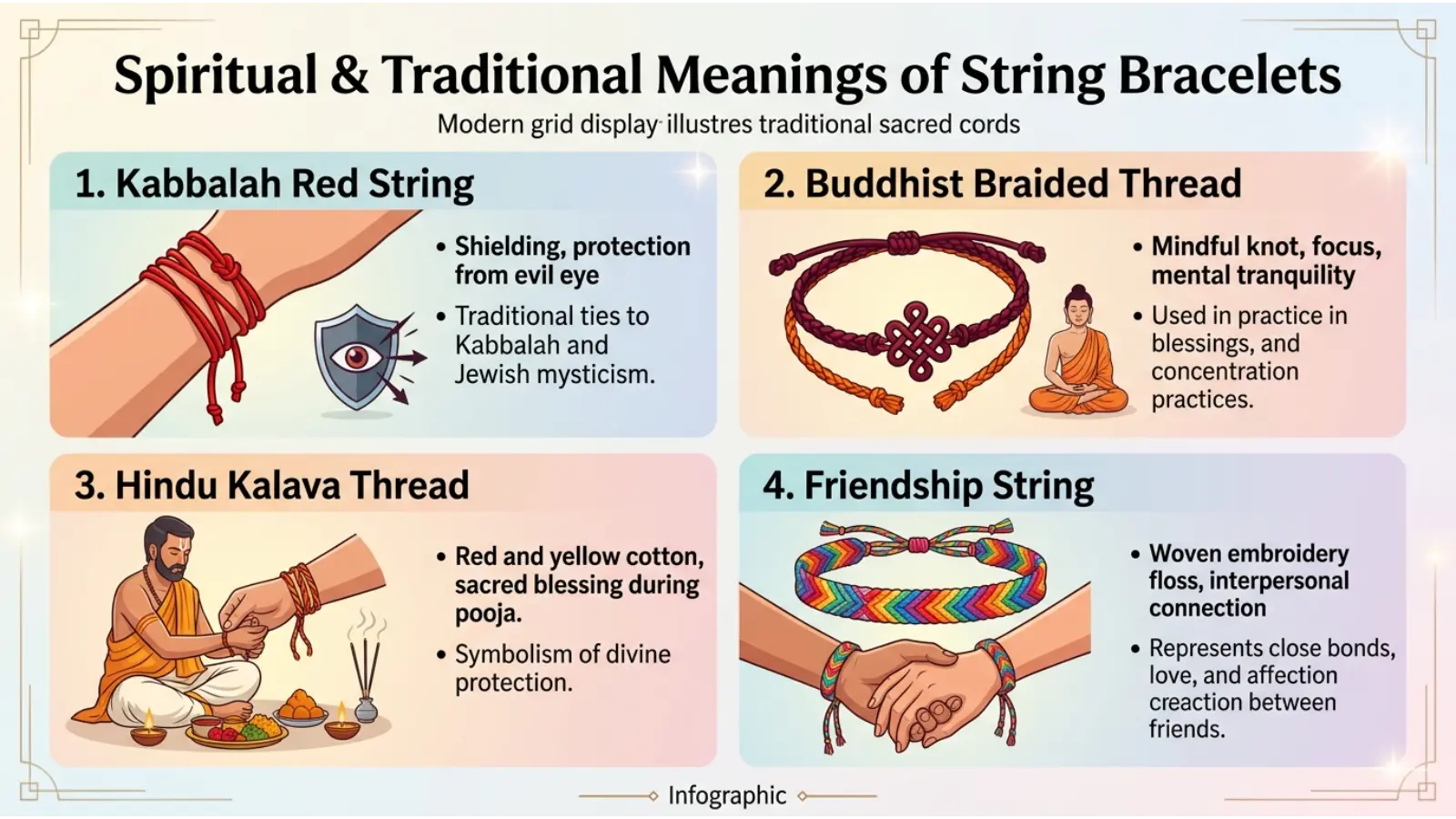
String and thread have symbolic importance in many cultures and traditions. However, there is no single spiritual meaning shared by every string bracelet.
Some traditions use threads, cords, or bracelets in ceremonies, blessings, vows, protection practices, or religious observances. The meaning depends on the specific tradition.
Red String Traditions
Red thread is especially well known in several cultural and religious contexts. One example is the red string associated with certain Kabbalistic practices.
This is an important distinction: a red friendship bracelet and a religious red string may look similar while carrying completely different meanings.
White and Sacred Threads
White threads or cords can also appear in religious and ceremonial traditions. Their meaning varies considerably depending on the community.
Cultural Differences in String Bracelet Color Meanings
Color meanings develop through history, religion, local customs, fashion, and popular culture.
A color that feels positive in one country may have a different association somewhere else. Even within one country, age groups and communities may interpret colors differently.
Western Popular Culture
In many Western settings, red is strongly associated with romance, blue with trust, green with nature, and black with sophistication or mourning.
These are broad cultural patterns rather than strict rules.
East and South Asian Contexts
Color symbolism across Asian cultures is highly diverse. Red, for example, has major positive associations in several East Asian traditions, while white can have important associations with mourning in some cultural contexts.
The lesson is simple: never assume that a Western color chart applies globally.
Middle Eastern and Muslim Cultural Contexts
Color meanings can also vary widely throughout the Middle East and Muslim communities. Religious symbolism, local customs, national colors, clothing traditions, and modern fashion can all influence interpretation.
African Cultural Traditions
Africa contains hundreds of cultures and traditions, so “African color meaning” is too broad to describe accurately as one system.
Colors may carry different meanings in textiles, ceremonies, flags, beadwork, art, and jewelry depending on the community.
Latin American Culture
Colors often appear strongly in celebrations, religious events, clothing, crafts, and national symbolism. Their meanings can combine Indigenous, European, African, and modern influences.
How String Bracelet Color Meanings Changed Over Time
Color symbolism is not fixed. Meanings evolve.
In earlier periods, the availability and cost of pigments affected how colors were perceived. Purple, for instance, became associated with status in some historical settings partly because certain dyes were difficult to produce.
Modern manufacturing made many colors inexpensive and widely available. As a result, color symbolism became increasingly influenced by advertising, fashion, entertainment, sports, and global media.
String bracelets are a good example of this change. A handmade bracelet can now be simultaneously a friendship gift, fashion accessory, fandom item, fundraising symbol, or personal statement.
What Your Favorite Bracelet Color May Suggest About You
People often connect color preferences with personality. These associations can be useful as a form of self-expression, but they should not be treated as personality tests.
Someone who prefers blue may like its appearance, remember a meaningful place such as the ocean, or simply own clothing that matches blue.
Likewise, someone who wears black is not automatically mysterious or independent.
Still, color preference can communicate a social impression.
- Red: bold, energetic, expressive
- Pink: caring, warm, playful
- Orange: adventurous, enthusiastic, creative
- Yellow: cheerful, optimistic, friendly
- Green: natural, balanced, growth-oriented
- Blue: dependable, peaceful, calm
- Purple: imaginative, artistic, individualistic
- Black: confident, modern, independent
- White: simple, clean, peaceful
- Brown: grounded, natural, practical
These are impressions, not diagnoses.
String Bracelets in Fashion
Bracelets are small accessories, so color gives you a simple way to change the appearance of an outfit without replacing the entire look.
A black string bracelet can create a minimalist style. A bright multicolor bracelet adds playfulness. A neutral bracelet can blend into an outfit while a red or orange bracelet can act as an accent.
Bracelet Colors for Casual Outfits
Bright colors work well with denim, white shirts, T-shirts, and simple everyday clothing.
Blue, green, yellow, and multicolor combinations can make casual outfits feel more personal.
Bracelet Colors for Formal Clothing
Dark blue, black, brown, gray, and muted purple can look more refined with formal clothing.
For professional settings, a simple bracelet is usually less distracting than a highly saturated multicolor design.
Matching Bracelets With Other Accessories
You do not have to match every color exactly.
Instead, choose one shared color between the bracelet, shoes, watch strap, bag, or another accessory. This creates visual connection without making the outfit look overly coordinated.
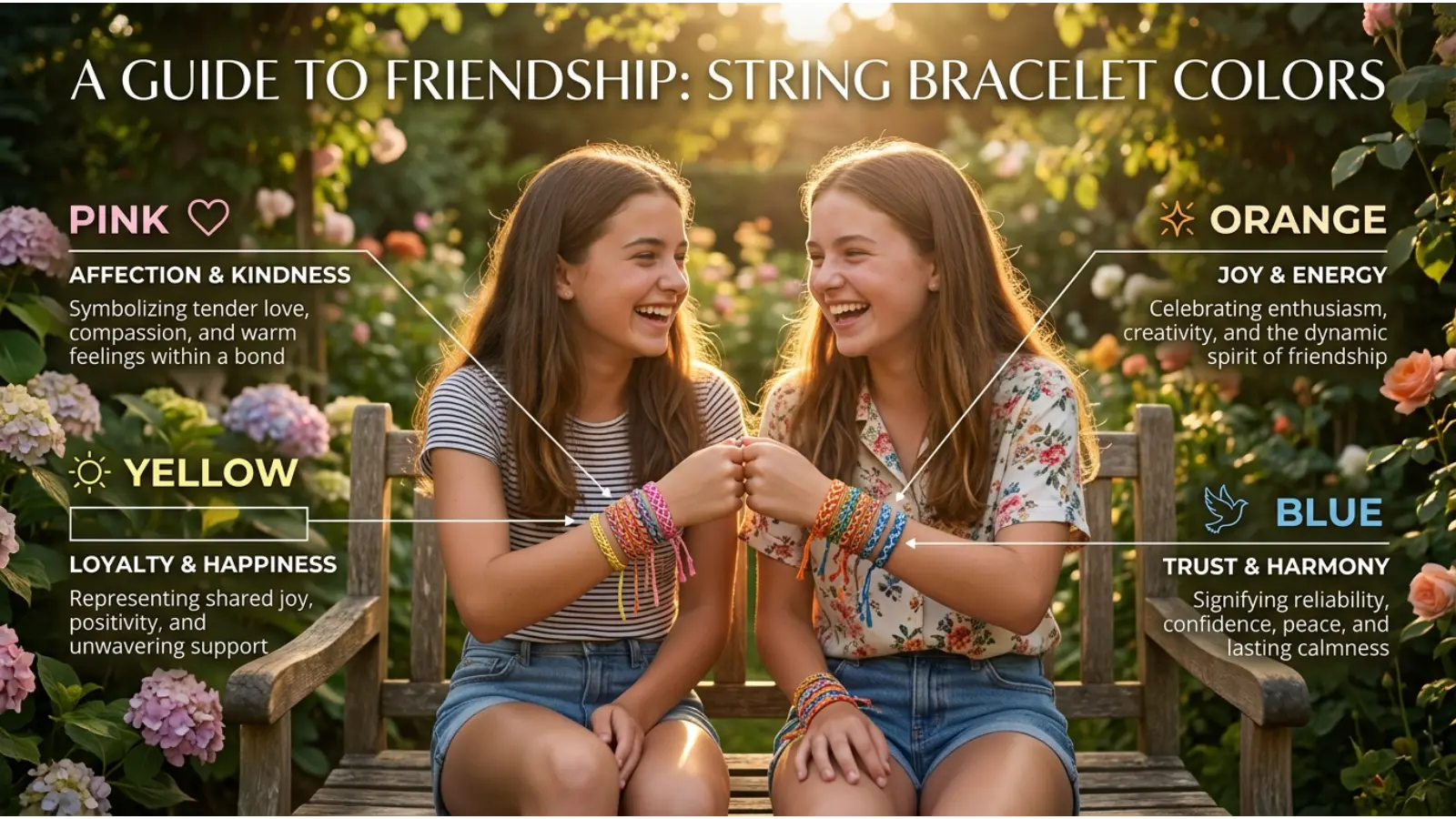
String Bracelet Colors for Friendship
Friendship bracelets are probably one of the most popular reasons people explore bracelet color meanings.
There is no official color dictionary for friendship bracelets. The meaning usually comes from the giver and receiver.
Still, some combinations work naturally:
Blue + yellow: friendship, happiness, and positive energy.
Pink + purple: affection, creativity, and emotional closeness.
Green + blue: calm friendship and connection with nature.
Red + pink: affection, warmth, and strong emotional connection.
Black + white: contrast, balance, and a clean minimalist style.
A handwritten note can make the meaning more personal than the colors alone.
String Bracelets for Gifts
The best bracelet color is often connected to the recipient rather than a universal meaning.
If someone loves the ocean, blue may be more meaningful to them than a generic “trust” interpretation.
If someone is starting a new chapter, green can represent growth.
The someone needs encouragement, yellow can create a cheerful visual message.
Personal associations often make gifts more meaningful than a standard color chart.
Branding and Marketing Uses of Bracelet Colors
Color also matters when bracelets are used for businesses, events, campaigns, organizations, or merchandise.
A company might choose blue to create a dependable visual identity. A creative brand may prefer purple or orange. A natural or environmental organization may use green.
However, successful branding is not simply “choose blue because blue means trust.”
Designers also consider:
- target audience
- industry expectations
- cultural context
- contrast
- readability
- packaging
- logo design
- competing brands
- accessibility
- emotional tone
For a bracelet business, consistent color choices can make different collections easier to recognize.
Interior Design and Bracelet Color Inspiration
Although string bracelets are small objects, their colors can inspire broader design choices.
Blue and green can work well in spaces intended to feel calm or natural. Warm colors such as orange and yellow can add energy. Purple can create a more dramatic accent.
The key is proportion.
A bright color does not need to cover an entire room to influence the design. A small bracelet, cushion, artwork, vase, or other accessory can act as an accent color.
String Bracelet Color Combinations
Color combinations often communicate more than individual colors.
Blue and White
This combination feels clean, calm, and simple. It is useful for beach-inspired bracelets, minimalist designs, and peaceful themes.
Red and Black
Red provides energy while black adds visual weight. Together, they create a bold and dramatic bracelet.
Green and Brown
These colors reinforce natural and earthy associations. They work especially well with wooden beads or outdoor-inspired designs.
Purple and Pink
The combination can feel expressive, creative, affectionate, and youthful.
Yellow and Orange
Both are warm colors, so they create a lively and energetic appearance.
Black and White
This is one of the strongest simple combinations. The contrast makes the pattern easy to notice while keeping the design versatile.
A Real-World Example: Choosing a Bracelet for a Friend
Imagine you are making a bracelet for a friend who has just started a new job.
You could choose yellow because you want the bracelet to represent optimism and encouragement. Adding blue could introduce a feeling of trust and steady support.
The final bracelet might use a pattern such as:
Yellow – Blue – Yellow – Blue – Yellow
The symbolism is not a scientific formula. Instead, the colors tell a personal story: I hope this new beginning brings happiness, and I believe in you.
That personal explanation can be more meaningful than any online color chart.
How Age and Personal Experience Change Color Meaning
People do not all learn color meanings in the same way.
Children may associate colors with cartoons, toys, school supplies, or favorite characters. Teenagers may connect colors with fashion, music, sports, or social groups. Adults may associate colors with workplaces, national symbols, ceremonies, or personal memories.
A color can also change meaning after an important life event.
Someone may love a particular shade because it reminds them of a family member, favorite place, childhood object, or memorable trip.
That is why personal symbolism should always have room alongside traditional symbolism.
Common Misconceptions About String Bracelet Colors
Every Color Has One Official Meaning
It does not. Color symbolism varies across cultures, situations, and individuals.
Wearing Red Automatically Means Love
Not necessarily. Red may represent fashion, confidence, energy, cultural tradition, or personal preference.
Bracelet Colors Reveal Personality
Color preference can suggest an impression, but it cannot reliably determine someone’s personality.
Red String Always Has a Spiritual Meaning
No. A red string can be a fashion accessory, friendship bracelet, handmade gift, or part of a specific cultural or religious practice.
Blue Always Means Peace
Blue often creates calm and trustworthy associations, but context can change the message.
Color Psychology Works the Same for Everyone
Human responses to color are influenced by many factors, including culture, context, experience, lighting, and individual preference.
Practical Uses for String Bracelet Color Meanings
String bracelet colors can be used creatively in many everyday situations.
Friendship Projects
Assign colors to personal messages such as trust, happiness, support, or adventure.
Handmade Businesses
Create collections around themes such as calm, nature, confidence, friendship, or creativity.
Events
Use color-coded bracelets for teams, activities, access levels, or event themes. Make the meaning clear rather than assuming guests will understand it automatically.
Fundraising
Colors can help create visual identity for campaigns, but organizations should clearly explain what a particular color represents.
Fashion
Use one bright bracelet as an accent against neutral clothing.
Personal Goals
Choose a color that reminds you of a personal intention, such as green for growth or blue for calm.
FAQ About String Bracelet Color Meanings
What is the most common string bracelet color meaning?
There is no single official meaning. Blue is commonly associated with trust and calm, red with love and energy, and yellow with happiness and friendship.
What does a red string bracelet mean?
It depends on the context. Red may represent love, passion, courage, energy, friendship, or a specific cultural or religious tradition.
What does a blue string bracelet mean?
Blue is commonly associated with peace, trust, loyalty, calmness, and stability. These are symbolic associations rather than universal rules.
What does a black string bracelet mean?
Black often represents strength, independence, mystery, sophistication, or a modern style. In some situations, it can also relate to mourning.
What does a white string bracelet symbolize?
White commonly suggests peace, simplicity, purity, cleanliness, or a new beginning. Its cultural meaning can vary.
What color bracelet represents friendship?
Blue, yellow, pink, and multicolor bracelets are often used for friendship because they can suggest trust, happiness, affection, and fun.
What bracelet color represents love?
Red and pink are the most common choices for love and affection. Red usually feels stronger and more passionate, while pink can feel softer and more tender.
What color bracelet represents protection?
Protection symbolism varies by tradition. Black, red, blue, and other colors may be used in different cultural or spiritual practices, so the specific tradition should be identified.
Can bracelet colors affect emotions?
Colors can influence perception and emotional impressions, but their effects are not identical for everyone. Context, culture, brightness, and personal experience all matter.
Can I create my own bracelet color meanings?
Absolutely. Personal symbolism is one of the strengths of handmade bracelets. You can assign colors meanings that are meaningful to you and explain them to the person receiving the bracelet.
Final Thoughts on String Bracelet Color Meanings
String bracelets show how a small object can carry a much bigger message. Red may express strong emotion, blue may suggest trust, green may represent growth, yellow may bring a sense of happiness, and purple may express creativity. Yet none of these meanings is locked in stone.
The most useful way to understand string bracelet color meanings is to consider three layers at once: the common symbolism of the color, the cultural or traditional context, and the personal meaning attached to the bracelet.
That approach also prevents common mistakes. A bracelet should not be treated as a secret personality test or a universal code. Instead, color works as a visual language whose meaning becomes clearer through context.
When you make or choose your next string bracelet, think beyond the color itself. Consider the person receiving it, the message you want to send, the colors around it, and the story behind the design. Sometimes the most meaningful bracelet is not the one with the “correct” color, but the one with a meaning that only you and someone special understand.

Emma Wilson is a dedicated comparison writer and product researcher at ColorMystiic.com. She specializes in creating unbiased product comparisons, detailed reviews, and helpful buying guides. Her goal is to help readers make smarter purchasing decisions with confidence.