The American flag color meanings have fascinated historians, educators, designers, and patriotic Americans for generations. While many people recognize the Stars and Stripes instantly, fewer know what its colors traditionally represent or how those meanings developed over time.
The United States flag uses red, white, and blue, colors that have become symbols of national identity, shared values, and historical ideals. Their meanings are often explained through government traditions, educational materials, and cultural interpretation. At the same time, people may attach their own emotional or symbolic meanings based on personal experience, military service, family heritage, or civic pride.
This guide explores the symbolism, psychology, history, culture, and practical uses of the American flag’s colors while separating documented facts from symbolic interpretations.
Quick Answer:
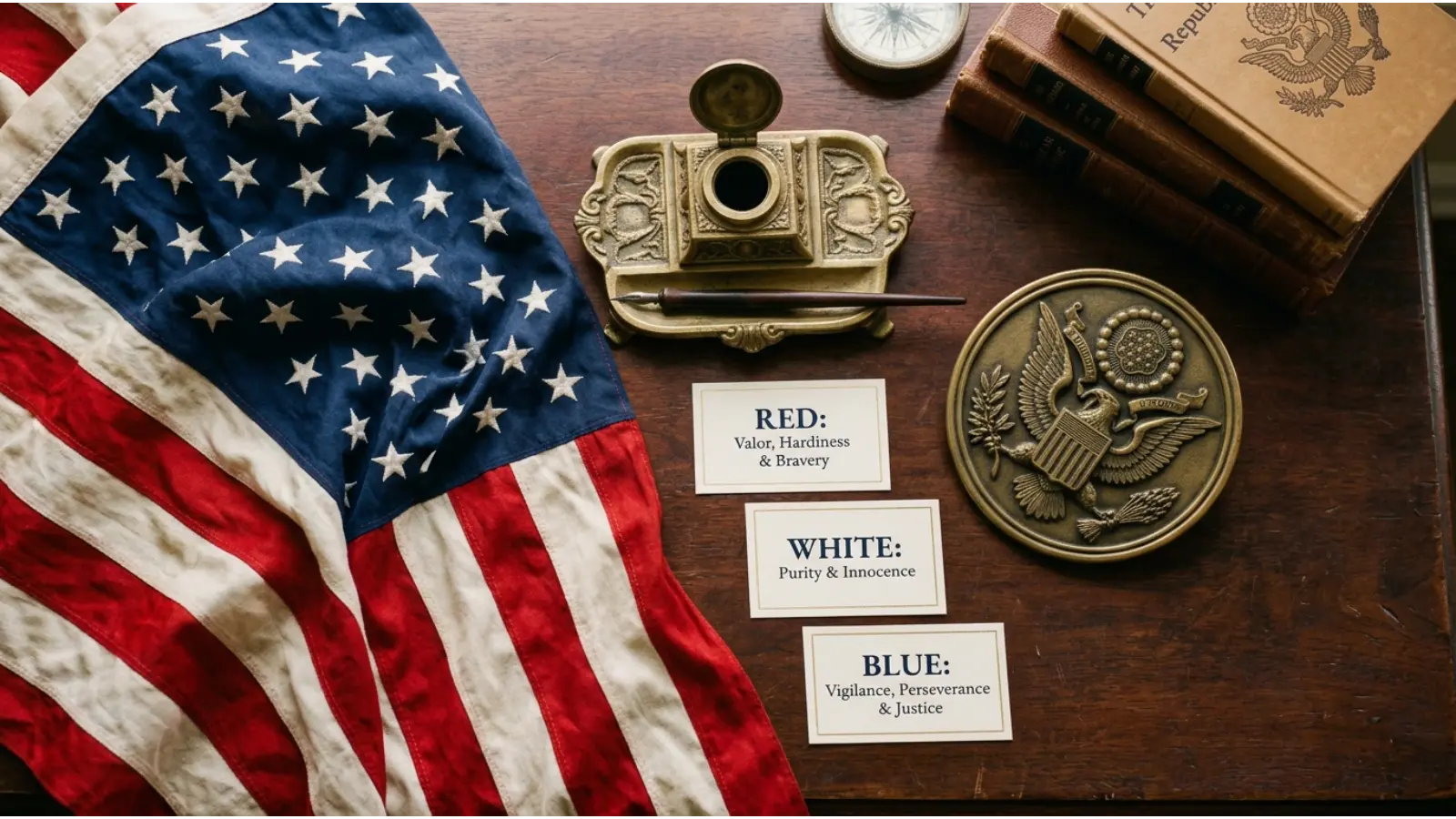
The American flag colors traditionally represent red for valor and courage, white for purity and innocence, and blue for vigilance, perseverance, and justice. These meanings are widely associated with the Great Seal of the United States and have become enduring symbols of American ideals.
American Flag Color Meanings Chart
| Color | Traditional Meaning | Psychological Association | Common Symbolism |
|---|---|---|---|
| 🔴 Red | Valor and Hardiness | Energy, strength, courage | Sacrifice, bravery, patriotism |
| ⚪ White | Purity and Innocence | Peace, honesty, simplicity | Freedom, integrity, hope |
| 🔵 Blue | Vigilance, Perseverance, Justice | Trust, stability, loyalty | Unity, wisdom, responsibility |
What Do the American Flag Colors Symbolize?
Although the legislation creating the U.S. flag in 1777 did not officially assign meanings to its colors, traditional interpretations became closely linked with the Great Seal of the United States, approved in 1782.
Together, the three colors communicate ideals that the nation has long aspired to uphold.
Red: Courage and Sacrifice
Red symbolizes:
- Courage
- Valor
- Hardiness
- Strength
- Sacrifice
- Determination
The Red naturally attracts attention because it is one of the most visually powerful colors. On the American flag, it reminds many people of those who defended the nation through military service and civic commitment.
Today, many Americans also associate red with resilience during difficult times.
White: Purity and Integrity
White traditionally represents:
- Purity
- Innocence
- Honesty
- Peace
- Transparency
- Good intentions
The White creates visual balance between the bold red stripes and deep blue canton. Symbolically, it reflects ideals rather than perfection, reminding citizens of the nation’s ongoing pursuit of justice and ethical government.
Blue: Justice and Perseverance
Blue symbolizes:
- Vigilance
- Perseverance
- Justice
- Loyalty
- Responsibility
- Stability
The Blue has long been associated with trust and dependability. These qualities explain why many government institutions, police departments, financial organizations, and public services continue to use blue prominently in their visual identity.
The Psychology of American Flag Colors
Color psychology studies how people commonly respond to different colors. While reactions vary by culture and personal experience, research suggests consistent patterns.
Why Red Feels Powerful
Red often increases visual attention and can create feelings of:
- Excitement
- Confidence
- Urgency
- Passion
- Motivation
Within the American flag, red reinforces ideas of bravery and action.
Why White Feels Calm
White commonly evokes:
- Cleanliness
- Openness
- Simplicity
- Honesty
- Fresh beginnings
Its presence softens the intensity of red while enhancing the visibility of both neighboring colors.
Why Blue Builds Trust
Blue is among the world’s most trusted colors because people frequently associate it with:
- Reliability
- Calmness
- Intelligence
- Security
- Professionalism
This helps explain why blue is widely used in government uniforms, official seals, and corporate branding.
Historical Origins of the American Flag Colors
The first American flag was adopted on June 14, 1777, now celebrated as Flag Day.
Congress established the flag’s design but did not officially define the meanings of its colors.
Several years later, the symbolism became connected with the Great Seal of the United States, where:
- Red represented hardiness and valor.
- White represented purity and innocence.
- Blue represented vigilance, perseverance, and justice.
These interpretations gradually became part of American education and patriotic tradition.
Spiritual American Flag Color Meanings
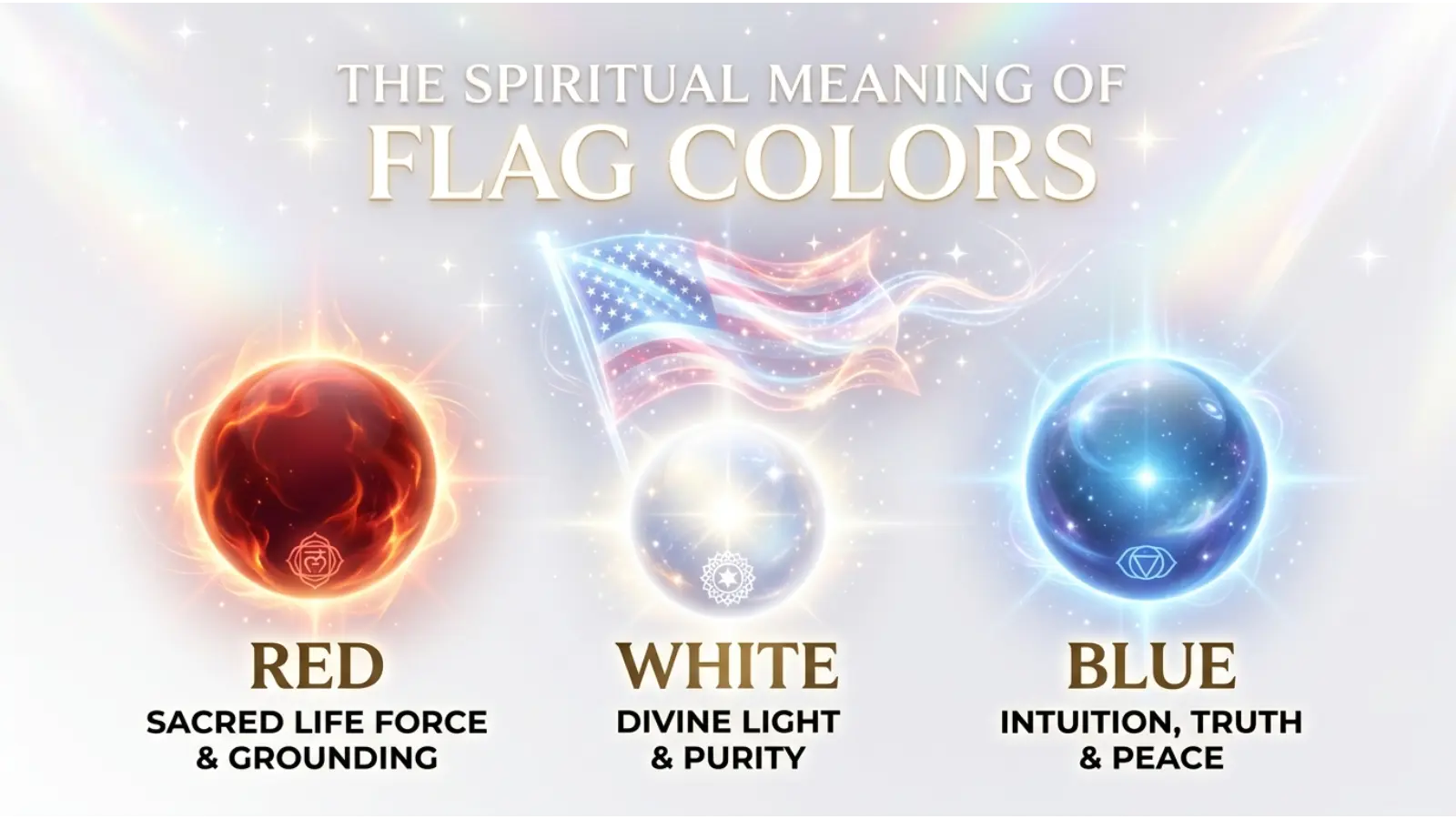
The United States flag is primarily a national symbol rather than a religious one. However, many individuals and communities interpret its colors through personal or spiritual perspectives.
These interpretations are symbolic and vary across traditions.
Some people see:
Red
- Selfless sacrifice
- Inner strength
- Commitment to serving others
White
- Moral clarity
- Peace
- Hope
- Renewal
Blue
- Faithfulness
- Wisdom
- Unity
- Endurance
These meanings are not official religious teachings but personal reflections that many people find meaningful.
Cultural Meaning of the American Flag Colors
Within the United States
The flag represents:
- National unity
- Freedom
- Democracy
- Independence
- Shared history
Many people display it during national holidays, community events, and military ceremonies.
International Perspectives
Outside the United States, the colors may symbolize:
- American culture
- Democracy
- Political influence
- Opportunity
- Global leadership
Interpretations differ depending on historical relationships, cultural experiences, and current events.
Why Red, White, and Blue Were Chosen
The colors also appeared on the British Union Flag, reflecting historical ties before American independence.
After independence, these colors were retained but came to represent a new national identity.
Their strong contrast also offers practical advantages:
- Excellent visibility
- Easy recognition
- Clear distinction at long distances
- Effective reproduction on fabric and printed materials
American Flag Colors in Branding and Marketing
Red, white, and blue are commonly used by American businesses because they communicate familiar emotional cues.
Red Suggests
- Action
- Energy
- Confidence
- Determination
White Suggests
- Simplicity
- Honesty
- Transparency
Blue Suggests
- Trust
- Security
- Professionalism
- Stability
Brands often use these colors together during patriotic holidays such as Independence Day, Memorial Day, and Veterans Day to create a sense of national pride.
American Flag Colors in Interior Design
Inspired by the flag, designers often create spaces that feel timeless and balanced.
Living Rooms
Blue walls paired with white trim and red accents create a classic patriotic appearance without overwhelming the room.
Home Offices
Blue encourages focus, while white keeps the workspace feeling organized.
Children’s Rooms
Soft navy, bright white, and muted red can create a playful Americana theme.
American Flag Colors in Fashion
Red, white, and blue remain popular because they combine boldness with versatility.
Popular combinations include:
- Navy blazer with white shirt
- Red accessories with neutral clothing
- White sneakers with denim
- Blue dresses accented with red scarves
These colors are especially common during national celebrations but are stylish year-round when balanced thoughtfully.
Color Combinations That Work Well
The American flag palette pairs naturally with many neutral and accent colors.
| Combination | Effect |
|---|---|
| Navy + White | Elegant and timeless |
| Red + Navy | Strong and confident |
| White + Red | Clean and energetic |
| Blue + Gray | Professional |
| Red + White + Denim | Casual Americana |
| Navy + Gold | Formal and distinguished |
Common Misconceptions About American Flag Color Meanings
Myth 1: The Flag Act Defined the Color Meanings
No. The original flag legislation described the design but did not assign symbolic meanings.
Myth 2: The Colors Have Only One Meaning
People often connect the colors with personal experiences, family traditions, or military service, so symbolism can vary.
Myth 3: Every Shade Is Official
The U.S. government specifies standard flag colors for consistency, but many artistic representations use slightly different shades while preserving the recognizable appearance.
Real-World Applications of American Flag Colors
These colors influence many aspects of everyday life.
Government
- Official seals
- Military insignia
- Public buildings
- State ceremonies
Business
Companies often use patriotic color schemes for seasonal campaigns that celebrate national holidays.
Education
Schools use the flag to teach history, citizenship, and national symbols.
Sports
National teams frequently wear red, white, and blue uniforms to represent the United States in international competitions.
Art and Photography
Artists use the flag’s colors to express themes such as identity, freedom, remembrance, or unity. Photographers often rely on the strong contrast between the colors to create striking compositions.
Why Context Matters
The meaning of the American flag colors is shaped by context.
- A military memorial emphasizes sacrifice.
- A classroom highlights civic education.
- A sporting event encourages unity and national pride.
- A marketing campaign may evoke celebration or trust.
Lighting, surrounding colors, and cultural background can also influence how people perceive the same color combination.
Frequently Asked Questions
What do the American flag colors officially mean?
Traditionally, red stands for valor and hardiness, white for purity and innocence, and blue for vigilance, perseverance, and justice.
Did the Founding Fathers assign these meanings?
The 1777 Flag Resolution did not define the colors. Their traditional meanings became associated with the Great Seal of the United States.
Why is blue associated with trust?
Across many cultures, blue is commonly linked with stability, dependability, and calmness, making it a popular color for governments and businesses.
Does the American flag have religious symbolism?
The flag itself is a national symbol. Spiritual interpretations of its colors are personal and vary across individuals and traditions.
Why are red, white, and blue common in American branding?
These colors are widely recognized and often evoke patriotism, trust, and confidence, especially during national holidays.
Do other countries use the same colors?
Yes. Many national flags include red, white, and blue, but each country assigns its own historical and cultural meanings.
Are the color meanings scientifically proven?
The historical symbolism is well documented. Psychological associations are supported by color psychology research but can vary between individuals and cultures.
Why do artists use American flag colors?
The palette is visually striking and carries strong symbolic associations with freedom, identity, courage, and national history.
Can color meanings change over time?
Yes. While traditional meanings remain influential, cultural events and personal experiences can shape how people interpret colors today.
Conclusion
The American flag color meanings combine history, symbolism, psychology, and national identity. Red reflects courage and sacrifice, white represents purity and integrity, and blue stands for vigilance, perseverance, and justice. Together, these colors have become enduring reminders of the values many Americans strive to uphold.
Although their traditional meanings are rooted in historical documents and long-standing customs, personal interpretation also plays a role. A veteran may see sacrifice, an artist may see balance and contrast, and a designer may recognize a timeless color palette that communicates trust and confidence.
Understanding the symbolism behind the American flag’s colors adds depth to one of the world’s most recognizable national symbols and encourages us to notice how color shapes meaning in everyday life.

Emma Wilson is a dedicated comparison writer and product researcher at ColorMystiic.com. She specializes in creating unbiased product comparisons, detailed reviews, and helpful buying guides. Her goal is to help readers make smarter purchasing decisions with confidence.