Fair ribbon color meanings are often connected with awareness campaigns, charity events, remembrance, celebration, and social causes. Unlike ordinary colors, ribbon colors usually gain their meaning through public campaigns and shared cultural understanding. A single ribbon can communicate support for a medical condition, honor a loved one, promote social justice, or celebrate an important achievement.
People search for fair ribbon color meanings to better understand what different ribbons represent, choose the right ribbon for an event, or learn the symbolism behind awareness campaigns. While some ribbon colors have globally recognized meanings, others vary by country, organization, or cultural tradition.
This guide explains the symbolism, psychology, emotional meaning, cultural significance, and practical uses of fair ribbon colors, helping you choose and understand them with confidence.
Quick Answer:
Fair ribbon color meanings represent awareness, hope, remembrance, support, and advocacy. Each ribbon color symbolizes different causes or emotions, although meanings may vary between organizations and countries.
What Are Fair Ribbon Color Meanings?
Fair ribbon color meanings refer to the symbolic messages associated with colored ribbons used in awareness campaigns, public events, charities, celebrations, and remembrance activities.
Ribbon colors are visual symbols. Instead of using words, they communicate shared ideas such as:
- Hope
- Compassion
- Awareness
- Courage
- Healing
- Unity
- Respect
- Remembrance
- Advocacy
- Community support
Over time, many nonprofit organizations adopted specific ribbon colors to represent their missions, making ribbons a universal language of support.
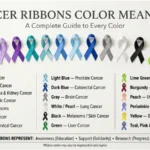
Fair Ribbon Color Meanings Chart
| Ribbon Color | Common Symbolism | Frequently Associated With |
|---|---|---|
| Pink | Hope, compassion | Breast cancer awareness |
| Red | Love, courage | Heart health, HIV/AIDS awareness |
| Blue | Trust, calm | Child abuse prevention, prostate cancer |
| Green | Growth, healing | Mental health, organ donation |
| Yellow | Hope, remembrance | Suicide prevention, military support |
| Purple | Strength, dignity | Domestic violence awareness |
| Orange | Energy, safety | Leukemia awareness, social causes |
| White | Peace, innocence | Lung cancer, peace campaigns |
| Black | Mourning, remembrance | Grief, memorial events |
| Gold | Strength, courage | Childhood cancer awareness |
| Silver | Wisdom, resilience | Brain disorders, recovery campaigns |
| Teal | Healing, balance | Ovarian cancer, PTSD awareness |
| Lavender | Grace, understanding | Various cancer awareness campaigns |
| Rainbow | Diversity, inclusion | LGBTQ+ pride and equality |
Some awareness organizations assign different meanings to the same ribbon color, so interpretations can vary.
What Do Fair Ribbon Colors Symbolize?
Ribbon colors generally symbolize emotional values rather than the color alone.
Positive Symbolism
Many ribbon colors represent:
- Hope
- Healing
- Community
- Support
- Kindness
- Awareness
- Courage
- Love
- Unity
- Recovery
These meanings help people show solidarity without needing lengthy explanations.
Possible Negative Associations
Some ribbon colors are also linked with difficult experiences, including:
- Illness
- Loss
- Grief
- Social injustice
- Violence
- Trauma
Even so, awareness ribbons are intended to encourage compassion and action rather than sadness alone.
Psychology of Fair Ribbon Colors
Color psychology suggests that colors influence perception and emotional responses, although reactions differ among individuals and cultures.
Warm Ribbon Colors
Warm colors such as red, orange, and yellow often communicate:
- Energy
- Determination
- Optimism
- Passion
- Visibility
These colors naturally attract attention, making them useful for awareness campaigns.
Cool Ribbon Colors
Blue, green, and teal typically suggest:
- Calmness
- Stability
- Healing
- Trust
- Balance
Healthcare organizations frequently use these colors because they create a reassuring impression.
Neutral Ribbon Colors
White, silver, gray, and black can express:
- Respect
- Reflection
- Simplicity
- Elegance
- Remembrance
These colors are often chosen for memorial events and formal ceremonies.
Spiritual Meaning of Ribbon Colors
Ribbon colors may also carry symbolic spiritual meanings. These interpretations differ across traditions and should not be viewed as universal religious teachings.
Common symbolic interpretations include:
| Color | Spiritual Association |
|---|---|
| White | Peace, purity, renewal |
| Green | Healing, growth |
| Purple | Wisdom, transformation |
| Blue | Faith, tranquility |
| Gold | Hope, divine light |
| Pink | Compassion, unconditional love |
Many people wear awareness ribbons as expressions of hope, prayer, remembrance, or encouragement rather than formal religious symbols.
Cultural Interpretations of Ribbon Colors
Ribbon symbolism changes across cultures.
Western Countries
Colored ribbons commonly represent:
- Charity campaigns
- Disease awareness
- Memorial events
- Social advocacy
- Community fundraising
Eastern Cultures
Certain colors may have different meanings:
- White often relates to mourning in some East Asian traditions.
- Red is widely associated with celebration, happiness, and prosperity.
Middle Eastern Traditions
Color symbolism often reflects historical, cultural, and religious influences. Meanings depend heavily on local customs and the context in which ribbons are used.
Global Awareness Campaigns
International organizations increasingly standardize ribbon colors, allowing many awareness campaigns to be recognized across borders.
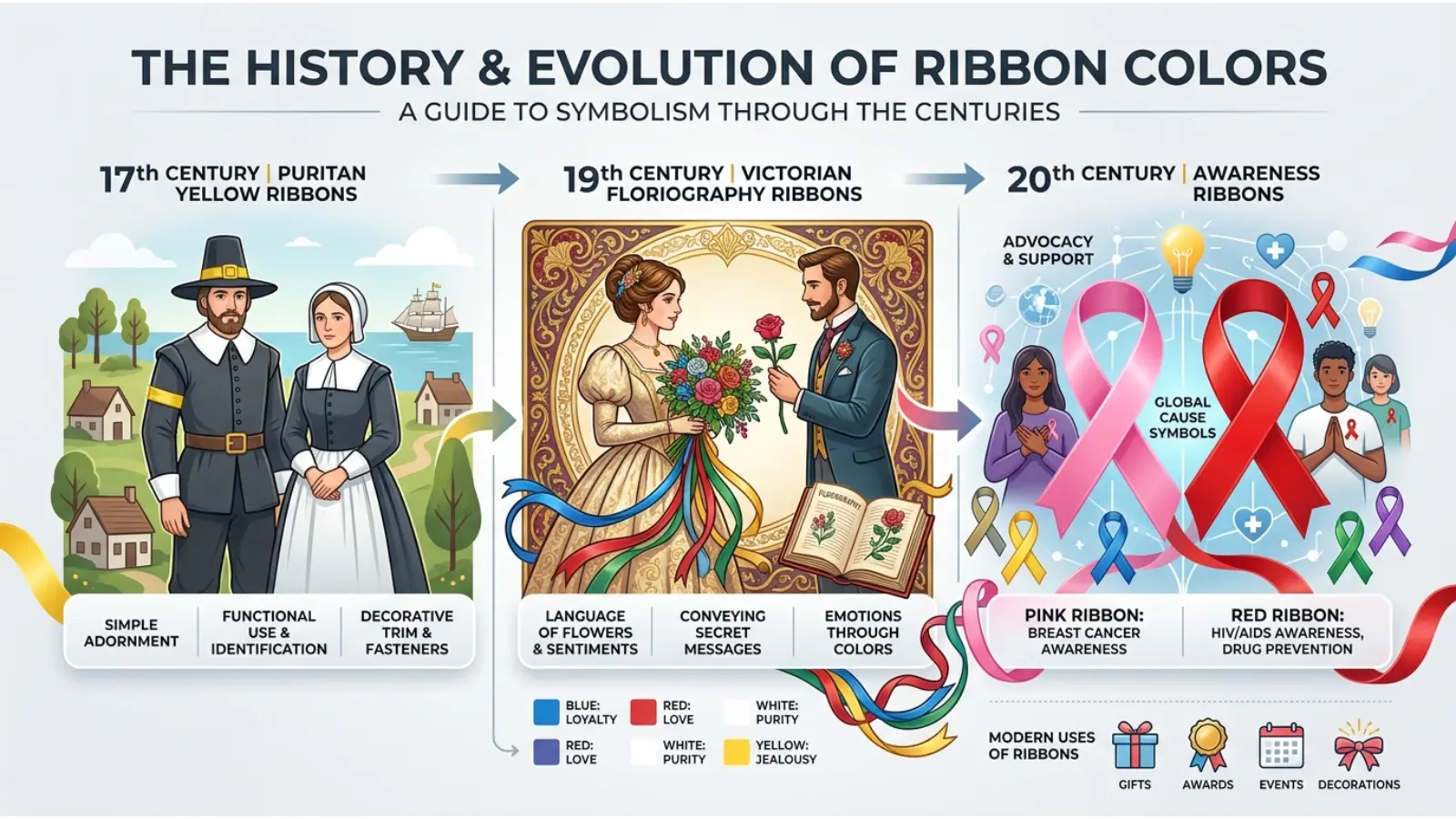
How Ribbon Color Meanings Have Changed Over Time
Awareness ribbons became widely recognized during the late 20th century.
As public health campaigns expanded, ribbons evolved from simple decorative accessories into symbols of education, fundraising, and advocacy.
Today, ribbons represent:
- Medical awareness
- Veterans
- Environmental causes
- Human rights
- Mental health
- Community support
The meaning of many ribbon colors continues to evolve as new campaigns emerge.
Personality Associations
Some people feel naturally drawn to certain ribbon colors. While color preferences do not determine personality, they may reflect personal taste or current emotions.
For example:
- Pink lovers may appreciate kindness and empathy.
- Blue enthusiasts often value calmness and trust.
- Green admirers may enjoy nature and personal growth.
- Purple fans sometimes appreciate creativity and individuality.
- Yellow supporters may be attracted to optimism and encouragement.
These are symbolic associations rather than scientific personality tests.
Fair Ribbon Colors in Branding and Marketing
Brands and nonprofit organizations carefully choose ribbon colors because color shapes first impressions.
Examples include:
- Pink encourages empathy and fundraising.
- Blue builds trust and credibility.
- Green suggests health and sustainability.
- Purple communicates dignity and resilience.
- Gold highlights courage and achievement.
Using consistent ribbon colors helps organizations become instantly recognizable and strengthens public awareness.
Fair Ribbon Colors in Interior Design
Ribbon-inspired color palettes can influence the atmosphere of a room.
Living Room
Soft blue and green accents create a welcoming, peaceful environment.
Bedroom
Lavender, white, and pale pink promote relaxation and comfort.
Office
Blue and green encourage focus and reduce visual stress.
Community Spaces
Bright awareness colors can inspire optimism and encourage participation during charity events.
Lighting also affects how ribbon colors appear. Natural daylight usually shows the truest color, while warm indoor lighting can make colors seem softer or more golden.
Fair Ribbon Colors in Fashion
Colored ribbons are common in clothing, accessories, and event apparel.
People wear ribbons to:
- Support awareness campaigns
- Honor loved ones
- Show solidarity
- Celebrate achievements
- Participate in charity events
Ribbon pins, bracelets, scarves, and lapel accessories allow individuals to express support in a simple yet meaningful way.
Color Combinations That Work Well
Certain ribbon color pairings create balanced and memorable designs.
| Combination | Why It Works |
|---|---|
| Pink + White | Soft, compassionate appearance |
| Blue + Silver | Professional and trustworthy |
| Green + White | Fresh, healthy look |
| Purple + Gold | Elegant and inspiring |
| Red + White | Bold, high visibility |
| Teal + Gray | Modern and calming |
Designers choose combinations based on contrast, readability, and the emotional message they want to communicate.
Real-World Applications
Fair ribbon colors appear in many aspects of everyday life.
They are used in:
- Charity walks
- Fundraising campaigns
- Hospital events
- School awareness programs
- Sports initiatives
- Memorial ceremonies
- Social media campaigns
- Corporate social responsibility programs
- Educational materials
- Community volunteer events
The same ribbon color may represent different causes depending on the sponsoring organization, so checking the campaign’s official meaning is always helpful.
Common Misconceptions
Every Ribbon Color Has Only One Meaning
Not true. Several organizations may use the same ribbon color for different causes.
Ribbon Colors Have Scientific Emotional Effects
Research suggests colors can influence perception and mood, but emotional responses are shaped by personal experiences, culture, and context. No ribbon color guarantees a specific psychological outcome.
Ribbon Colors Are Universal
Color meanings vary around the world. A color associated with celebration in one culture may symbolize mourning or remembrance in another.
Frequently Asked Questions
What do fair ribbon colors represent?
They generally represent awareness, support, remembrance, advocacy, hope, and community solidarity.
Are ribbon color meanings universal?
No. Many ribbon colors have widely recognized meanings, but organizations and cultures sometimes assign different interpretations.
Which ribbon color symbolizes hope?
Yellow, pink, gold, and green are commonly linked with hope, depending on the campaign.
Why are awareness ribbons important?
They help raise visibility for causes, encourage conversations, support fundraising, and show compassion for affected individuals and families.
Can one ribbon color represent multiple causes?
Yes. Several awareness campaigns share the same ribbon color, making context important.
Is there scientific evidence behind ribbon color meanings?
The symbolic meanings come mainly from cultural traditions and awareness campaigns. Color psychology offers insights into perception, but many symbolic interpretations are cultural rather than scientific.
How do I choose the right ribbon color?
Identify the organization or cause you want to support and use the ribbon color officially associated with that campaign.
Does lighting affect ribbon colors?
Yes. Natural light usually shows the most accurate color, while artificial lighting can change brightness and tone.
Are ribbon colors used outside awareness campaigns?
Absolutely. They also appear in celebrations, awards, gifts, fashion, branding, sports, and decorative events.
Why do different countries interpret colors differently?
History, religion, local customs, and social traditions all influence how colors are understood.
Final Thoughts
Fair ribbon color meanings go beyond simple color symbolism. They reflect shared experiences, public awareness, compassion, remembrance, and collective action. While many ribbon colors have widely accepted associations, their meanings can vary depending on the organization, culture, and context.
Understanding these differences helps you choose ribbon colors thoughtfully—whether you’re supporting a charitable cause, designing awareness materials, planning an event, or simply learning the language of color. A small ribbon may seem simple, but its message can inspire conversation, encourage empathy, and unite people around causes that matter.

Emma Wilson is a dedicated comparison writer and product researcher at ColorMystiic.com. She specializes in creating unbiased product comparisons, detailed reviews, and helpful buying guides. Her goal is to help readers make smarter purchasing decisions with confidence.