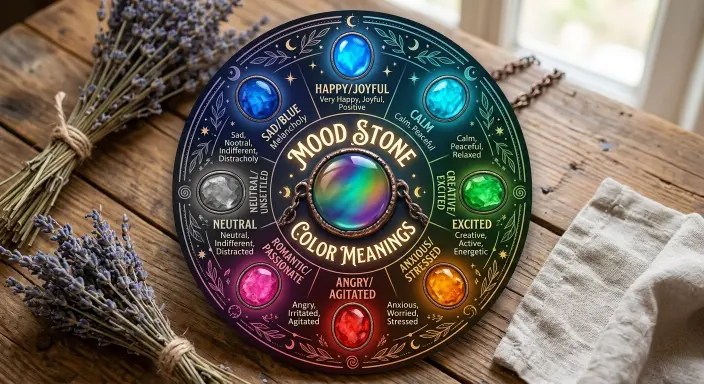
Mood stones have fascinated people for decades because they seem to reveal emotions through changing colors. A simple glance at a mood stone can spark curiosity, conversation, and even personal reflection. While many people believe these colors represent specific feelings, the real story combines science, symbolism, and popular culture.People search for Mood stone color meanings to understand what each color supposedly says about emotions, relationships, personality, or spiritual energy.
However, it’s important to know that the colors themselves are produced by temperature-sensitive materials rather than direct emotion detection. Even so, the meanings associated with each shade have become widely recognized and continue to influence jewelry, gifts, fashion, and personal expression.
This guide explains what every common mood stone color means, how mood stones actually work, where their symbolism comes from, and how to interpret the colors realistically.
Quick Answer: Mood stones change color because heat affects special liquid crystals inside them. Each color has a traditional emotional meaning—such as blue for calm, green for balance, and black for stress—but these interpretations are symbolic rather than scientifically proven.
What Is a Mood Stone?
A mood stone is a gemstone or jewelry piece containing thermochromic liquid crystals. These crystals react to changes in temperature by reflecting different wavelengths of light, creating the appearance of changing colors.
Since body temperature can change with stress, relaxation, excitement, weather, or physical activity, mood stones often display different colors throughout the day.
Although marketers originally promoted mood stones as emotional indicators, scientists agree that they respond to temperature, not thoughts or feelings. Nevertheless, the emotional meanings assigned to each color have become part of modern symbolism.
Mood Stone Color Meanings Chart
| Mood Stone Color | Traditional Meaning |
|---|---|
| Black | Stress, tension, exhaustion |
| Gray | Anxiety, uncertainty |
| Brown | Restlessness, nervousness |
| Amber | Mixed emotions, caution |
| Yellow | Optimism, curiosity |
| Green | Balance, calmness |
| Light Blue | Relaxation, peace |
| Dark Blue | Confidence, happiness |
| Purple | Passion, creativity |
| Violet | Inspiration, imagination |
| Pink | Love, kindness |
| Red | Energy, excitement |
| Orange | Enthusiasm, adventure |
Black Mood Stone Meaning
Black is usually the coolest color a mood stone displays.
Traditionally, it symbolizes:
- Stress
- Fatigue
- Emotional pressure
- Physical coldness
- Overthinking
From a scientific perspective, black often appears when the stone is too cold to activate the liquid crystals. Therefore, it doesn’t necessarily mean someone is unhappy. It may simply reflect cold weather or cool hands.
Gray Mood Stone Meaning
Gray represents emotional uncertainty.
Common symbolic meanings include:
- Confusion
- Doubt
- Emotional distance
- Reflection
- Temporary worry
Unlike black, gray often suggests transition rather than intense stress.
Brown Mood Stone Meaning
Brown traditionally represents instability or discomfort.
It may symbolize:
- Nervousness
- Uneasiness
- Physical tiredness
- Restlessness
Again, this interpretation comes from mood stone tradition rather than scientific research.
Amber Mood Stone Meaning
Amber often symbolizes a changing emotional state.
People associate it with:
- Caution
- Curiosity
- Adjustment
- Decision-making
- Emotional flexibility
Because amber sits between warmer and cooler shades, many guides interpret it as emotional transition.
Yellow Mood Stone Meaning
Yellow is connected with mental activity.
Traditional meanings include:
- Optimism
- Learning
- Creativity
- Curiosity
- Friendly conversation
However, very bright yellow can sometimes symbolize nervous excitement instead of calm happiness.
Green Mood Stone Meaning
Green is one of the most desirable mood stone colors.
It commonly represents:
- Balance
- Emotional stability
- Inner peace
- Harmony
- Good health
Many mood stone manufacturers describe green as the ideal emotional state because it reflects comfortable body temperature.
Light Blue Mood Stone Meaning
Light blue symbolizes peaceful emotions.
It often represents:
- Relaxation
- Calm thinking
- Patience
- Trust
- Emotional openness
Many people associate this color with quiet confidence and comfortable surroundings.
Dark Blue Mood Stone Meaning
Dark blue is traditionally considered one of the happiest mood stone colors.
It symbolizes:
- Confidence
- Satisfaction
- Happiness
- Emotional security
- Positive communication
Since relaxed hands tend to be warmer, mood stones frequently display blue shades during comfortable conditions.
Purple Mood Stone Meaning
Purple has long represented imagination and mystery.
Mood stone traditions connect it with:
- Creativity
- Passion
- Inspiration
- Personal growth
- Emotional awareness
Because purple blends calming blue with energetic red, it often symbolizes emotional balance mixed with creative energy.
Violet Mood Stone Meaning
Violet usually represents deeper reflection.
It may symbolize:
- Wisdom
- Spiritual curiosity
- Imagination
- Artistic thinking
- Personal insight
Although some spiritual traditions assign special meaning to violet, these interpretations vary widely.
Pink Mood Stone Meaning
Pink is strongly associated with affection.
Traditional meanings include:
- Love
- Kindness
- Compassion
- Friendship
- Emotional warmth
For this reason, pink mood stones are popular gifts between friends and romantic partners.
Red Mood Stone Meaning
Red reflects higher temperatures.
Its symbolic meanings include:
- Excitement
- Passion
- Energy
- Motivation
- Confidence
Sometimes red is also associated with intense emotions or physical activity because increased circulation warms the skin.
Orange Mood Stone Meaning
Orange represents enthusiasm and movement.
People often connect it with:
- Adventure
- Optimism
- Confidence
- Social energy
- Motivation
Orange usually appears between yellow and red, making it another color associated with emotional change.
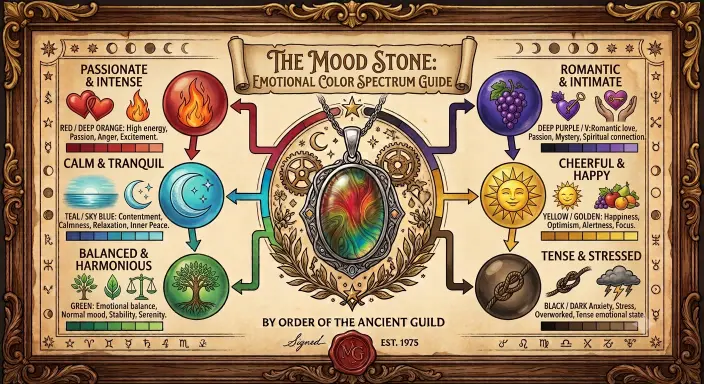
How Mood Stones Actually Work
Despite popular myths, mood stones do not detect emotions directly.
Instead, they contain tiny liquid crystals that change their molecular arrangement as temperature changes. This shift alters how light reflects from the surface, producing different colors.
Several factors can influence the color, including:
- Body temperature
- Outdoor weather
- Indoor heating
- Exercise
- Blood circulation
- Holding hot or cold objects
Because emotions can sometimes affect body temperature, mood stones may occasionally appear to match someone’s mood. However, this is an indirect relationship rather than proof of emotional detection.
The Psychology Behind Mood Stone Color Meanings
The emotional meanings assigned to mood stone colors come mainly from color psychology rather than scientific testing of mood stones themselves.
For example:
- Blue often feels calming because people associate it with clear skies and water.
- Green reminds many people of nature and balance.
- Red attracts attention and suggests excitement.
- Yellow is commonly linked with sunshine and optimism.
- Purple has historically represented luxury, imagination, and creativity.
These psychological associations help explain why mood stone color charts feel intuitive to many people.
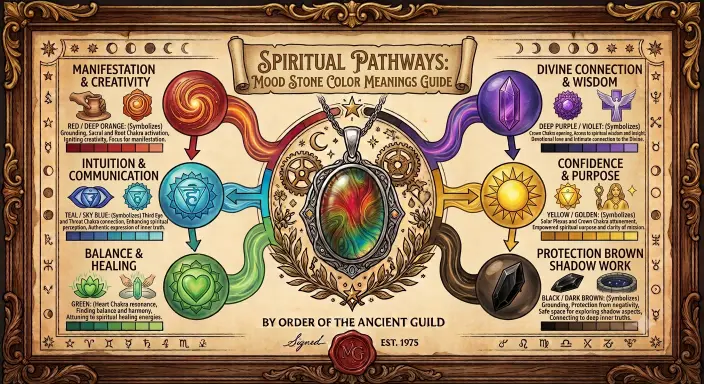
Spiritual Meaning of Mood Stone Colors
Some spiritual traditions interpret mood stone colors as reflections of personal energy rather than emotional states.
Examples include:
- Green for healing and balance
- Blue for communication
- Purple for intuition
- Pink for compassion
- Red for vitality
- Yellow for confidence
These interpretations differ between belief systems and should be understood as symbolic traditions rather than universally accepted spiritual facts.
Mood Stones in Popular Culture
Mood stones became especially popular during the 1970s.
They quickly became:
- Fashion accessories
- Friendship gifts
- Conversation starters
- Collectible jewelry
- Symbolic keepsakes
Today, they continue to appeal to people who enjoy combining science with symbolism.
Personality Associations
Some people wonder whether their favorite mood stone color reflects their personality.
While no scientific evidence supports this idea, traditional associations include:
- Blue lovers often value peace.
- Green fans appreciate balance.
- Purple enthusiasts enjoy creativity.
- Red supporters seek excitement.
- Pink admirers value relationships.
- Yellow fans enjoy learning new things.
Remember that favorite colors cannot accurately predict personality. They simply reflect personal preferences, experiences, and cultural influences.
Mood Stones in Fashion
Mood stone jewelry remains fashionable because every piece appears unique throughout the day.
Popular choices include:
- Rings
- Necklaces
- Bracelets
- Earrings
- Pendants
They pair especially well with casual outfits and vintage-inspired fashion while adding an interactive element to accessories.
Why Mood Stone Colors Change Throughout the Day
Many people notice that their mood stone changes color several times daily.
This happens because body temperature naturally changes during:
- Exercise
- Eating
- Sleeping
- Stressful situations
- Warm weather
- Cold weather
- Physical illness
- Relaxation
Consequently, a mood stone may display different colors even when your emotional state remains the same.
Common Misconceptions About Mood Stone Color Meanings
Mood stones read emotions directly.
False. They measure temperature changes, not emotions.
Every color has one universal meaning.
False. Different manufacturers use slightly different color charts.
Mood stones are scientifically accurate emotion detectors.
There is no scientific evidence supporting this claim.
Spiritual meanings are universally accepted.
Not necessarily. Spiritual interpretations differ across cultures and belief systems.
Real-World Uses of Mood Stone Colors
Although mood stones are mostly decorative, they have several practical uses.
People enjoy them for:
- Personal expression
- Gifts
- Jewelry collections
- Icebreakers
- Fashion accessories
- Conversation starters
- Color symbolism
- Nostalgia
Designers also appreciate mood stones because they combine interactive technology with visual appeal.
Factors That Influence Color Interpretation
Understanding mood stone colors requires context.
Several factors shape how people interpret them:
Lighting
Natural sunlight often makes colors appear brighter than indoor lighting.
Temperature
Cold weather can keep stones darker for longer periods.
Culture
Different societies assign different symbolic meanings to colors.
Personal Experience
Someone’s memories may influence how they interpret a specific shade.
Fashion Trends
Modern color symbolism changes over time, especially through marketing and popular culture.
Frequently Asked Questions
Do mood stones really detect emotions?
No. Mood stones respond to temperature changes, although emotions can sometimes influence body temperature indirectly.
Which mood stone color is considered the best?
Many traditional charts consider green and dark blue the most balanced and positive colors.
Why does my mood stone stay black?
It is usually too cold. Cold hands or cool weather often prevent the liquid crystals from activating.
Can stress change a mood stone?
Possibly. Stress may affect blood circulation and skin temperature, which can influence the stone’s color.
Are mood stone meanings scientifically proven?
No. The color meanings are symbolic traditions rather than scientifically verified emotional measurements.
Why do different charts show different meanings?
Manufacturers often create their own interpretation guides, so meanings may vary slightly.
Can mood stones stop changing color?
Yes. Over time, liquid crystals can wear out, especially if exposed to water, sunlight, or excessive heat.
Are mood stones suitable as gifts?
Yes. Their changing colors make them thoughtful gifts that encourage conversation and personal reflection.
Do children enjoy mood stones?
Many children enjoy watching the colors change, although adults should explain that the colors reflect temperature rather than magical powers.
Can lighting affect mood stone colors?
Yes. Different light sources change how the reflected colors appear, making the stone look slightly different indoors and outdoors.
Final Thoughts
Mood stone color meanings combine science, symbolism, and decades of cultural tradition. While mood stones do not literally read emotions, their changing colors encourage people to pause, reflect, and think about how feelings, environment, and perception interact. Understanding the science behind thermochromic crystals alongside the symbolic meanings of each color helps you appreciate mood stones for what they truly are: fascinating pieces of jewelry that blend visual beauty with enduring human curiosity about emotion and color.

Emma Wilson is a dedicated comparison writer and product researcher at ColorMystiic.com. She specializes in creating unbiased product comparisons, detailed reviews, and helpful buying guides. Her goal is to help readers make smarter purchasing decisions with confidence.