Flags are more than colorful pieces of fabric. They tell stories about a nation’s history, beliefs, struggles, geography, and hopes for the future. Every shade on a flag is usually chosen with purpose, although the exact meaning depends on each country’s history and official explanation.Many people search for country flag color meanings to understand why so many nations use red, blue, white, green, yellow, black, and other colors. While some colors have common symbolic themes, their meanings can vary greatly from one country to another.
This guide explains the symbolism, psychology, historical background, cultural significance, and modern use of flag colors around the world.
Quick Answer:
Country flag color meanings often represent values such as courage, peace, freedom, nature, religion, prosperity, justice, and national identity. However, each country’s official interpretation is unique and should not be replaced by general color symbolism.
What Are Country Flag Color Meanings?
National flags use colors to communicate ideas that unite a country’s people. These meanings often come from:
- Historical events
- Independence movements
- Religious traditions
- Natural landscapes
- Political ideals
- Cultural heritage
- National values
Although many nations share similar colors, they rarely assign exactly the same meaning to them.
For example:
- Red may symbolize sacrifice in one country and revolution in another.
- Green may represent agriculture, Islam, or fertile land depending on the nation.
- Blue can represent freedom, the sea, justice, or the sky.
Understanding a flag requires looking beyond the color itself.
Common Flag Color Meanings Chart
| Color | Common Symbolism | Frequently Associated With |
|---|---|---|
| Red | Courage, sacrifice, revolution | Freedom struggles, military bravery |
| Blue | Peace, justice, freedom, loyalty | Oceans, skies, stability |
| White | Peace, honesty, purity | Unity, truth, hope |
| Green | Nature, agriculture, growth | Fertile land, prosperity, Islam |
| Yellow/Gold | Wealth, sunshine, generosity | Natural resources, optimism |
| Black | Determination, strength, heritage | Resistance, resilience |
| Orange | Courage, cultural identity | National traditions, freedom |
| Purple | Royal heritage, dignity | Historic kingdoms (rare) |
| Brown | Land and indigenous heritage | Earth and tradition (very rare) |
What Does Red Mean on Country Flags?
Red is the most common flag color worldwide.
It often symbolizes:
- Courage
- Sacrifice
- Patriotism
- Revolution
- Strength
- National independence
Many countries use red to honor people who fought for freedom.
From a psychological perspective, red attracts attention quickly. It communicates urgency, determination, and energy, making it highly visible from long distances.
However, red does not always represent war. In several nations, it also stands for love of country and national unity.
What Does Blue Mean on Country Flags?
Blue is widely connected with:
- Peace
- Loyalty
- Justice
- Freedom
- Truth
- Stability
Many island nations use blue to represent surrounding oceans.
Countries with large skies or important rivers may also use blue to symbolize natural beauty.
Psychologically, blue creates feelings of trust and calmness. This partly explains why it is also popular among governments and international organizations.
What Does White Mean on Country Flags?
White commonly symbolizes:
- Peace
- Purity
- Honesty
- Unity
- Hope
Historically, white has often represented peaceful intentions after conflict.
Because white reflects light, it also creates strong contrast against darker colors, making flag designs easier to recognize.
What Does Green Mean on Country Flags?
Green frequently represents:
- Nature
- Agriculture
- Fertility
- Growth
- Hope
- Prosperity
In many Muslim-majority countries, green also has important religious significance because of its historical association with Islam.
In agricultural nations, green celebrates fertile land and farming traditions.
What Does Yellow or Gold Mean?
Yellow and gold usually symbolize:
- Wealth
- Prosperity
- Sunshine
- Happiness
- Wisdom
- Natural resources
Countries rich in minerals or precious metals sometimes include gold to reflect economic strength.
Gold can also represent excellence and national pride.
What Does Black Mean?
Black is one of the least common but most powerful flag colors.
It may symbolize:
- Strength
- Determination
- National resilience
- Ancestral heritage
- Victory over hardship
In several African nations, black represents the people themselves and shared cultural identity.
Unlike everyday symbolism where black may suggest mourning, flag symbolism is often much more positive.
Less Common Flag Colors
Orange
Orange often represents:
- Bravery
- National identity
- Cultural traditions
- Religious heritage
It is relatively uncommon but highly distinctive.
Purple
Purple appears on only a few national flags.
It traditionally symbolizes:
- Royal authority
- Honor
- Historical prestige
Its rarity partly comes from the historical expense of purple dye.
Brown
Brown is extremely uncommon in national flags.
When used, it may represent:
- The earth
- Indigenous heritage
- Natural landscapes
Why Countries Choose Different Meanings for the Same Color
Colors never exist in isolation.
The same shade may represent completely different ideas because each nation’s history is different.
For example:
- Green may symbolize forests in one country.
- Another nation may connect green with religion.
- A third may use it for agricultural prosperity.
Historical events often shape these meanings more than color psychology does.
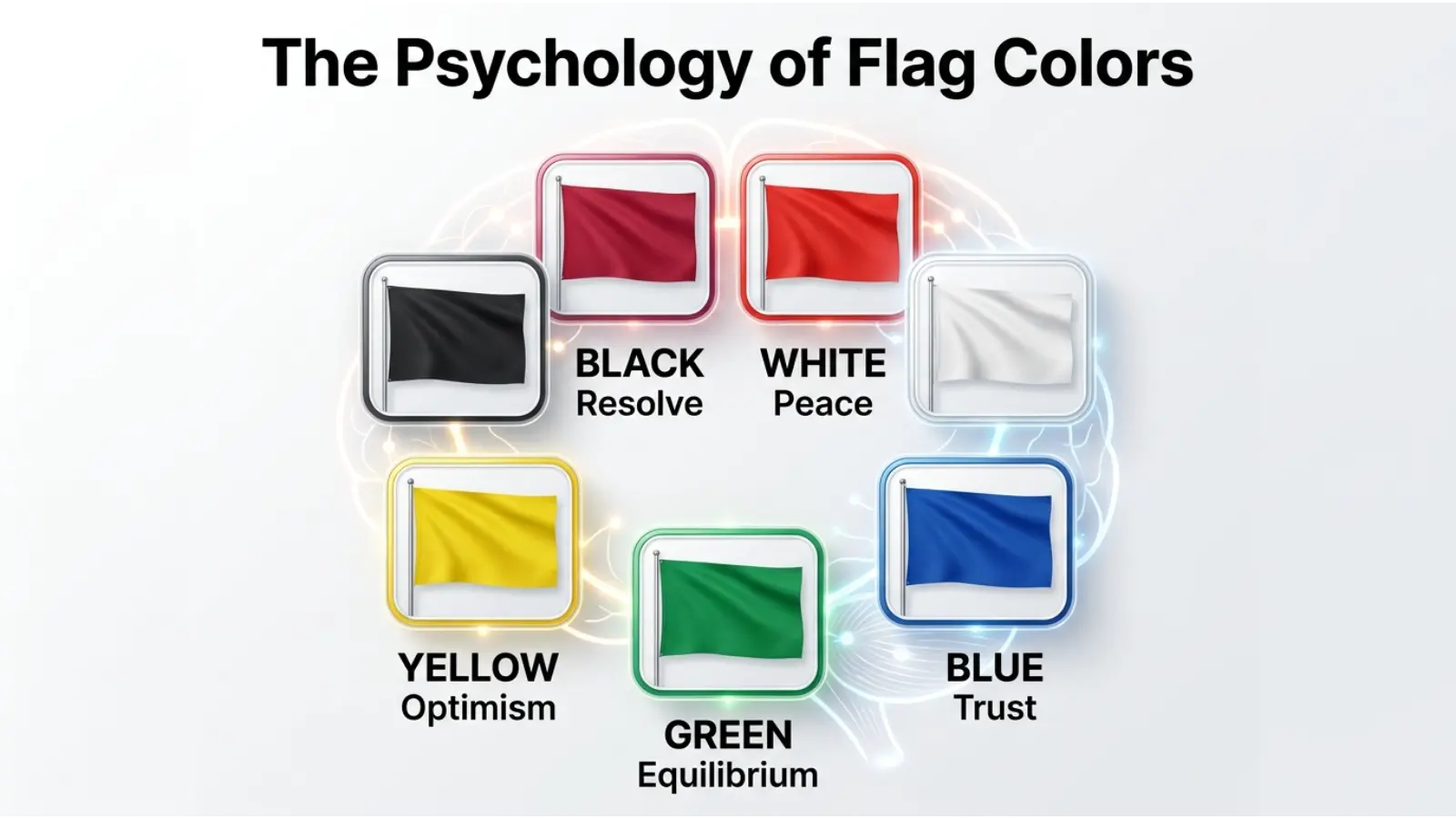
Psychology of Flag Colors
Although governments usually choose colors for historical reasons, psychology helps explain why certain colors remain effective.
Red
Creates excitement and urgency.
Blue
Builds trust and stability.
Green
Suggests safety and growth.
White
Feels open and peaceful.
Yellow
Attracts attention while expressing optimism.
Black
Communicates authority and resilience.
Research in visual perception suggests that high-contrast combinations improve recognition from a distance, making flags easier to identify.
Historical Evolution of Flag Colors
Early flags often displayed family crests or military symbols.
As modern nations developed, colors became linked with:
- Independence movements
- Revolutions
- National unity
- Constitutional values
- Geographic identity
Many countries kept traditional colors after gaining independence because citizens already recognized them.
Some newly independent nations intentionally selected colors that separated them from former colonial powers.
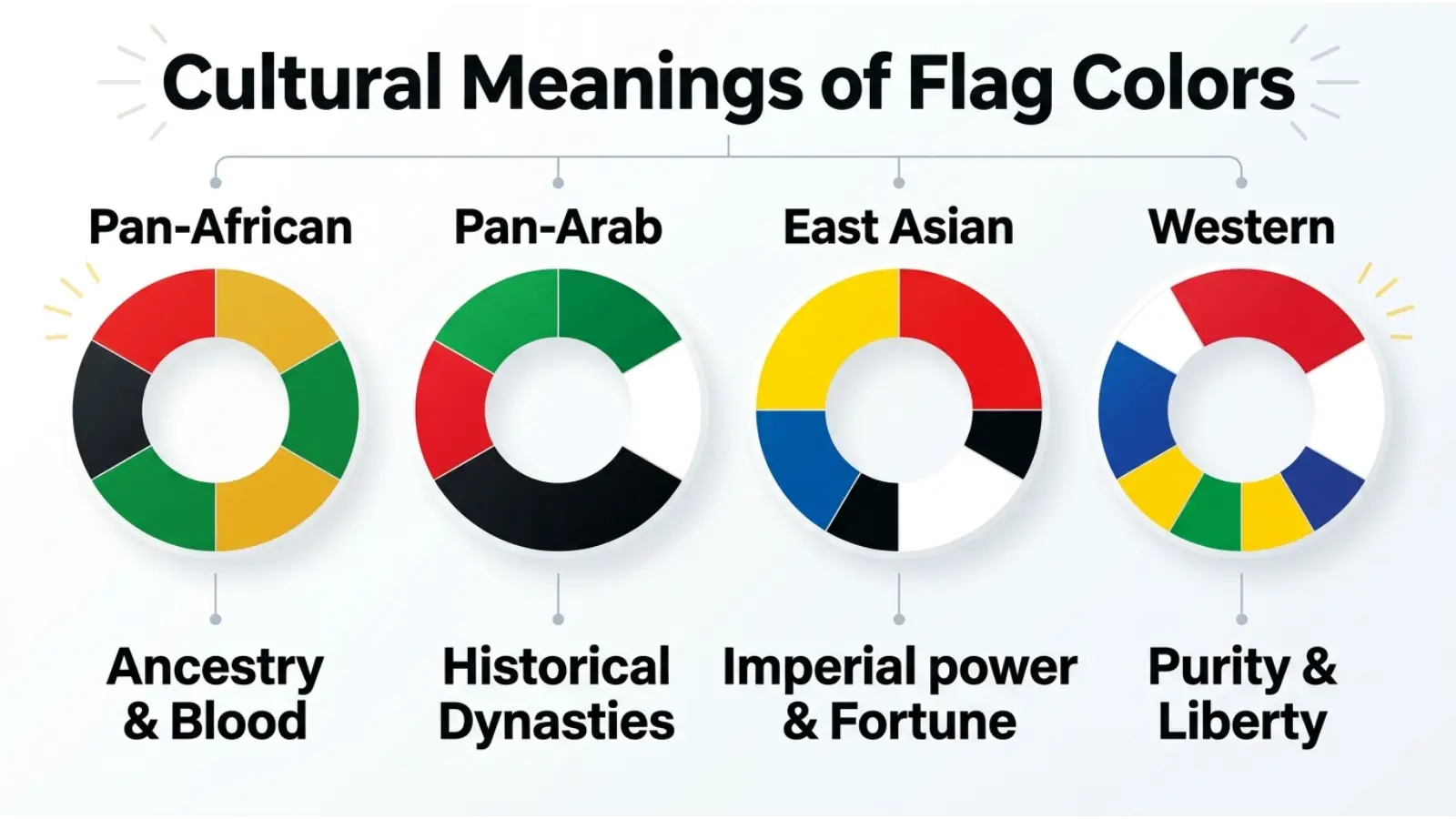
Cultural Interpretations of Flag Colors
Different cultures naturally associate colors with different ideas.
Western Traditions
- Blue often suggests liberty.
- White commonly represents peace.
- Red may symbolize courage.
Middle Eastern Traditions
Green frequently carries religious and historical importance.
African Traditions
Red, green, black, and yellow often celebrate independence, heritage, and unity.
Asian Traditions
Colors may connect with prosperity, happiness, nature, or historical dynasties depending on local customs.
Because traditions differ, no single interpretation applies everywhere.
Spiritual Symbolism of Flag Colors
Some countries include colors with spiritual or religious significance.
Examples include:
- Green in many Islamic traditions
- White as a symbol of peace in various cultures
- Gold representing divine light in some historical contexts
These meanings vary across religions and should not be generalized to every nation using the same color.
Why Certain Colors Appear More Often
Some colors became common because they were easier to produce with early dyes.
Others spread through political alliances or historical influence.
Common reasons include:
- Better visibility
- Easier manufacturing
- Shared cultural heritage
- Historical symbolism
- Revolutionary movements
Flag Colors in National Identity
A country’s flag becomes one of its strongest national symbols.
People see these colors during:
- Sporting events
- National holidays
- Government ceremonies
- International competitions
- Military events
- Schools
Over time, citizens often associate these colors with patriotism more than their original historical meanings.
Country Flag Colors in Branding and Design
Governments use flag colors consistently across:
- Tourism campaigns
- Official logos
- Passports
- Currency
- National celebrations
- International exhibitions
Businesses sometimes incorporate national colors to express local identity or celebrate cultural heritage.
However, using national flag colors in branding should respect local laws and cultural expectations.
What Makes a Good Flag Color Combination?
Successful flags usually combine:
- High contrast
- Simple color palettes
- Easy recognition
- Strong symbolism
Popular combinations include:
- Red and white
- Blue and white
- Green and white
- Red, blue, and white
- Black, green, red, and yellow
Simple combinations remain recognizable from great distances.
Common Misconceptions About Flag Colors
Every country uses universal meanings.
False. Each nation defines its own symbolism.
Red always means war.
No. It may represent courage, independence, or patriotism.
Green always means religion.
Not necessarily. It can represent forests, farming, hope, or prosperity.
Colors never change meaning.
Historical interpretation often evolves over time.
Real-World Applications of Flag Color Symbolism
Understanding country flag color meanings helps people in many fields:
Education
Students learn world history and geography more effectively.
International Business
Designers avoid unintended cultural misunderstandings.
Tourism
Visitors better appreciate national traditions.
Graphic Design
Professionals create culturally respectful materials.
Sports
Fans understand the symbolism behind team colors inspired by national flags.
Diplomacy
Officials recognize important national identities during international events.
Frequently Asked Questions
Why do so many country flags use red, white, and blue?
These colors became popular through historical influence, visibility, and symbolism. Different countries assign different meanings to them.
Do all countries officially explain their flag colors?
No. Some governments publish official meanings, while others rely on historical interpretation.
Which flag color is most common?
Red is generally considered the most common color found on national flags.
Does green always represent Islam?
No. While green has important meaning in Islam, many countries use it to represent nature, agriculture, or prosperity.
Why is purple so rare on flags?
Purple dye was historically expensive, making it uncommon in traditional flag design.
Can one flag color have multiple meanings?
Yes. A single color may symbolize history, geography, religion, and national values at the same time.
Why do neighboring countries often share colors?
Shared history, regional movements, or cultural traditions often influence neighboring nations.
Are flag colors based on psychology?
Usually not. Most originate from history and culture, though psychological effects may strengthen their impact.
Do flag colors change over time?
The colors often remain the same, but people may interpret their symbolism differently as societies evolve.
Why are simple flag designs preferred?
Simple designs are easier to recognize, reproduce, and remember.
Final Thoughts
Country flag color meanings reveal far more than simple color choices. Every flag reflects a nation’s journey, values, traditions, and aspirations. While colors such as red, blue, green, white, and gold often share broad symbolic themes, their true meaning depends on each country’s unique history and official interpretation.
Learning the symbolism behind national flags offers a deeper appreciation of world cultures and reminds us that the same color can tell very different stories depending on where it flies.

Emma Wilson is a dedicated comparison writer and product researcher at ColorMystiic.com. She specializes in creating unbiased product comparisons, detailed reviews, and helpful buying guides. Her goal is to help readers make smarter purchasing decisions with confidence.