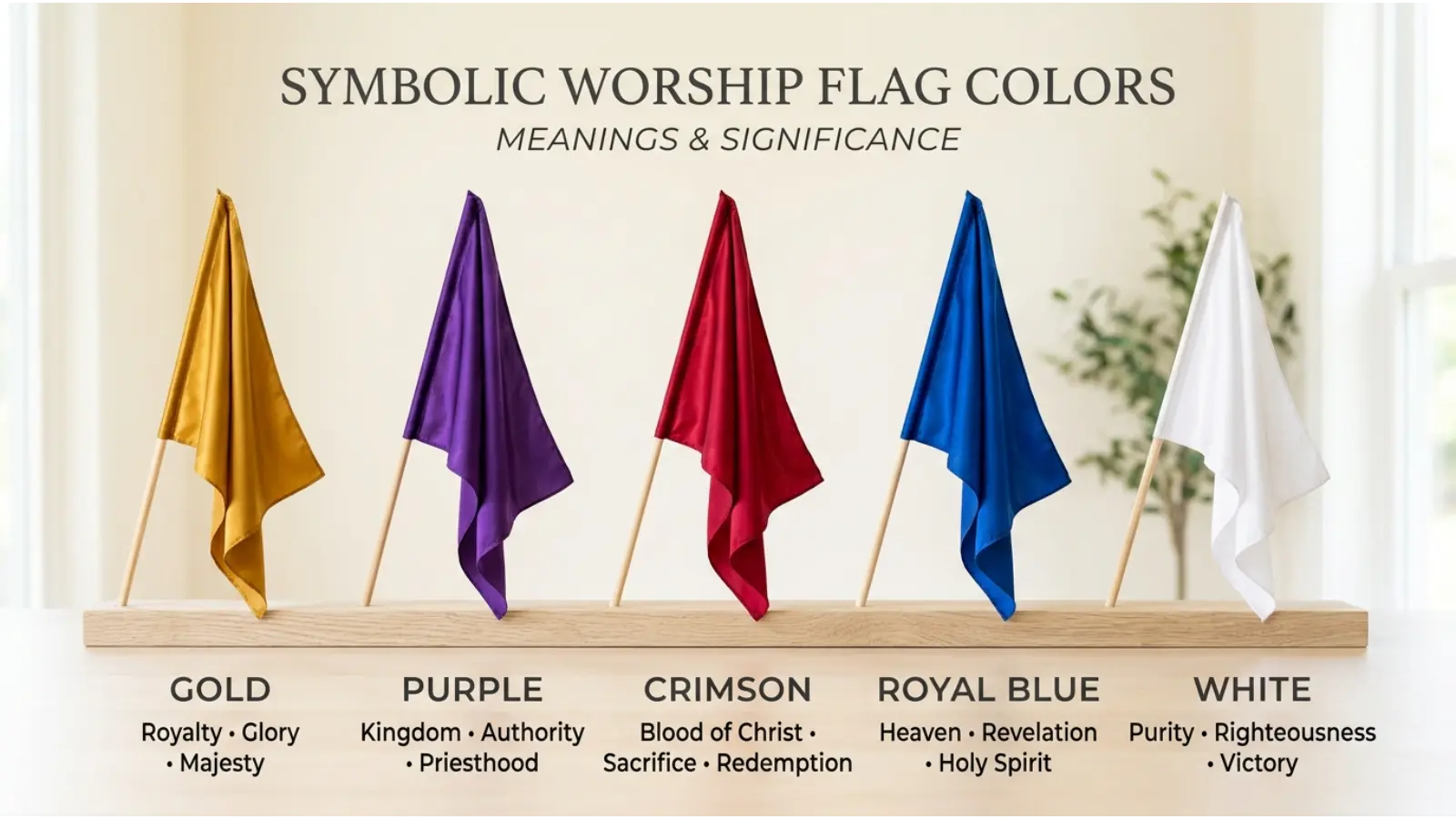
Worship flags are more than colorful pieces of fabric. For many Christian worshippers, they are visual expressions of praise, prayer, celebration, and devotion. Different flag colors often represent specific biblical themes, spiritual ideas, or moments of worship. While many churches and ministries use similar interpretations, there is no single universal standard. Meanings can vary by denomination, culture, and individual ministry traditions.Many people search for worship flags color meanings because they want to choose the right flag for worship services, prayer meetings, prophetic dance, or personal devotion.
Understanding these symbolic colors can help worshippers use them with greater intention while recognizing that color symbolism is interpretive rather than a biblical command.This guide explains the symbolism, spiritual associations, historical background, practical uses, and common interpretations of worship flag colors.
Quick Answer: Worship flag colors symbolize different biblical themes such as holiness (white), sacrifice (red), heaven (blue), royalty (purple), joy (gold), growth (green), repentance (black), and victory (silver). These meanings come from biblical imagery and Christian tradition rather than direct biblical commands.
What Are Worship Flags?
Worship flags are fabric banners used during Christian worship, praise, prayer, and liturgical dance. They are intended to visually express worship through movement while reflecting biblical themes.
Some churches use them during praise songs, while others include them in prayer ministry, conferences, special celebrations, or seasonal services. Their use varies widely among Christian denominations.
Rather than serving as sacred objects, worship flags function as visual reminders of biblical truths and heartfelt worship.
What Do Worship Flags Colors Symbolize?
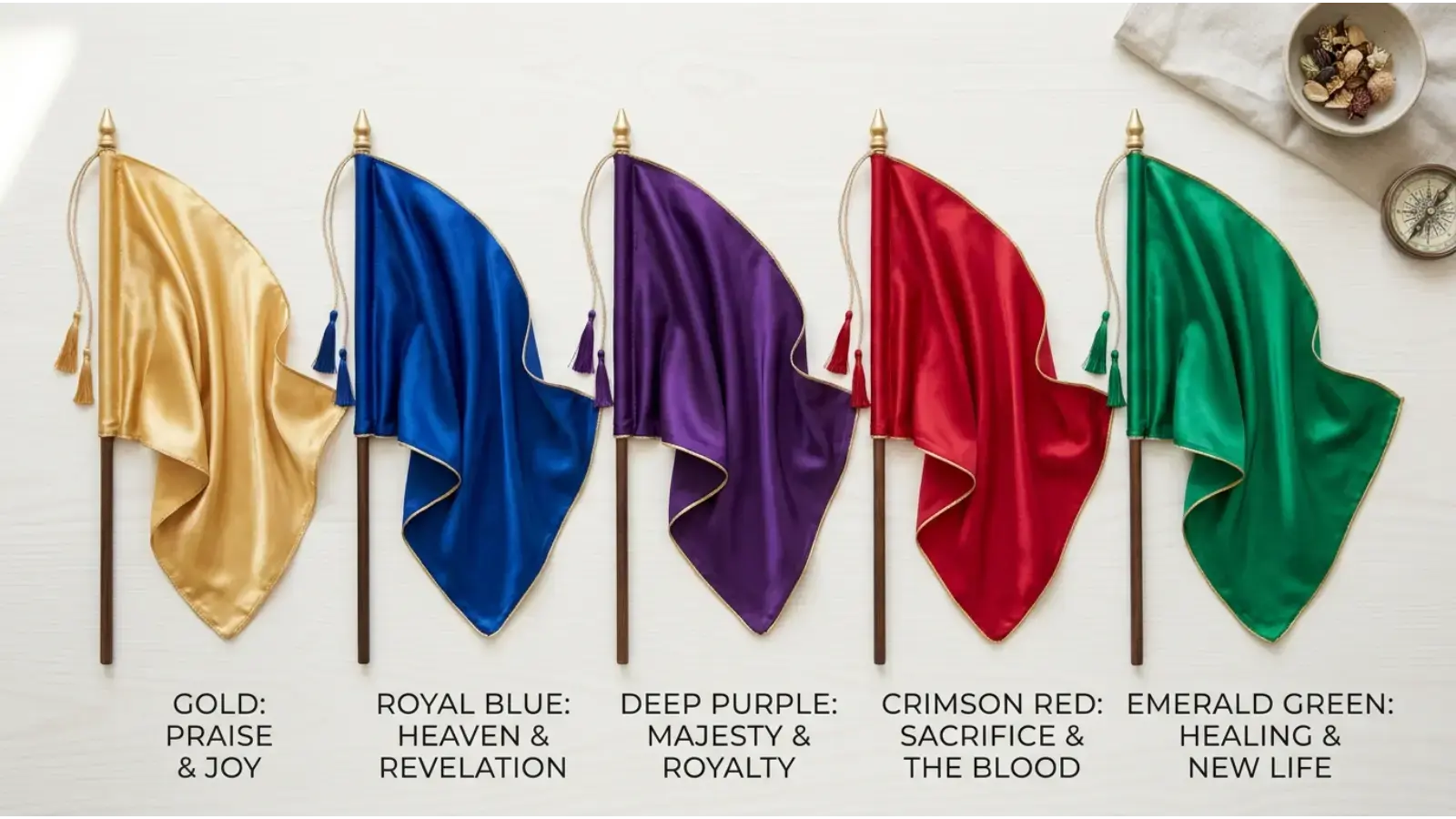
Colors communicate ideas quickly. Throughout history, people have associated colors with emotions, celebrations, authority, mourning, and spiritual themes. Christian ministries often draw from biblical imagery to assign symbolic meanings to worship flags.
These interpretations are devotional traditions rather than official biblical doctrines.
Positive Purposes of Worship Flag Colors
- Express praise and joy
- Represent prayer themes
- Encourage reflection
- Support visual worship
- Celebrate biblical events
- Reinforce sermon messages
Why Meanings Differ
Color symbolism varies because:
- Scripture rarely defines colors directly.
- Different churches emphasize different passages.
- Cultural traditions influence interpretation.
- Ministries often develop their own teaching materials.
For this reason, two churches may use the same color differently.
Worship Flags Color Meanings Chart
| Flag Color | Common Symbolism | Biblical Themes | Typical Worship Use |
|---|---|---|---|
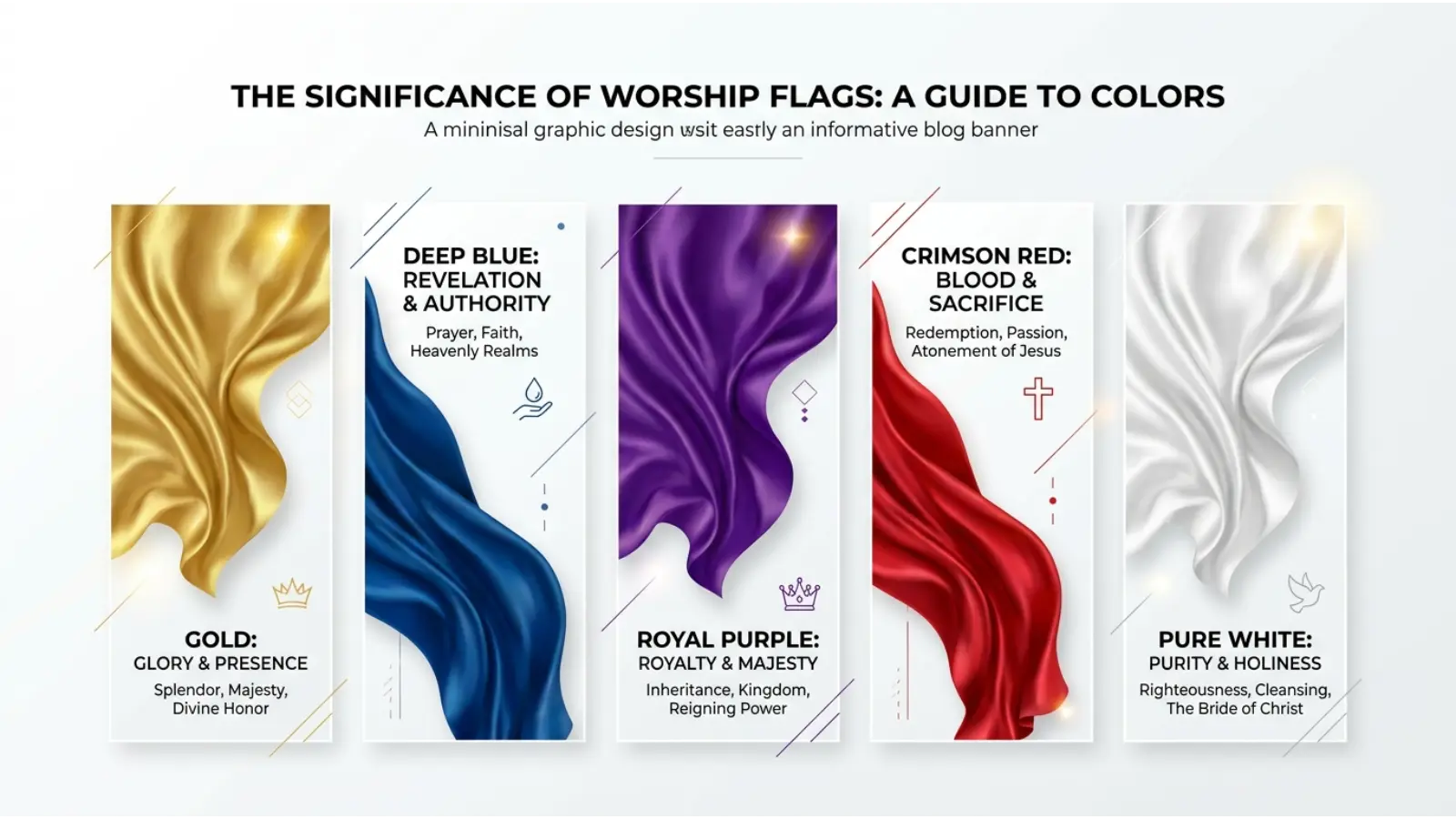
| White | Purity, holiness | Righteousness, forgiveness | Communion, Easter, prayer |
| Red | Blood of Christ, sacrifice | Redemption, love, power | Communion, Good Friday |
| Blue | Heaven, revelation | Faithfulness, God’s presence | Prayer, worship, intercession |
| Purple | Royalty, authority | Kingship of Christ | Advent, worship celebrations |
| Gold | Glory, victory | God’s majesty | Praise, celebration |
| Yellow | Joy, hope | Light, happiness | Thanksgiving services |
| Green | Growth, new life | Renewal, restoration | New beginnings |
| Orange | Passion, encouragement | Spiritual enthusiasm | Revival meetings |
| Pink | Love, compassion | Grace, kindness | Women’s gatherings, celebrations |
| Silver | Redemption, refinement | Purification | Prayer ministry |
| Black | Repentance, humility | Mourning, reflection | Solemn worship services |
| Brown | Humility, earth | Simplicity, service | Teaching events |
White Worship Flag Meaning
White is one of the most recognized worship flag colors.
It commonly represents:
- Holiness
- Purity
- Forgiveness
- Peace
- God’s righteousness
Biblical imagery frequently connects white garments with cleansing and righteousness. Because of this association, white flags are often used during communion services, baptisms, Easter celebrations, and prayer gatherings.
Red Worship Flag Meaning
Red carries strong biblical symbolism.
It often represents:
- The sacrifice of Jesus Christ
- Love
- Redemption
- Courage
- Spiritual strength
Many ministries use red flags during communion, Good Friday services, or worship centered on Christ’s sacrifice.
Because red is emotionally powerful, it often creates a sense of passion and reverence.
Blue Worship Flag Meaning
Blue is widely associated with heaven and God’s faithfulness.
Common meanings include:
- Heaven
- Revelation
- Truth
- Prayer
- Peace
- Divine presence
Blue worship flags are frequently used during quiet worship, intercession, and reflective praise.
Their calming appearance also contributes to a peaceful worship atmosphere.
Purple Worship Flag Meaning
Purple has long symbolized royalty and honor.
Within Christian worship it commonly represents:
- Jesus as King
- Authority
- Majesty
- Worship
- Honor
- Spiritual leadership
Purple flags are especially popular during Advent and special worship celebrations.
Gold Worship Flag Meaning
Gold reflects celebration and God’s glory.
It often symbolizes:
- Victory
- Divine glory
- Excellence
- Majesty
- Celebration
- Eternal value
Gold worship flags are commonly used during joyful praise services and resurrection celebrations.
Green Worship Flag Meaning
Green naturally represents life and growth.
Common interpretations include:
- Spiritual growth
- Renewal
- Hope
- Restoration
- Healing
- New beginnings
Many churches use green during teaching events or services focused on discipleship and personal growth.
Yellow Worship Flag Meaning
Yellow is associated with brightness and happiness.
It often symbolizes:
- Joy
- Hope
- God’s light
- Celebration
- Gratitude
Yellow flags are frequently seen during praise services and thanksgiving celebrations.
Orange Worship Flag Meaning
Orange combines the warmth of red with the optimism of yellow.
Common meanings include:
- Passion
- Revival
- Energy
- Encouragement
- Enthusiasm
Its vibrant appearance makes it popular during youth worship and revival meetings.
Pink Worship Flag Meaning
Pink usually represents gentle expressions of love.
Typical interpretations include:
- Compassion
- Grace
- Mercy
- Affection
- Kindness
Pink flags may appear during women’s conferences, family celebrations, or services emphasizing God’s love.
Silver Worship Flag Meaning
Silver often symbolizes refinement.
Many ministries associate it with:
- Redemption
- Purification
- Wisdom
- Reflection
- God’s refining work
Silver fabric also reflects light beautifully, adding visual movement during worship.
Black Worship Flag Meaning
Although black is sometimes misunderstood, it is not always negative.
Many Christian ministries use black to represent:
- Repentance
- Humility
- Reflection
- Spiritual surrender
- Mourning
These flags are generally reserved for solemn worship services or seasons of repentance.
Brown Worship Flag Meaning
Brown symbolizes the earth and humble service.
It commonly represents:
- Humility
- Stability
- Simplicity
- Dependability
- Servanthood
Although less common, brown flags can support messages about faithful service and everyday obedience.
Spiritual Worship Flags Color Meanings
Many believers connect worship flag colors with spiritual reflection rather than supernatural power.
For example:
- White reminds worshippers of forgiveness.
- Red recalls Christ’s sacrifice.
- Blue encourages prayer.
- Green reflects spiritual growth.
- Gold celebrates God’s glory.
These meanings serve as teaching tools that help people remember biblical themes.
Biblical Background of Color Symbolism
The Bible frequently mentions colors in contexts such as:
- Priestly garments
- The Tabernacle
- Temple decoration
- Visions
- Royal clothing
- Festivals
However, Scripture rarely assigns one fixed meaning to each color.
Modern worship flag meanings combine biblical imagery with centuries of Christian symbolism.
Psychology of Worship Flags Color Meanings
Color psychology studies suggest that colors can influence attention and emotional responses, though reactions vary by culture and individual experience.
Examples include:
- White often feels peaceful.
- Blue may create calmness.
- Red naturally attracts attention.
- Green is commonly associated with renewal.
- Gold often conveys celebration.
These psychological effects can complement worship settings but should not be confused with proven spiritual outcomes.
Cultural Differences in Color Interpretation
Color meanings change across cultures.
For example:
- White symbolizes weddings in many Western cultures but mourning in some Eastern traditions.
- Red may represent celebration in one culture and sacrifice in another.
- Purple often symbolizes royalty in Christian tradition but can have different historical meanings elsewhere.
Churches sometimes adapt worship flag colors to fit local cultural understanding while maintaining biblical themes.
Using Worship Flags in Church
Many ministries choose colors based on the focus of the service.
Examples include:
- Easter: White and gold
- Communion: Red and white
- Prayer services: Blue
- Thanksgiving: Yellow and gold
- Advent: Purple
- Healing services: Green
- Repentance services: Black
The goal is usually to reinforce the worship message visually.
Worship Flags in Dance Ministry
Flag ministry combines movement with worship music.
Color selection may support:
- Sermon themes
- Scripture readings
- Seasonal celebrations
- Prayer emphasis
- Congregational worship
Graceful movement helps communicate emotion without replacing spoken teaching.
Common Misconceptions About Worship Flag Colors
Every color has one official biblical meaning.
False. Most interpretations come from Christian tradition rather than direct biblical commands.
Worship flags have supernatural power.
No evidence suggests the fabric itself has spiritual power. Worship focuses on God rather than the object.
Every church uses identical meanings.
Different ministries often teach different symbolic associations.
Choosing the “wrong” color is sinful.
Most churches view color selection as symbolic rather than doctrinal.
Real-World Applications of Worship Flags Color Meanings
Beyond church services, worship flag colors may be used in:
Use up and down arrow keys to resize the meta box pane.
- Prayer rooms
- Christian conferences
- Worship concerts
- Bible schools
- Children’s ministry
- Creative arts ministry
- Christian photography
- Stage design
- Seasonal church decorations
When combined thoughtfully with music, lighting, and teaching, colors can reinforce the overall worship experience.
Frequently Asked Questions
What do worship flag colors mean?
They represent symbolic biblical themes such as holiness, redemption, prayer, growth, joy, or God’s glory. Interpretations vary among churches.
Are worship flag meanings found directly in the Bible?
Not usually. Most meanings are based on biblical imagery combined with Christian tradition.
Which worship flag color represents holiness?
White is most commonly associated with holiness, purity, forgiveness, and righteousness.
Why is red used in worship?
Red often symbolizes Christ’s sacrifice, redemption, love, and spiritual strength.
What does the blue worship flag represent?
Blue commonly symbolizes heaven, faithfulness, prayer, peace, and God’s presence.
Is there an official worship flag color chart?
No. Different ministries and denominations may use different color systems.
Can churches create their own color meanings?
Yes. Many churches adapt color symbolism to match their teaching while remaining rooted in biblical themes.
Are black worship flags negative?
Not necessarily. They are often used to express repentance, humility, reflection, and solemn worship.
Do worship flag colors have psychological effects?
Colors can influence mood and attention, but responses vary by person and culture. They should not be viewed as having guaranteed spiritual effects.
Which worship flag color is best?
There is no single best color. The most appropriate choice depends on the worship theme, Scripture focus, and ministry tradition.
Conclusion
Worship flag colors provide a meaningful visual language that can enrich Christian worship when used thoughtfully. Colors such as white, red, blue, purple, gold, and green help illustrate biblical themes like holiness, redemption, prayer, royalty, glory, and spiritual growth. While these interpretations are widely respected, they are not universally fixed or required by Scripture.
Understanding both their symbolic traditions and their practical use allows churches and individuals to choose worship flags with greater purpose. Ultimately, the heart of worship matters more than the color itself, and the flags serve as tools that point attention toward faith, praise, and the message of the Gospel rather than the symbols alone.

Emma Wilson is a dedicated comparison writer and product researcher at ColorMystiic.com. She specializes in creating unbiased product comparisons, detailed reviews, and helpful buying guides. Her goal is to help readers make smarter purchasing decisions with confidence.