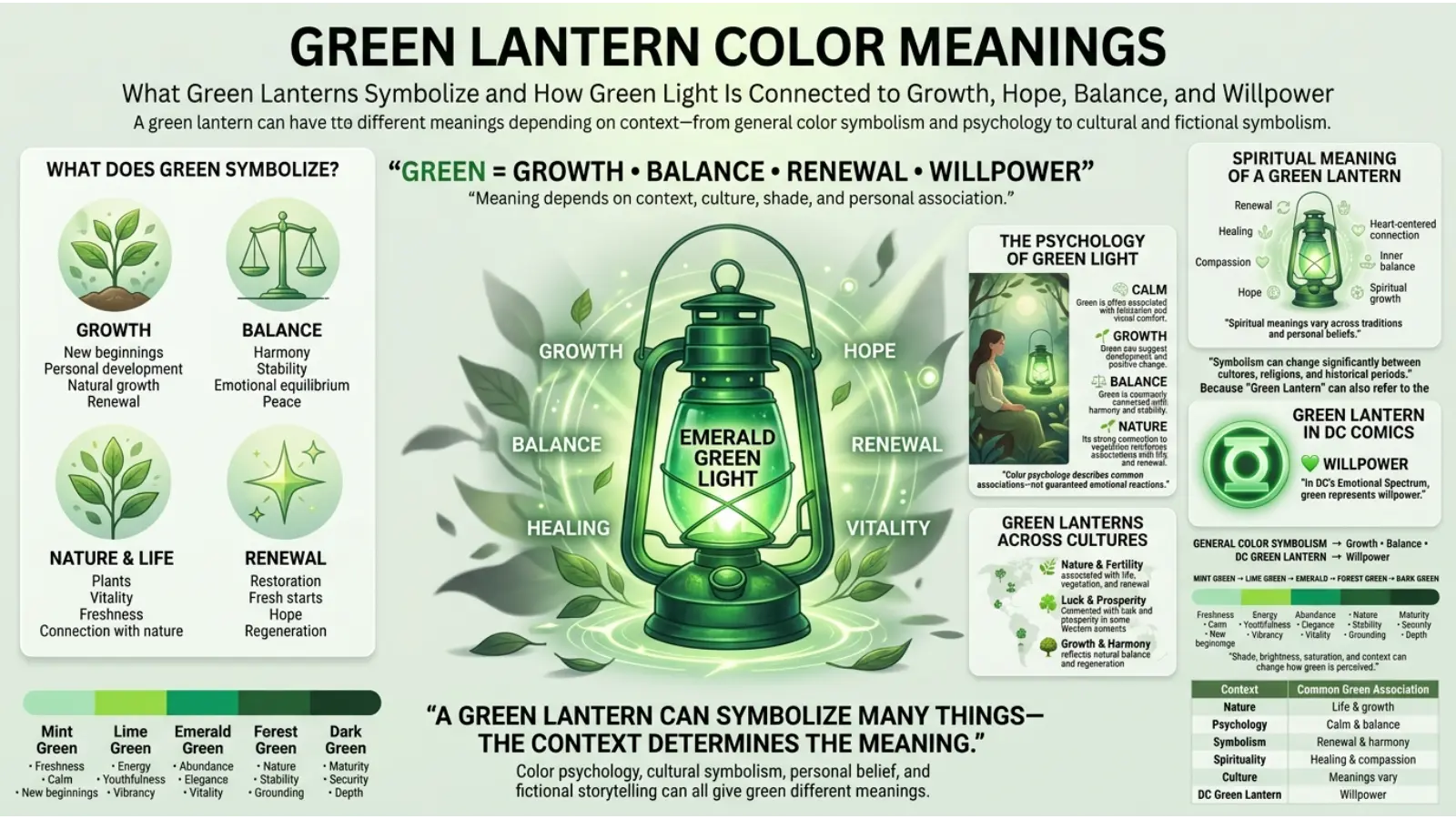
Green lanterns have a meaning that goes beyond the color green itself. A glowing green lantern can suggest hope, guidance, safety, renewal, nature, energy, or a welcoming presence. However, the exact message depends on where the lantern appears, how bright the light is, and what the surrounding colors and symbols communicate. That is why people search for green lantern color meanings in contexts ranging from traditional lighting and celebrations to fantasy stories, games, religious settings, decoration, and modern design.
Green has long been associated with vegetation, growth, and renewal, while a lantern often represents light, direction, protection, or finding a way through darkness. Put together, these ideas can create a powerful visual symbol.
This guide separates widely recognized color associations from spiritual and symbolic interpretations, while also explaining how culture and context can change the message.
Quick Answer: A green lantern commonly symbolizes hope, growth, renewal, safety, balance, nature, and positive energy. When used as a light or decorative symbol, it may also suggest guidance and welcome. Its meaning changes according to cultural traditions, setting, brightness, and whether the lantern is real, decorative, religious, or fictional.
What Does a Green Lantern Symbolize?
The strongest general association is growth. Green appears throughout the natural world in leaves, grass, plants, and forests, so people naturally connect it with life and renewal. A green lantern can therefore suggest a light that encourages growth or a fresh beginning.
Another common association is hope. Light already represents visibility and direction, while green can represent renewal. Together, they create an image of moving forward after a difficult period.
Green can also communicate balance. It sits between warm and cool color families in many common color systems, and its natural associations can create a feeling of steadiness and harmony.
Green Lantern Symbolism Chart
| Symbolic idea | Strength of association | Why it fits |
|---|---|---|
| 🟢 Growth | Very strong | Green is closely linked with plant life |
| 🟢 Renewal | Strong | Green suggests new growth and fresh starts |
| 🟢 Hope | Strong | Light suggests guidance while green suggests renewal |
| 🟢 Nature | Very strong | Green dominates many natural landscapes |
| 🟢 Balance | Moderate | Green is often used to suggest harmony |
| 🟢 Safety | Context-dependent | Green can signal permission or a positive condition |
| 🟢 Protection | Context-dependent | The lantern itself can represent guidance and security |
| 🟢 Wealth | Context-dependent | Green is associated with money in some cultures |
| 🟢 Jealousy | Possible negative association | Green has a long-standing negative use in some expressions |
Why Does a Lantern Add Meaning to Green?
Color does not work alone. The object carrying the color can change the message considerably.
A lantern is traditionally a source of light. Because light helps people see, a lantern can symbolize guidance, direction, awareness, safety, and hope. When green light fills that object, viewers may combine the meanings of both elements.
For example, a green lantern beside a garden may feel natural and peaceful. The same green lantern inside a mysterious fantasy scene could represent magic, danger, supernatural power, or another fictional idea.
This is a useful principle in visual communication: meaning comes from the combination of color, object, setting, and cultural context—not from color alone.
Psychology of Green Lantern Colors
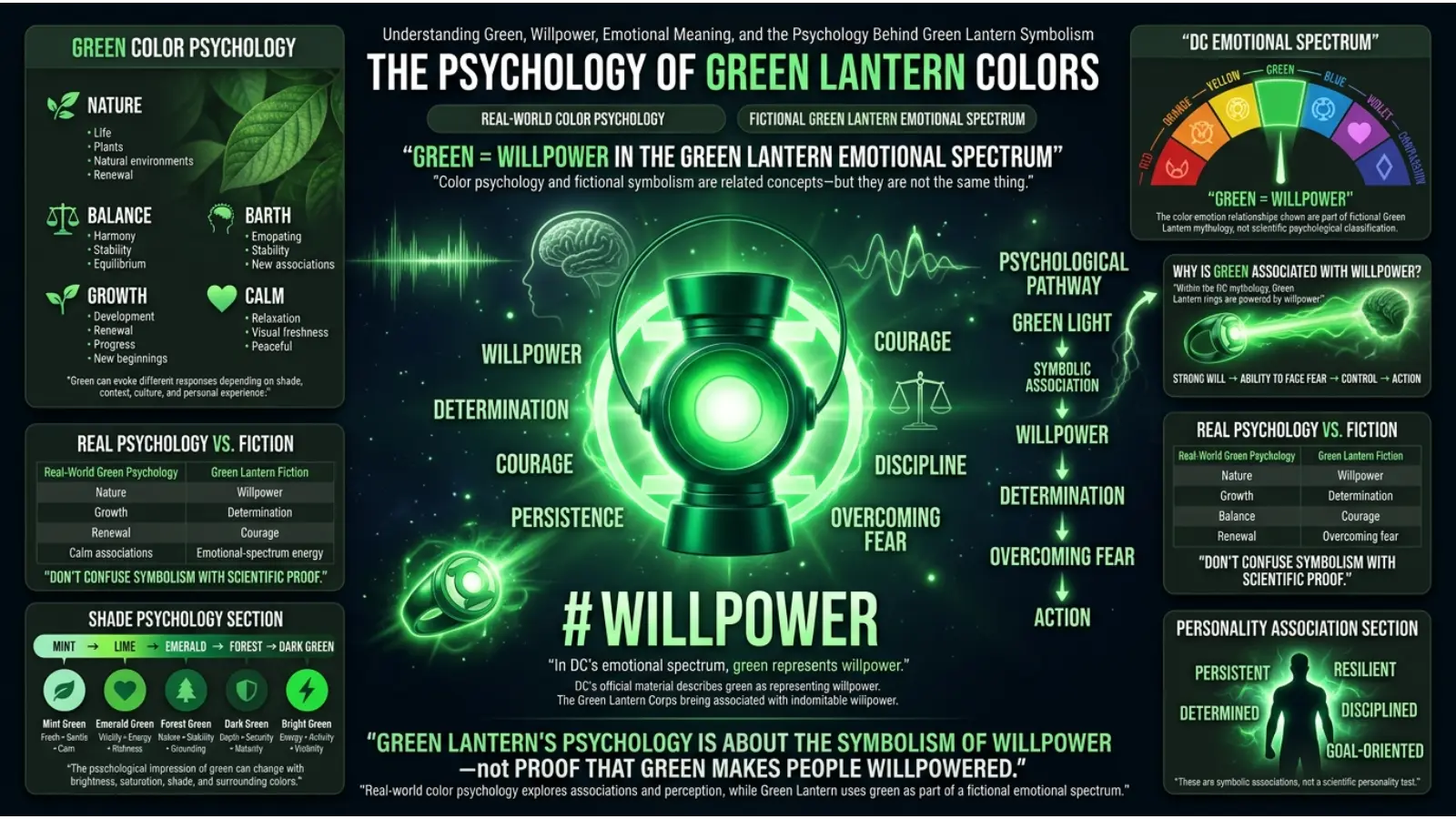
Color psychology can help explain why green lanterns often feel calming or refreshing, but it should not be treated as a system that predicts human behavior with certainty.
Green is strongly connected with nature because humans repeatedly encounter it in vegetation and outdoor environments. As a result, green can bring natural associations into visual spaces.
A lantern adds another psychological layer. Light attracts attention, improves visibility, and creates a focal point. Consequently, a green light can become more noticeable than a flat green surface.
Lightness Changes the Emotional Effect
A pale green lantern can feel gentle, fresh, and peaceful. A bright green lantern can appear energetic and attention-grabbing. A deep emerald lantern may feel richer and more dramatic, while a yellow-green lantern can appear lively but sometimes less relaxing.
Brightness matters too. A soft green glow may create a quiet atmosphere, whereas intense green lighting can feel theatrical or futuristic.
Does Green Light Actually Make People Feel Calm?
Green is often described as calming, but the evidence does not support a simple rule that everyone automatically feels calm around green light. Personal experience, cultural learning, brightness, saturation, and surrounding colors all influence perception.
Therefore, green should be viewed as a visual cue, not a guaranteed emotional trigger.
Spiritual Meaning of a Green Lantern Color Meanings
In spiritual and symbolic settings, green is often interpreted through ideas such as growth, renewal, healing, balance, compassion, and life. A lantern can add the idea of illumination or guidance.
A green lantern may therefore be used symbolically to represent a journey toward renewal or a light that encourages hope during change.
However, these meanings are interpretations rather than universal spiritual facts. Different religions, communities, and spiritual traditions assign different meanings to colors. There is no single worldwide spiritual definition of a green lantern.
Green as a Symbol of Renewal
Because plants return and grow after periods of dormancy, green can represent the idea of beginning again. A green lantern can visually express this idea especially well in ceremonies, artwork, or seasonal decorations.
Green as a Symbol of Balance
Green is also commonly connected with harmony and balance. A green lantern used in a peaceful space can reinforce a theme of stability without requiring words.
Cultural Meaning of Green Lantern Color Meanings
Green does not carry one universal meaning across cultures. Its interpretation can change according to history, religion, politics, local traditions, and everyday experiences.
In many Western contexts, green can suggest nature, freshness, environmental awareness, growth, and permission. Traffic signals are one familiar example where green communicates that movement may proceed.
Across parts of Asia, green can have varied associations depending on the country and cultural setting. It may connect with nature, youth, renewal, or other local meanings, but it should not be treated as having one universal Asian interpretation.
In Middle Eastern cultures, green can have important historical and religious associations in some contexts. However, the meaning depends strongly on the specific tradition and setting.
Across African cultures, green may appear in national, environmental, spiritual, or community symbolism, with meanings differing greatly between countries and peoples.
In Latin American contexts, green can similarly carry several meanings, including nature, hope, national identity, and celebration, depending on the country.
The safest approach is to ask what the green lantern is doing within a particular tradition rather than assuming that one color meaning applies everywhere.
Historical Meaning of Green Lantern Color Meanings
Lanterns have served practical purposes for centuries. Before electric lighting became widespread, lanterns provided portable illumination for travel, work, ceremonies, and public spaces.
Green lighting later became useful for signaling and identification in different technical and transportation settings. Because colored lights can communicate information quickly, green gradually became connected with ideas such as permission, safe conditions, or an active status in some modern systems.
The symbolic meaning of a green lantern today is therefore partly shaped by this combination of old lantern symbolism and modern color signaling.
At the same time, not every historical green lantern was created to symbolize hope or growth. Some were simply practical objects. Their symbolic meaning must be interpreted from their actual historical context.
Green Lantern Personality Associations
People who prefer green are sometimes described as balanced, dependable, nature-loving, patient, or growth-oriented. These descriptions can be useful as symbolic personality associations, especially in design and popular culture.
However, color preference does not determine personality. Someone may choose green because it matches their clothing, home, culture, favorite sports team, or simply because they like how it looks.
A person who chooses a green lantern for decoration may be seeking a peaceful atmosphere rather than expressing a particular personality trait.
Common Symbolic Personality Traits
🟢 Growth-minded: Often associated with learning and development.
🟢 Balanced: Linked symbolically with harmony and stability.
🟢 Nature-oriented: May suggest appreciation for natural environments.
🟢 Hopeful: Green can represent renewal and positive change.
🟢 Grounded: Natural green shades can create a sense of connection with the outdoors.
These are associations, not psychological diagnoses.
Green Lantern Color Meanings in Branding and Marketing
Green is one of the most useful colors in branding because it can communicate several ideas at once. Companies may use it to suggest nature, sustainability, health, freshness, growth, money, or progress, depending on the shade and industry.
A green lantern could work particularly well as a visual identity element for an organization associated with outdoor activities, renewable energy, gardening, wellness, environmental projects, or community support.
However, marketers should choose the exact shade carefully. A natural forest green communicates something different from a bright neon green.
Green Branding Chart
| Green shade | Common brand impression |
|---|---|
| 🌿 Soft green | Natural, gentle, approachable |
| 🌲 Forest green | Established, natural, dependable |
| 💚 Emerald green | Premium, energetic, refined |
| 🟢 Bright green | Youthful, active, modern |
| 🟩 Olive green | Earthy, practical, traditional |
| 🟢 Neon green | Futuristic, energetic, attention-grabbing |
Green Lantern Color Meanings in Interior Design
The Green lantern lighting can transform a room, but the effect depends heavily on intensity.
For a living room, a muted green lantern can add an organic accent without overwhelming the space. Pairing it with wood, cream, beige, or warm neutral furniture creates a relaxed environment.
In a bedroom, softer green lighting is usually more comfortable than highly saturated green light. A green glass lantern used as an accent can provide the color without turning the entire room green.
For an office, a small green lamp or decorative lantern can introduce an outdoor-inspired accent while maintaining a professional appearance.
In a garden or patio, green lanterns can blend naturally with plants and foliage. They can also create a themed atmosphere for evening gatherings.
Lighting Tip
The same green lantern can look completely different under daylight, warm indoor bulbs, and darkness. Before choosing a permanent fixture, test it under the lighting conditions where it will actually be used.
Green Lantern Color Meanings in Fashion
Green lantern-inspired colors can work as statement accessories, especially when the green is treated as an accent rather than covering an entire outfit.
Emerald green often creates a polished and dramatic impression. Olive green feels more earthy and casual, while bright green creates a youthful and energetic look.
A green lantern-shaped accessory can become a strong focal point because both the unusual shape and color attract attention.
Colors That Pair With Green
Green works with many neutrals and natural tones:
- White: Creates a clean, fresh contrast.
- Black: Makes green look stronger and more dramatic.
- Cream: Produces a softer natural combination.
- Brown: Reinforces an earthy theme.
- Gold: Adds warmth and a decorative, luxurious feel.
- Navy: Creates a deeper, sophisticated palette.
- Pink: Produces a lively complementary contrast.
- Purple: Can create a creative and slightly mysterious combination.
The best pairing depends on the green’s undertone. Yellow-green usually works differently from blue-green.
Green Lantern Color Combinations
A green lantern becomes more expressive when surrounded by carefully selected colors.
Green + White
This combination emphasizes freshness, cleanliness, and simplicity. It works well in modern interiors and spring-themed designs.
Green + Gold
Gold adds warmth and richness. Together, the colors can create an elegant decorative appearance suitable for celebrations or premium visual designs.
Green + Brown
Brown and green both connect strongly with nature. This pairing is especially effective for rustic, garden, camping, and outdoor themes.
Green + Blue
Blue and green can create a calm, natural palette. The result works particularly well for environmental, water, travel, and wellness concepts.
Green + Red
These colors create strong contrast. Because they are often associated with holiday imagery, they can also create a seasonal feeling when used together.
Green + Purple
Purple adds mystery and creativity to green. This pairing can work especially well in fantasy artwork and imaginative entertainment settings.
Why Green Lanterns Look Different Under Different Lighting
Color is not fixed in appearance. The light falling on an object changes the way our eyes perceive it.
A green lantern viewed under warm yellow lighting may appear softer or slightly yellowish. Under cool white lighting, it may look cleaner and more vivid. In darkness, the actual light emitted by the lantern becomes much more important than the color of its outer material.
Digital screens create another difference. A green lantern shown on a phone may appear brighter than the physical object because the screen produces its own light.
For accurate design work, always evaluate green under the lighting conditions in which people will experience it.
Green Lanterns in Art and Photography
Artists can use a green lantern as a visual anchor. Against a dark background, a glowing green lantern immediately attracts attention and can create a strong sense of mystery.
In photography, green lighting can alter skin tones and surrounding surfaces, so photographers often use it deliberately rather than as a neutral light source.
A green lantern can also represent a character’s emotional or narrative state. A bright green glow might suggest hope or discovery, while a dark green glow can create an eerie atmosphere.
The symbolism becomes strongest when the visual story supports it.
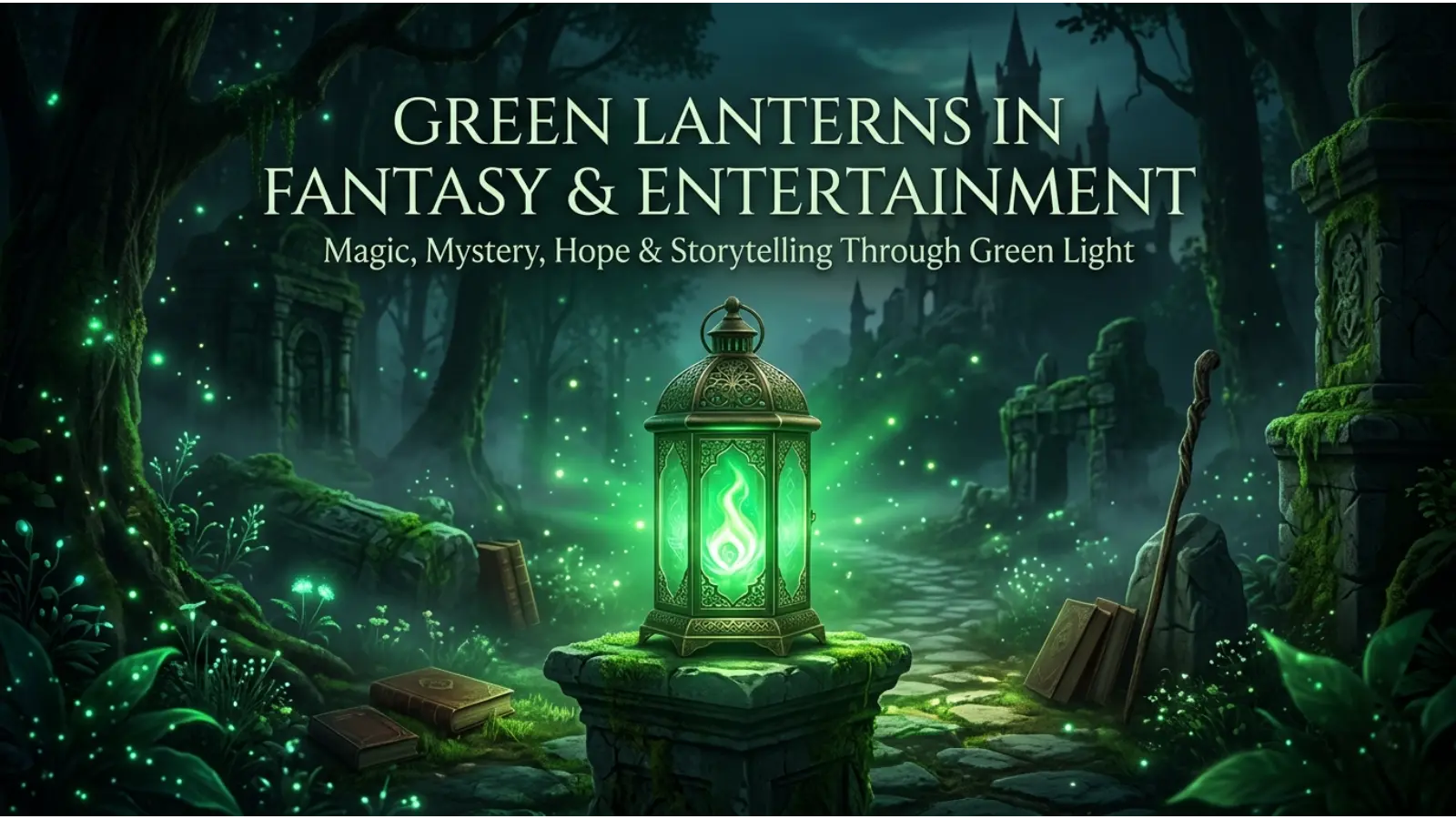
Green Lanterns in Fantasy and Entertainment
The phrase green lantern can also refer to fictional characters and fantasy worlds rather than an ordinary colored lantern.
This distinction matters for SEO and readers because someone searching for green lantern color meanings may be asking about a real decorative lantern, a symbolic green light, or a fictional universe.
A fictional green lantern may represent ideas such as courage, willpower, magic, energy, or another story-specific concept.
Real-World Uses of Green Lanterns
Green lanterns can serve practical and decorative purposes in many settings.
Daily life: Decorative lanterns can add an outdoor-inspired accent to rooms, balconies, gardens, and patios.
Business: Green lighting can support themes related to sustainability, growth, nature, or wellness.
Events: Green lanterns can contribute to seasonal, cultural, environmental, or fantasy-themed decorations.
Art: A glowing green lantern can become a symbol of hope, mystery, or discovery.
Photography: Green illumination can create dramatic mood and color contrast.
Home decoration: Green glass and green light can introduce nature-inspired color without changing every surface in a room.
Sports: Green can represent teams, fields, competition, or specific organizational identities, although the meaning depends on the team or sport.
Entertainment: Green lighting is often useful for fantasy, science-fiction, supernatural, and dramatic scenes.
Green Lantern Color Meanings in Everyday Situations
The meaning of a green lantern can change simply because of where you see it.
A green lantern at a garden party may communicate nature and decoration. A green signal light may communicate permission or an active status. The green lantern in a meditation space may suggest balance and renewal. A green lantern in a horror film may instead create an unnatural or unsettling atmosphere.
This shows why color symbolism should always be read in context.
Common Misconceptions About Green Lantern Meanings
Myth: Green Always Means Good
Not necessarily. Green can represent positive ideas such as growth and renewal, but it can also represent jealousy, illness, immaturity, or danger in particular contexts.
Myth: Everyone Experiences Green the Same Way
People learn color meanings through culture, environment, personal experience, and media. Individual reactions can differ.
Myth: Green Light Always Relaxes People
Green may feel natural or pleasant to many people, but brightness, saturation, surrounding colors, and personal preferences can change the experience.
Myth: A Color Has One Universal Spiritual Meaning
Spiritual symbolism varies among traditions. Myth: Choosing Green Reveals Your Personality
Color preference can be interesting for self-expression, but it cannot reliably determine someone’s personality.
How to Choose the Right Green Lantern
Start with the purpose. If you want a peaceful decorative effect, choose a softer or muted green. For a dramatic focal point, emerald or saturated green can work better.
Next, consider the surroundings. Green looks natural with wood and plants, elegant with gold and cream, and dramatic with black or deep navy.
Finally, test the lantern at night if it will primarily be used after dark. A color that looks perfect in a store during daylight can appear completely different once illuminated.
Green Lantern Meaning by Shade
| Shade | Main symbolic impression | Best visual use |
|---|---|---|
| 🌱 Mint green | Freshness and softness | Bedrooms, spring décor |
| 🍃 Leaf green | Nature and growth | Gardens, environmental themes |
| 🌿 Olive green | Earthiness and practicality | Rustic décor, casual fashion |
| 🌲 Forest green | Stability and nature | Premium interiors, outdoor themes |
| 💎 Emerald green | Richness and energy | Luxury décor, fashion |
| 🟢 Lime green | Youthfulness and energy | Games, modern graphics |
| 🟩 Sage green | Calm and understated nature | Minimal interiors |
| 🟢 Neon green | Energy and technology | Entertainment and futuristic designs |
| The shade can change the emotional impression as much as the basic color category. |
Frequently Asked Questions
What does a green lantern symbolize?
A green lantern commonly symbolizes growth, renewal, hope, nature, balance, and guidance. Its exact meaning depends on context.
Is a green lantern a symbol of hope?
It can be. Green is frequently associated with renewal, while a lantern represents light and guidance. Together, they can create a strong visual metaphor for hope.
What does a green lantern mean spiritually?
In symbolic or spiritual settings, green may represent growth, healing, balance, renewal, or life. However, spiritual meanings vary between traditions.
What does a bright green lantern symbolize?
Bright green usually creates a more energetic and attention-grabbing impression than muted green. It can suggest vitality, youthfulness, excitement, or modernity.
What does a dark green lantern mean?
Dark green often feels more grounded, mature, natural, and stable. In dramatic settings, however, it can also create mystery.
What does an emerald green lantern symbolize?
Emerald green can suggest richness, vitality, elegance, and energy. It works particularly well as a decorative or luxury accent.
Does green light have a psychological meaning?
Green light can create associations with nature and freshness, but there is no single psychological response that applies to everyone. Brightness, saturation, context, and individual experience matter.
Why is green associated with nature?
Green is highly visible in leaves, grass, and many plants. Repeated exposure to these natural environments has made green strongly connected with vegetation and life.
Can green lanterns be used in interior design?
Yes. Green lanterns can provide an accent color in living rooms, bedrooms, offices, gardens, and patios. The ideal shade depends on the room’s existing palette and lighting.
Does green always have a positive meaning?
No. Green has both positive and negative associations. Growth, nature, and renewal are positive examples, while jealousy and envy are common negative associations in some contexts.
Conclusion
Green lantern color meanings are best understood as a combination of color symbolism and object symbolism. Green can suggest nature, growth, renewal, balance, and hope, while the lantern itself can represent light, direction, visibility, and guidance. When the two are combined, the result can communicate a powerful message without words.
Still, there is no single meaning that works in every situation. A soft green lantern in a bedroom, a bright green signal light, and a mysterious green lantern in a fantasy film can create completely different impressions. Culture, shade, brightness, surrounding colors, and personal experience all matter.
The most useful way to understand green lantern symbolism is therefore to look at the complete visual story. Instead of asking only, “What does green mean?” ask why this shade, why this object, why this setting, and why this lighting? That approach reveals the deeper meaning behind color in everyday life.

Emma Wilson is a dedicated comparison writer and product researcher at ColorMystiic.com. She specializes in creating unbiased product comparisons, detailed reviews, and helpful buying guides. Her goal is to help readers make smarter purchasing decisions with confidence.