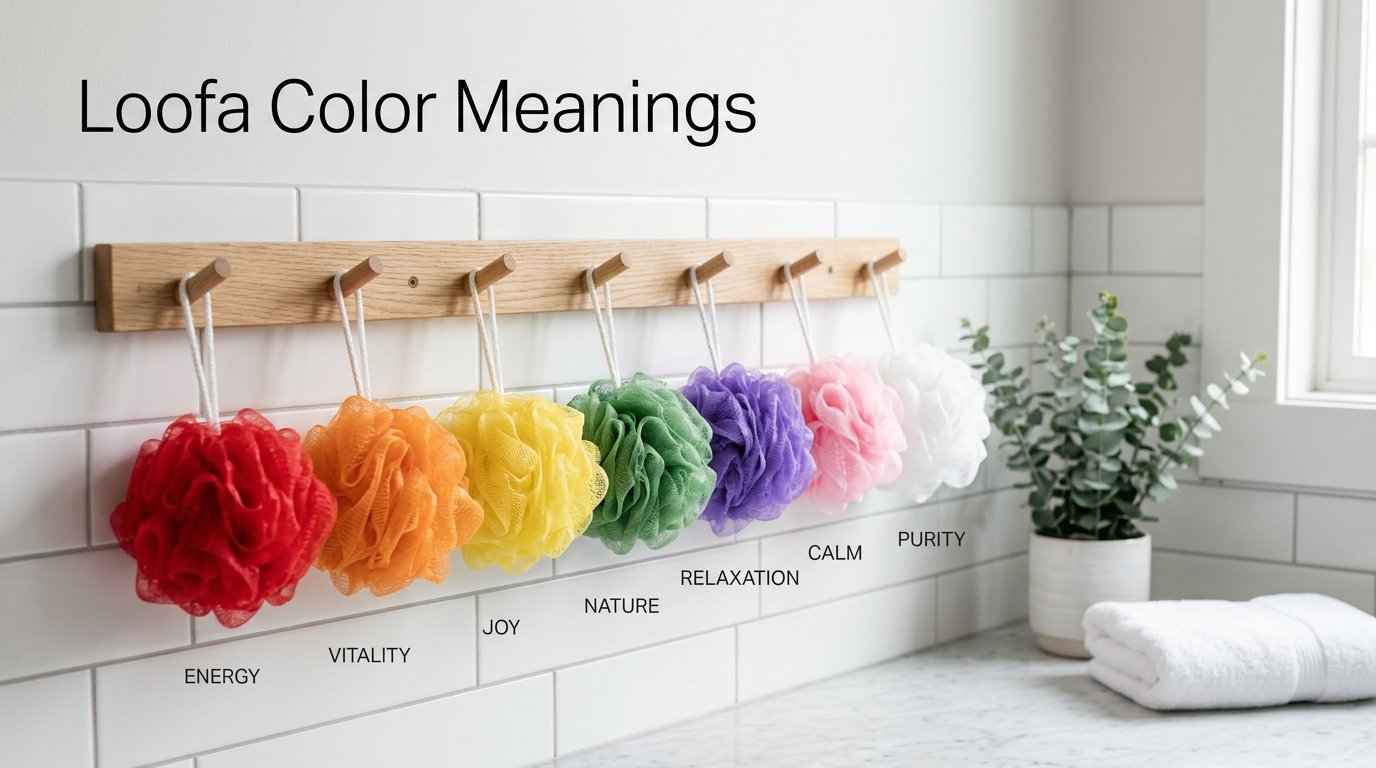
A loofa, loofah, or bath sponge may seem like a simple bathroom item, but its color can influence how people perceive it. Loofa color meanings can come from personal preference, product design, cultural symbolism, marketing, and the natural colors associated with different materials.
Unlike traditional colors such as red, blue, or purple, loofah colors do not have one universal symbolic dictionary. A blue loofah does not automatically mean calmness, and a green loofah does not always represent healing. Instead, people bring familiar color associations to an everyday object.
This makes loofah colors interesting from both a design and psychology perspective. The same shade can feel refreshing in a bathroom, playful in a children’s product, luxurious in a hotel, or practical in a cleaning product.
This guide explains common loofah color meanings, the psychology behind them, cultural differences, practical color choices, and how manufacturers use color to shape product perception.
Quick Answer: Loofa color meanings are mainly based on familiar color symbolism rather than fixed rules. Blue often suggests calm and cleanliness, green can suggest nature and freshness, pink may suggest softness, yellow can feel cheerful, white often suggests cleanliness, and black may suggest luxury or sophistication. However, context, culture, lighting, and personal preference can change the meaning.
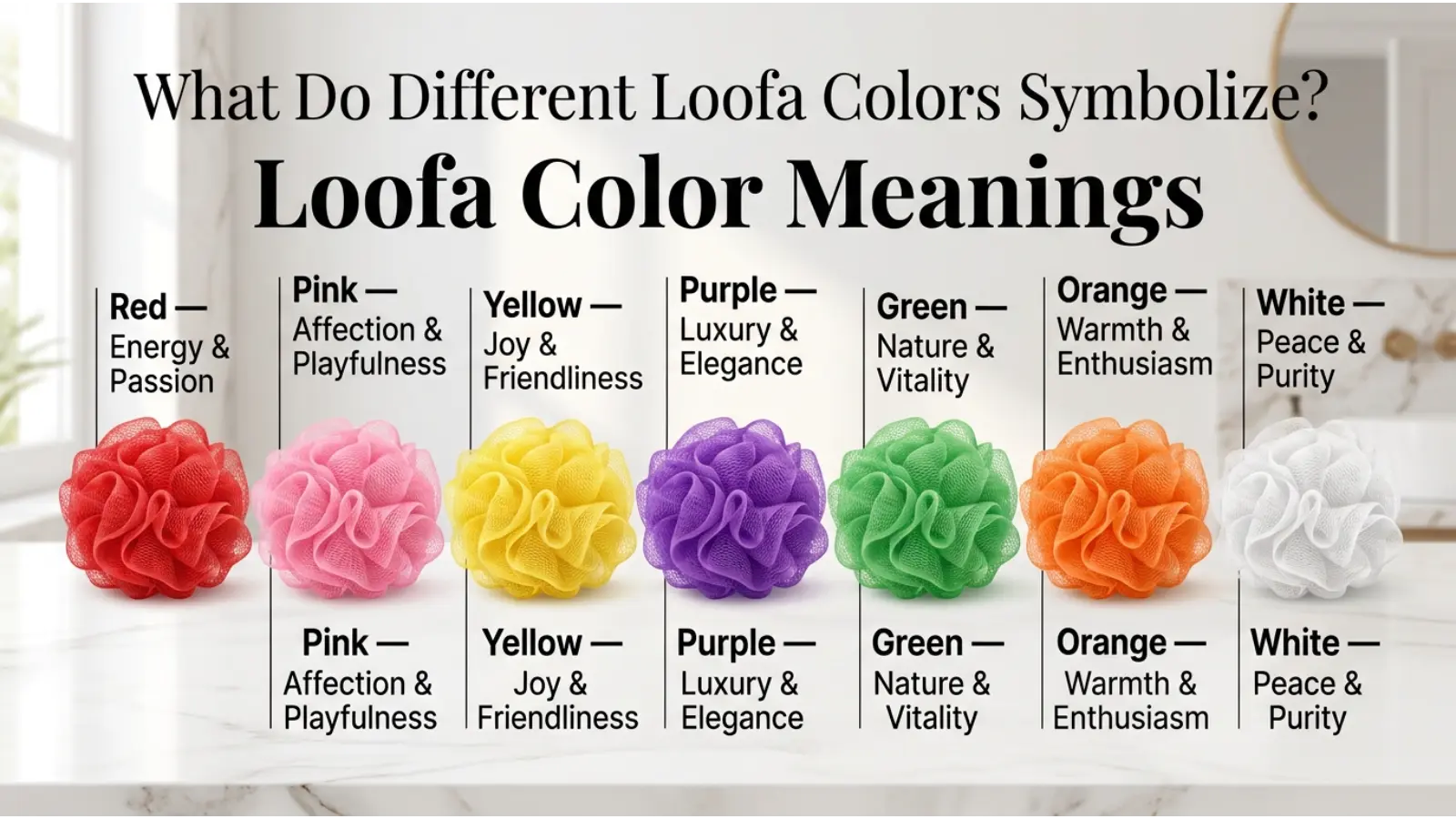
Loofa Color Meanings Chart
The following chart provides a practical starting point. These associations are common cultural and design interpretations, not universal psychological facts.
| Loofa Color | Common Meaning | Emotional Impression | Practical Association |
|---|---|---|---|
| Blue | Calm, cleanliness, trust | Relaxing and fresh | Shower, spa, everyday bathing |
| Green | Nature, freshness, renewal | Balanced and natural | Herbal or eco-focused products |
| Pink | Softness, care, warmth | Gentle and playful | Personal care and beauty |
| Purple | Luxury, creativity, mystery | Rich and expressive | Premium or spa products |
| Yellow | Happiness, energy, optimism | Bright and cheerful | Morning routines and playful designs |
| White | Cleanliness, simplicity, purity | Fresh and orderly | Hotels, spas, minimalist bathrooms |
| Orange | Energy, warmth, enthusiasm | Active and friendly | Sports and energetic product lines |
| Red | Energy, passion, attention | Strong and stimulating | Bold packaging and promotional products |
| Black | Sophistication, power, luxury | Modern and dramatic | Premium grooming products |
| Gray | Neutrality, balance, modernity | Calm and understated | Contemporary bathroom design |
Because these meanings are flexible, the material, shape, packaging, brand, and surrounding colors can be just as influential as the loofah itself.
What Do Different Loofa Colors Symbolize?
A loofah color usually borrows its meaning from broader color symbolism. Therefore, its interpretation depends heavily on the situation.
For example, a pale blue loofah may reinforce the idea of a relaxing shower. A bright red loofah, however, may feel energetic rather than peaceful.
The color also works alongside texture. A soft pink loofah can appear gentle because both its color and physical texture communicate softness. Similarly, a dark-colored exfoliating sponge may appear more powerful or intense.
Blue Loofa Color Meaning
Blue is commonly associated with calmness, cleanliness, water, trust, and freshness.
That makes blue a natural choice for bath products. Since water itself is often represented with blue, the color can strengthen the connection between a loofah and bathing.
Light blue tends to feel softer and more relaxing, while navy or dark blue can appear more mature and sophisticated.
Green Loofa Color Meaning
Green commonly represents nature, freshness, growth, and renewal.
A green loofah can therefore suggest a natural or refreshing bathing experience. Brands selling products with botanical, herbal, or environmentally focused themes may also use green because of these associations.
However, green does not automatically prove that a product is natural or environmentally friendly. The color is a visual signal, not evidence about ingredients or manufacturing.
Pink Loofa Color Meaning
Pink is often linked with softness, affection, care, warmth, and playfulness.
A pink loofah can create a gentle and cheerful impression. Lighter pinks generally feel softer, while hot pink can look energetic and youthful.
Modern design has also moved away from treating pink as exclusively feminine. Its meaning changes considerably depending on shade, audience, culture, and surrounding design.
Purple Loofa Color Meaning
Purple has long been associated with luxury, creativity, mystery, and individuality in many Western design contexts.
A purple loofah can therefore give an ordinary bathroom item a more decorative or premium appearance.
Lavender and other pale purples usually create a quieter impression than deep violet. As a result, lavender may work particularly well with spa-inspired designs.
Yellow Loofa Color Meaning
Yellow is commonly associated with happiness, optimism, energy, and warmth.
A yellow loofah can make a bathroom feel brighter and more playful. It may also fit products designed around morning freshness or an energetic routine.
Very bright yellow can attract attention strongly, while muted yellow may feel warmer and more traditional.
White Loofa Color Meaning
White commonly communicates cleanliness, simplicity, freshness, and order.
These associations make white especially suitable for bathrooms, hotels, spas, and minimalist interiors.
At the same time, white can show stains and discoloration more easily than darker colors. Therefore, its practical appearance may change faster with use.
Black Loofa Color Meaning
Black often communicates sophistication, strength, modernity, and luxury.
A black loofah can look particularly striking in a modern bathroom. It may also appeal to consumers who prefer neutral grooming products.
However, black can make an object feel more serious and less playful than bright colors.
The Psychology Behind Loofa Colors
Color psychology is useful, but it should not be treated as a system that predicts exactly how every person will feel.
People learn color associations through culture, experience, advertising, environment, and repeated exposure. Consequently, color can influence perception without controlling behavior.
For example, blue is frequently used in contexts involving water and cleanliness. A blue bath product may therefore feel familiar and appropriate even before someone consciously thinks about its color.
Likewise, green can remind people of plants and nature. Yet a person’s response depends on their experiences and the exact shade.
Color and Mood
Color can influence the atmosphere of a space. A bathroom filled with pale blues and soft greens may feel calmer than one filled with highly saturated reds and oranges.
However, the effect does not come from the loofah alone. Wall color, lighting, towels, tiles, fixtures, and natural light all contribute to the overall visual experience.
Color and Behavior
A colorful product can attract attention on a store shelf. This is particularly useful when many competing products have similar shapes and functions.
Bright colors can help a product stand out, while neutral colors may communicate simplicity and premium design.
Still, packaging, price, brand reputation, product claims, and personal preference also influence purchasing decisions.
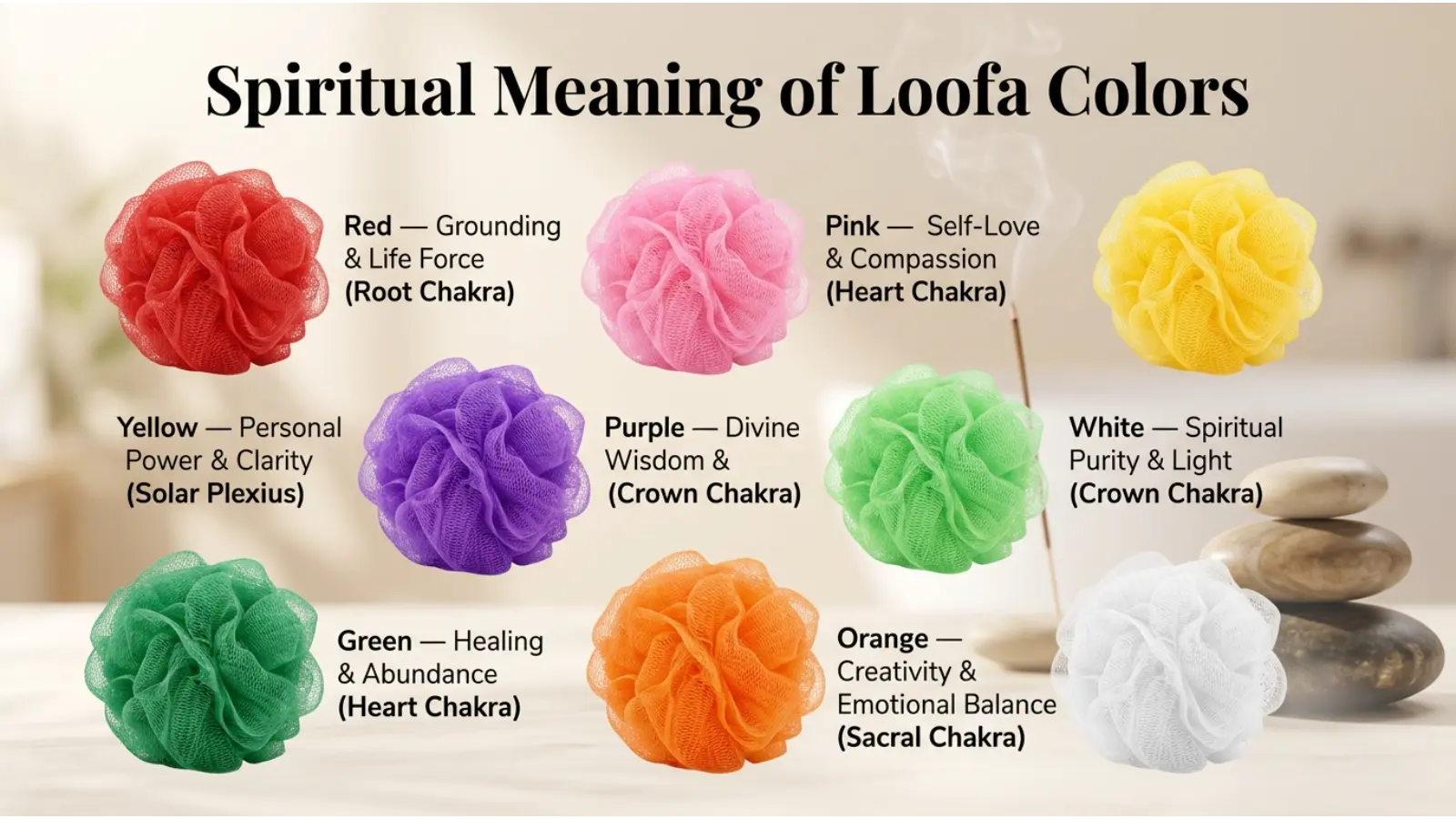
Spiritual Meaning of Loofa Colors
There is no universal spiritual system that assigns fixed spiritual meanings specifically to loofah colors.
However, people may apply broader color symbolism to bath and self-care rituals.
Blue may be interpreted as peace or emotional calm. Green can represent renewal or connection with nature. White may symbolize purification in traditions where white carries that meaning. Purple can be associated with contemplation or spiritual depth in some symbolic systems.
These interpretations are symbolic rather than scientific facts. Spiritual meanings differ across religions, cultures, and personal practices.
A colored loofah can become meaningful in a personal self-care routine, but the object itself does not have a universally recognized spiritual power.
Cultural Differences in Loofa Color Meanings
Color meanings are strongly shaped by culture.
In many Western contexts, white is associated with cleanliness, while black may communicate sophistication. In other cultural settings, those same colors can carry additional meanings connected with mourning, celebration, status, or tradition.
Red provides an especially useful example. It can communicate excitement, danger, love, celebration, or good fortune depending on the cultural setting.
Therefore, companies selling bath products internationally need to consider local color preferences rather than assuming that one color has the same emotional meaning everywhere.
Modern global culture adds another layer. Social media, international fashion, gaming, entertainment, and global brands continually spread and remix color associations.
Historical Development of Color Symbolism
The meaning of color has never been completely fixed.
Historically, color meanings were influenced by available pigments, clothing customs, religious art, political symbols, social status, and trade. Some colors were once difficult or expensive to produce, which helped connect them with wealth or authority.
Modern industrial production changed this relationship. Synthetic dyes made many strong colors widely available, so a color’s meaning increasingly depended on branding, fashion, media, and consumer culture.
Loofa colors belong to this modern visual environment. Their meanings are therefore less about ancient symbolism and more about contemporary design and everyday associations.
Do Loofa Colors Reveal Personality?
People sometimes choose products in colors that match their preferred style. Someone who loves bright yellow may enjoy energetic visual environments, while someone who prefers gray may favor understated design.
However, color preference does not diagnose personality.
A person can choose a black loofah simply because it matches their bathroom. Another person may select pink because it was the only color available.
Therefore, personality associations are best treated as playful observations rather than psychological tests.
Loofa Colors in Branding and Marketing
Color is especially useful when many products have nearly identical functions.
A manufacturer may use blue to create a clean and refreshing appearance, green to suggest natural themes, or purple to make a product look more premium.
Packaging can reinforce the message. For example, green combined with botanical illustrations may create a stronger natural impression than green alone.
Why Brands Use Blue
Blue works well for products connected with water, freshness, cleanliness, and relaxation. It can make a bath product immediately recognizable as part of a personal-care category.
Why Brands Use Green
Green can support natural, botanical, organic-looking, or environmentally themed visual identities.
Nevertheless, responsible marketing should not use color alone to imply environmental credentials that a product does not actually have.
Why Brands Use Purple and Black
Purple can make a product appear expressive or luxurious, while black can create a sleek and premium appearance.
This is particularly useful when a basic bathroom accessory is being positioned as part of a higher-end grooming experience.
Loofa Colors in Interior Design
A loofah is small, but its color can contribute to the visual harmony of a bathroom.
For a calm bathroom, combine blue or soft green accessories with neutral walls and natural materials. The result can create a visually quiet environment.
For a modern bathroom, black, gray, or white accessories can coordinate with stone, glass, chrome, or matte fixtures.
A colorful loofah can also serve as a small accent. Instead of changing the entire bathroom, a yellow, orange, or pink accessory can introduce a controlled burst of color.
Bathroom Lighting Matters
Lighting can dramatically change how a loofah looks.
Warm bulbs can make some colors appear softer or more yellow. Cool lighting can make blues and greens appear sharper.
Natural daylight can reveal colors differently again. Therefore, when matching a loofah with towels or bathroom accessories, check the colors under the lighting you actually use.
Loofa Colors in Fashion and Personal Style
Although a loofah is not normally considered fashion, personal-care products can still reflect someone’s style.
A person who prefers minimalist accessories may choose white, gray, black, or muted colors. Someone with a playful style may choose bright pink, yellow, orange, or purple.
Travel and gym products can also use color as a personal identifier. For example, choosing a distinctive color can make a personal bath item easier to recognize in a shared environment.
Best Loofa Color Combinations
Color combinations can create different visual moods.
| Color Combination | Overall Impression | Good For |
|---|---|---|
| Blue + White | Clean and calm | Classic bathrooms |
| Green + Beige | Natural and warm | Spa-inspired spaces |
| Pink + White | Soft and cheerful | Personal-care spaces |
| Purple + White | Elegant and relaxing | Decorative bathrooms |
| Black + White | Modern and strong | Minimalist interiors |
| Yellow + Gray | Bright but balanced | Contemporary bathrooms |
| Orange + White | Energetic and friendly | Gym or active spaces |
| Blue + Gray | Cool and sophisticated | Modern bathrooms |
The best combination depends on the surrounding room. A color that looks excellent in a bright bathroom may appear too strong in a small room with limited lighting.
A Real-Time Example: Choosing a Loofah for a Bathroom
Imagine you are updating a bathroom today with white tiles, gray cabinets, and cool LED lighting.
A bright yellow loofah will immediately become an accent color. It can make the room feel more energetic, but it may also draw more attention than you want.
A pale blue loofah will blend naturally with the cool lighting and strengthen the bathroom’s clean, relaxing appearance.
Alternatively, a black loofah will create a sharper contrast with the white tiles and match the gray cabinets.
The practical lesson is simple: do not choose a loofah color by symbolism alone. Consider the room, lighting, personal taste, and intended mood together.
Real-World Uses of Loofa Color Meanings
Loofah colors can be useful beyond simple decoration.
Daily Life
Different colors can help household members identify personal bath items quickly. This is especially useful when several people share a bathroom.
Business
Hotels, spas, gyms, and salons can use coordinated colors to create a consistent visual identity.
Marketing
Manufacturers can use color to differentiate product varieties and communicate a visual theme before customers read the packaging.
Art and Photography
Photographers can use brightly colored bath accessories as small props or contrast elements in lifestyle images.
Home Decoration
A colorful loofah can provide an inexpensive accent that matches towels, rugs, storage containers, or wall accessories.
Sports and Fitness
Bright orange, yellow, or red can fit energetic gym environments, while blue and green may support a more relaxed wellness aesthetic.
Entertainment
Film and television designers can use bathroom colors to subtly support a character’s environment or the emotional tone of a scene.
Common Misconceptions About Loofa Color Meanings
Myth: Every loofah color has one official meaning.
There is no universal color code for ordinary loofahs. Most meanings come from broader color symbolism and design conventions.
Myth: A color can determine someone’s personality.
Color preference can reflect taste and context, but it cannot reliably determine personality.
Myth: Green always means an eco-friendly product.
Green can suggest nature, but it does not prove that a product is sustainable.
Myth: Blue products are scientifically proven to make everyone calm.
Blue is commonly associated with calmness, but individual responses vary. Color effects are influenced by context and experience.
Myth: Spiritual color meanings are universal.
Spiritual symbolism varies among traditions. A meaning found in one practice may not exist in another.
How Age and Personal Experience Change Color Meaning
Color preferences can change over a person’s life.
Children may be attracted to highly saturated colors because they are visually noticeable. Adults may prefer colors that match their home, clothing, lifestyle, or social setting.
Personal experiences matter too. Someone may associate green with a favorite place in nature, while another person may connect it with a particular brand.
Consequently, color meaning is partly cultural and partly personal.
Why Designers Choose Specific Loofa Colors
Designers usually consider several factors rather than symbolism alone.
They may ask:
- Will the color stand out on a store shelf?
- Does it match the product’s packaging?
- Does it fit the target audience?
- Does it work with the bathroom environment?
- Does it communicate the intended mood?
- Is the color easy to distinguish from competing products?
- Does it remain attractive under different lighting?
This shows why color is both an emotional and practical design tool.
FAQ About Loofa Color Meanings
What does a blue loofa mean?
A blue loofah commonly suggests calmness, freshness, water, cleanliness, and relaxation. However, this is a general color association rather than an official loofah meaning.
What does a green loofa mean?
Green often represents nature, freshness, renewal, and balance. A green loofah may therefore create a natural or refreshing impression.
What does a pink loofa mean?
Pink is commonly associated with softness, care, warmth, and playfulness. Its meaning can change depending on the shade and cultural context.
What does a purple loofa mean?
Purple can suggest luxury, creativity, mystery, and individuality. Lighter purple shades often create a softer spa-like impression.
What does a white loofa symbolize?
White commonly represents cleanliness, simplicity, freshness, and order. It is especially popular in minimalist and hospitality settings.
What does a black loofa symbolize?
Black can communicate sophistication, strength, modernity, and luxury. It can also provide strong visual contrast in a light-colored bathroom.
Is there a universal loofa color meaning chart?
No. A loofah color chart is a practical interpretation based on broader color symbolism, design conventions, and cultural associations.
Does loofa color affect how people feel?
It can influence visual perception and atmosphere, but the effect is not identical for everyone. Context, lighting, culture, and personal experience all matter.
Which loofa color is best for a relaxing bathroom?
Blue, pale green, lavender, white, and other soft shades can create a visually calm environment. The best choice depends on the bathroom’s existing colors and lighting.
Can loofa colors have spiritual meanings?
People may give colors personal or spiritual meanings based on traditions and individual beliefs. However, there is no single universal spiritual meaning for loofah colors.
Final Thoughts on Loofa Color Meanings
Loofa color meanings are a good example of how ordinary objects can carry visual messages. The loofah itself has a simple purpose, but its color can change how the product looks, how it fits into a bathroom, and what consumers expect from it.
Blue can create a calm and clean impression. Green can suggest freshness and nature. Pink can feel soft and playful, while purple can appear expressive or luxurious. White communicates simplicity, and black can create a modern appearance.
Yet no color works in isolation. Lighting, culture, personal experience, surrounding colors, branding, and context all shape perception.
The most useful way to understand loofah colors is therefore not to memorize one fixed meaning for every shade. Instead, look at the complete visual setting and ask what message the color is helping create. That approach makes color symbolism more accurate, practical, and useful in everyday life.

Emma Wilson is a dedicated comparison writer and product researcher at ColorMystiic.com. She specializes in creating unbiased product comparisons, detailed reviews, and helpful buying guides. Her goal is to help readers make smarter purchasing decisions with confidence.