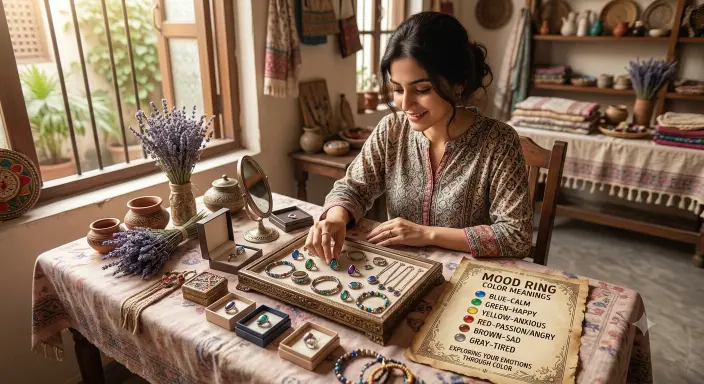
Mood jewelry Colors has fascinated people for decades. At first glance, it looks like an ordinary ring, necklace, or bracelet. However, the color-changing stone creates the impression that it can reveal your emotions. As the jewelry shifts from blue to green, black, purple, or amber, many people wonder what each color actually means.
The truth is more interesting than many expect. Mood jewelry combines science, symbolism, and popular culture. While the colors change because of temperature-sensitive materials rather than direct emotion detection, many people still enjoy interpreting the shades as reflections of their feelings or mood.
In this guide, you’ll learn the complete mood jewelry color meanings, how mood jewelry works, the psychology behind each color, common myths, and practical tips for understanding these fascinating accessories.
Quick Answer: Mood jewelry changes color because heat-sensitive liquid crystals respond to changes in skin temperature. Each color has a traditional symbolic meaning—such as blue for calm, green for balance, purple for passion, and black for stress or cold—but these meanings are cultural interpretations rather than scientifically proven emotion readings.
How Does Mood Jewelry Work?
Many people believe mood jewelry can read emotions directly. In reality, it works through temperature.
Inside the stone is a layer of thermochromic liquid crystals. These crystals twist differently as they warm or cool, changing the wavelengths of light they reflect. As a result, the jewelry displays different colors.
Although emotions can influence body temperature—for example, stress may cool your hands while excitement can warm them—many other factors also affect the color, including:
- Room temperature
- Weather
- Physical activity
- Blood circulation
- Holding a hot or cold drink
- Individual body temperature
Therefore, mood jewelry does not “detect emotions.” Instead, it reacts to changes in temperature that sometimes accompany emotional states.
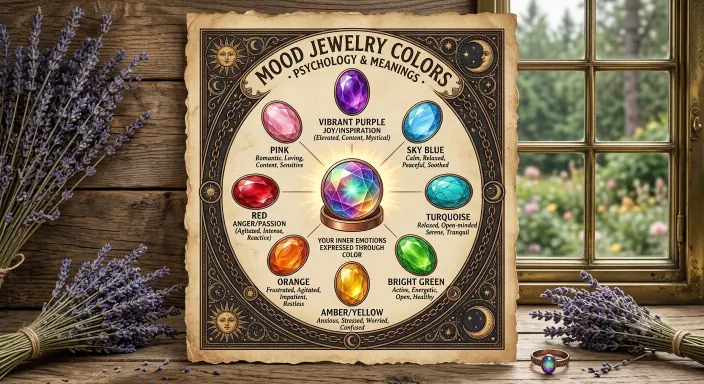
Complete Mood Jewelry Color Meanings Chart
| Color | Traditional Meaning |
|---|---|
| Black | Stress, tension, cold, fatigue |
| Gray | Anxiety, uncertainty, emotional distance |
| Brown | Restlessness, nervousness |
| Amber | Mixed emotions, excitement |
| Yellow | Optimism, curiosity, creativity |
| Green | Balance, calmness, growth |
| Light Blue | Relaxed, peaceful |
| Dark Blue | Happy, confident, comfortable |
| Purple | Passion, imagination, romance |
| Violet | Strong emotions, creativity |
| Pink | Love, affection, kindness |
| Red | Energy, excitement, determination |
These interpretations became popular during the mood ring trend of the 1970s and continue to appear on modern mood jewelry charts.
What Does Each Mood Jewelry Color Mean?
Black Mood Jewelry Meaning
Black often appears when the jewelry is cold or not being worn.
Symbolically, black is commonly associated with:
- Stress
- Fatigue
- Nervousness
- Emotional overload
- Low energy
However, black does not automatically mean someone feels unhappy. Often, it simply indicates cooler skin temperature.
Gray Mood Jewelry Meaning
Gray represents emotional uncertainty.
Traditional interpretations include:
- Worry
- Confusion
- Emotional distance
- Mental fatigue
- Lack of focus
Gray is considered a transitional color, suggesting that emotions may be changing rather than fixed.
Brown Mood Jewelry Meaning
Brown usually symbolizes instability or restlessness.
It may represent:
- Uneasiness
- Nervous energy
- Restlessness
- Temporary stress
- Discomfort
Because brown often appears between temperature changes, it can also indicate shifting physical conditions.
Amber Mood Jewelry Meaning
Amber combines warmth and energy.
Traditional symbolism includes:
- Excitement
- Curiosity
- Anticipation
- Adventure
- Positive change
Many people associate amber with creativity and enthusiasm.
Yellow Mood Jewelry Meaning
Yellow is often connected with positive thinking.
Common meanings include:
- Happiness
- Optimism
- Mental clarity
- Confidence
- Creativity
Since yellow is bright and energetic, it is frequently linked with cheerful emotions.
Green Mood Jewelry Meaning
Green is one of the most common mood jewelry colors.
It traditionally represents:
- Balance
- Calmness
- Stability
- Patience
- Emotional harmony
Many mood rings display green when the wearer’s hands are at a comfortable temperature, which is why green is often considered the “normal” or balanced color.
Light Blue Mood Jewelry Meaning
Light blue symbolizes relaxation.
Traditional interpretations include:
- Peace
- Calm
- Comfort
- Contentment
- Emotional stability
Because blue is widely associated with tranquility, many people consider it one of the most pleasant mood jewelry colors.
Dark Blue Mood Jewelry Meaning
Dark blue often indicates emotional confidence.
It may represent:
- Happiness
- Security
- Inner peace
- Confidence
- Satisfaction
This color frequently appears when body temperature is slightly warmer than average.
Purple Mood Jewelry Meaning
Purple has long been connected with imagination and mystery.
Mood jewelry traditionally associates purple with:
- Passion
- Romance
- Creativity
- Inspiration
- Emotional depth
Many people enjoy seeing purple because it suggests both confidence and imagination.
Violet Mood Jewelry Meaning
Violet is closely related to purple but often represents stronger emotional intensity.
Common symbolic meanings include:
- Artistic expression
- Intuition
- Deep emotions
- Inspiration
- Spiritual reflection
Interpretations vary depending on the manufacturer.
Pink Mood Jewelry Meaning
Pink is almost universally associated with caring emotions.
Traditional meanings include:
- Love
- Compassion
- Friendship
- Kindness
- Affection
Many mood jewelry charts describe pink as a sign of warmth and emotional openness.
Red Mood Jewelry Meaning
Red is one of the warmest colors on the chart.
It commonly symbolizes:
- Excitement
- Passion
- Determination
- Energy
- Motivation
Since red often appears when skin temperature rises, it has become associated with strong emotions.
The Psychology Behind Mood Jewelry Colors
The emotional meanings of mood jewelry are inspired by color psychology rather than proven scientific measurements.
For example:
- Blue often makes people think of calm skies and peaceful water.
- Green reminds us of nature and balance.
- Yellow feels energetic because of its brightness.
- Red attracts attention and suggests action.
- Purple has historically symbolized creativity and luxury.
Although these psychological associations influence how people interpret colors, they should not be confused with medical or psychological diagnoses.
Why People Believe Mood Jewelry Reflects Emotions
Mood jewelry remains popular because emotions and body temperature are sometimes connected.
For instance:
- Stress may reduce blood flow to the hands.
- Relaxation can warm the skin.
- Excitement may increase circulation.
- Anxiety sometimes cools fingers.
Even so, temperature changes happen for many unrelated reasons. Therefore, mood jewelry should be viewed as a fun conversation piece rather than an emotional testing device.
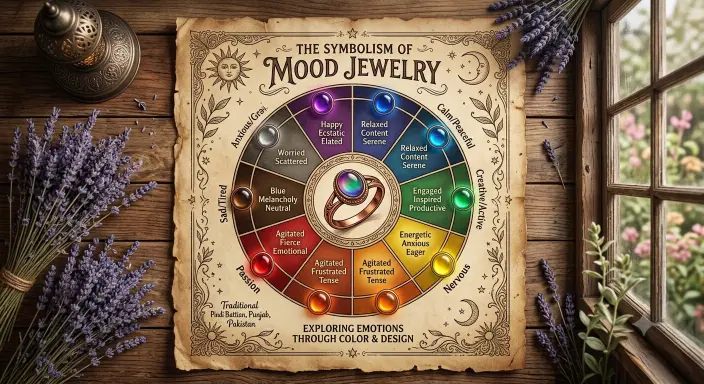
Symbolism of Mood Jewelry
Beyond individual colors, mood jewelry symbolizes several broader ideas:
Self-awareness
Many people use mood jewelry as a reminder to check in with their emotions.
Personal Expression
Changing colors make each piece feel unique and personal.
Curiosity
Mood jewelry encourages conversations about feelings and personality.
Mindfulness
Seeing the colors change can prompt people to pause and notice how they’re feeling.
Cultural Popularity of Mood Jewelry
Mood jewelry first became widely popular during the 1970s.
At the time, it reflected growing interest in:
- Personal wellness
- Self-discovery
- Alternative lifestyles
- Psychology
- Fashion trends
Today, mood jewelry enjoys renewed popularity through social media, nostalgic fashion, and gift collections.
Rather than being viewed as scientific tools, modern pieces are appreciated for their playful design and symbolic meaning.
Mood Jewelry in Fashion
Mood jewelry works well with many styles because its colors constantly change.
Popular fashion uses include:
- Casual everyday outfits
- Bohemian styles
- Vintage-inspired clothing
- Festival fashion
- Colorful accessories
- Personalized gifts
Since the jewelry never stays the same color for long, it adds visual interest without needing multiple accessories.
Choosing Mood Jewelry
When buying mood jewelry, consider:
Material Quality
Higher-quality metals often last longer and feel more comfortable.
Protective Coating
A good coating helps protect the temperature-sensitive crystal.
Color Range
Some manufacturers produce more vivid color transitions than others.
Comfort
Because mood jewelry responds to body heat, proper contact with the skin is important.
Common Misconceptions About Mood Jewelry
Myth: Mood jewelry reads your mind.
Reality: It measures temperature changes, not thoughts.
Myth: Every company uses identical color meanings.
Reality: Color charts vary slightly between manufacturers.
Myth: Black always means sadness.
Reality: Black often simply indicates that the jewelry is cold.
Myth: Mood jewelry predicts the future.
Reality: There is no scientific evidence supporting this claim.
Myth: It works the same for everyone.
Reality: Individual body temperature, circulation, and environment all affect the colors.
Real-World Uses of Mood Jewelry
Although mood jewelry isn’t a scientific instrument, people enjoy it for many reasons.
It is commonly used as:
- A fashion accessory
- A nostalgic gift
- A conversation starter
- A collectible item
- A mindfulness reminder
- A colorful piece of personal expression
Designers also appreciate its dynamic appearance because no two moments look exactly alike.
Frequently Asked Questions
What do mood jewelry colors really mean?
They represent traditional symbolic interpretations based on color psychology. The actual color changes are caused by temperature-sensitive liquid crystals.
Is mood jewelry scientifically accurate?
No. It responds to temperature, not directly to emotions or thoughts.
Why does my mood jewelry stay black?
The jewelry may be too cold, damaged, or not making enough contact with your skin.
Why is green the most common mood jewelry color?
Green usually appears when the jewelry reaches a comfortable temperature range, so it is often associated with emotional balance.
Can stress change mood jewelry color?
Sometimes. Stress may affect circulation and skin temperature, which can influence the crystal’s color.
Do all mood rings use the same color chart?
No. Manufacturers may assign slightly different meanings to certain colors.
Does mood jewelry stop working over time?
Yes. Exposure to moisture, chemicals, or physical damage can reduce the effectiveness of the liquid crystals.
Is mood jewelry waterproof?
Most mood jewelry should not be submerged in water because moisture can damage the thermochromic layer.
Why does the color change so quickly?
Liquid crystals respond rapidly to temperature changes, often within seconds.
Is mood jewelry still popular?
Yes. It remains a popular novelty gift, fashion accessory, and nostalgic collectible.
Final Thoughts
Mood jewelry continues to capture attention because it blends science, symbolism, and style in a unique way. While its colors are driven by temperature rather than direct emotional detection, the traditional meanings attached to each shade have become part of its enduring appeal.
Instead of treating mood jewelry as a scientific emotion detector, think of it as a creative reminder to reflect on your feelings and appreciate the fascinating ways color shapes our perceptions. Whether you wear it for fun, fashion, or personal expression, mood jewelry offers an engaging connection between color symbolism and everyday life.

Emma Wilson is a dedicated comparison writer and product researcher at ColorMystiic.com. She specializes in creating unbiased product comparisons, detailed reviews, and helpful buying guides. Her goal is to help readers make smarter purchasing decisions with confidence.